Greenhouse Frog
Scientific Name: Eleutherodactylus planirostris
Category: other
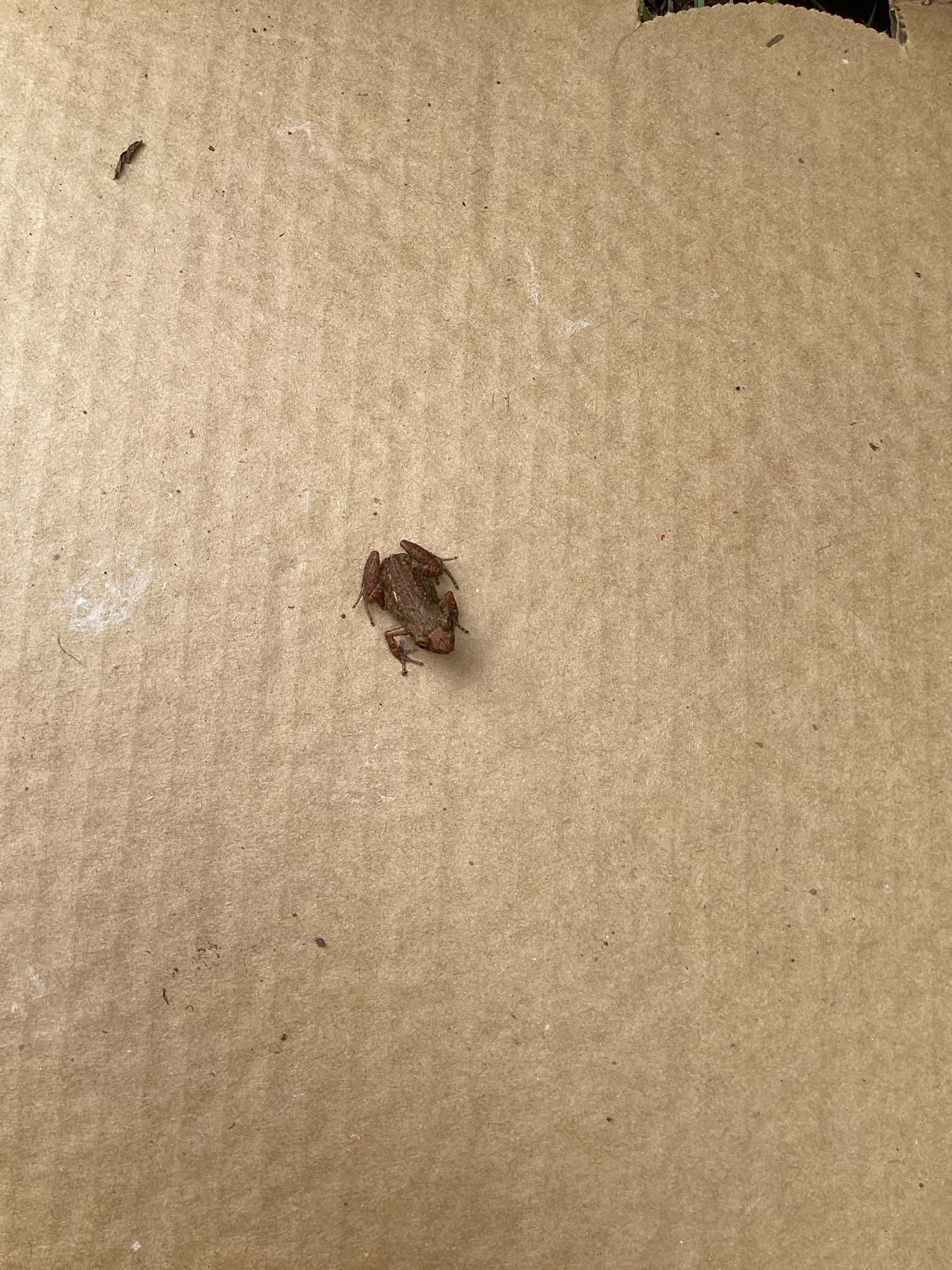
Brief Description
A small, terrestrial frog belonging to the flesh-bellied frog family, often found in gardens and under debris.
Characteristics
Very small (15-30mm), reddish-brown to tan color with either mottled patterns or two light longitudinal stripes. It has long toes without extensive webbing and can be distinguished by its bumpy skin and lack of a tadpole stage.
Habitat
Terrestrial habitats including gardens, greenhouses, forests, and suburban yards, often hiding under logs, rocks, or flower pots.
When to Find It
Most active at night, especially during warm, humid, or rainy weather. Breeding occurs from late spring through summer.
Conservation Status
Least Concern (Invasive species in many parts of the US).
Ecological Role
Acts as an insectivore, consuming a high volume of small invertebrates like ants, beetles, and mites, helping control pest populations.
Easily Confused With
Coqui Frogs, which are larger with more prominent toe pads, and various Cricket Frogs, which prefer being near water and have different skin textures.
Observation Tips
Look under moist debris or plant containers at night with a flashlight. They are very fast jumpers and can be difficult to catch for a close look.
Interesting Facts
Unlike most frogs, Greenhouse Frogs do not lay eggs in water; instead, they lay eggs in moist soil that hatch directly into fully formed tiny froglets, skipping the aquatic tadpole stage entirely.
User Notes
Outside