White Snakeroot
Scientific Name: Ageratina altissima
Category: plant
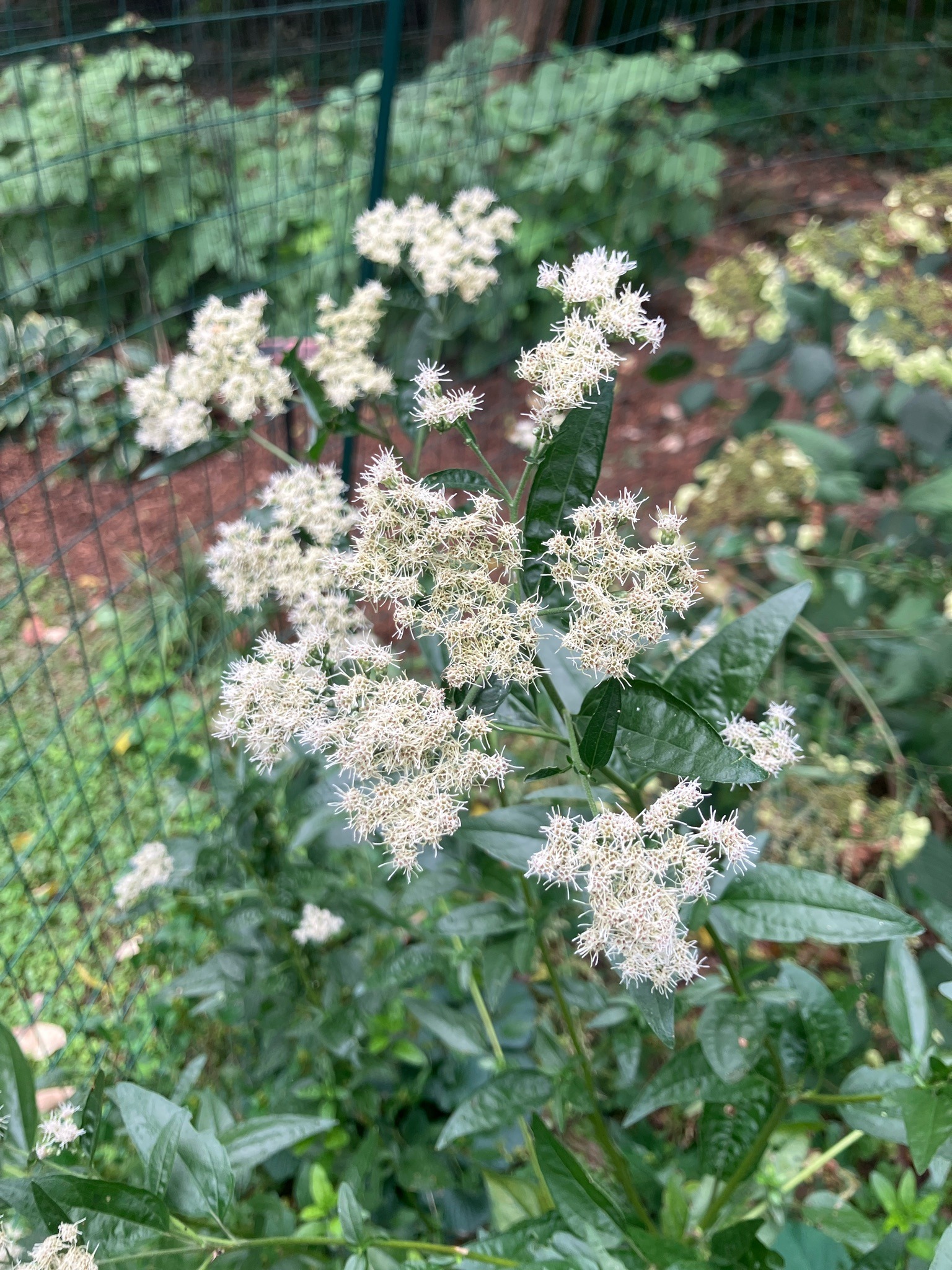
Brief Description
White snakeroot is a perennial herbaceous plant native to North America, known for its clusters of small, bright white flowers and dark green, opposite leaves. It is infamous for containing tremetol, a toxin that can pass through milk to humans, causing milk sickness.
Characteristics
Grows up to 1.5 meters tall with branching stems. Leaves are opposite, ovate to triangular, sharply toothed, and petiolate with prominent veins. Flowers are small, white, fluffy composite heads clustered in flat-topped or rounded panicles blooming from late summer to frost.
Habitat
Found in rich deciduous woods, thickets, woodland clearings, shaded ravines, and sometimes in partially shaded garden areas or along fence rows.
When to Find It
Blooms from July through October. Most conspicuous in late summer and autumn when in flower.
Conservation Status
Secure (Least Concern)
Ecological Role
Provides late-season nectar for a variety of pollinators including butterflies, native bees, and beneficial wasps.
Easily Confused With
Can be confused with other white-flowered asteraceae species such as Boneset (Eupatorium perfoliatum), which has fused or perfoliate leaves, or various Thoroughworts. White snakeroot is distinguished by its distinctively petioled, toothed, heart- or triangle-based leaves.
Observation Tips
Look for patches of bright white, fluffy flower clusters in shady woodland edges or backyard borders during late summer. Avoid ingestion or touching damaged plant sap if sensitive.
Interesting Facts
Historically, white snakeroot was responsible for 'milk sickness,' a fatal illness that afflicted European settlers in the American Midwest. Abraham Lincoln's mother, Nancy Hanks Lincoln, died of milk sickness after consuming milk from cows that had grazed on the plant.