Snowy Owl
Scientific Name: Bubo scandiacus
Category: bird
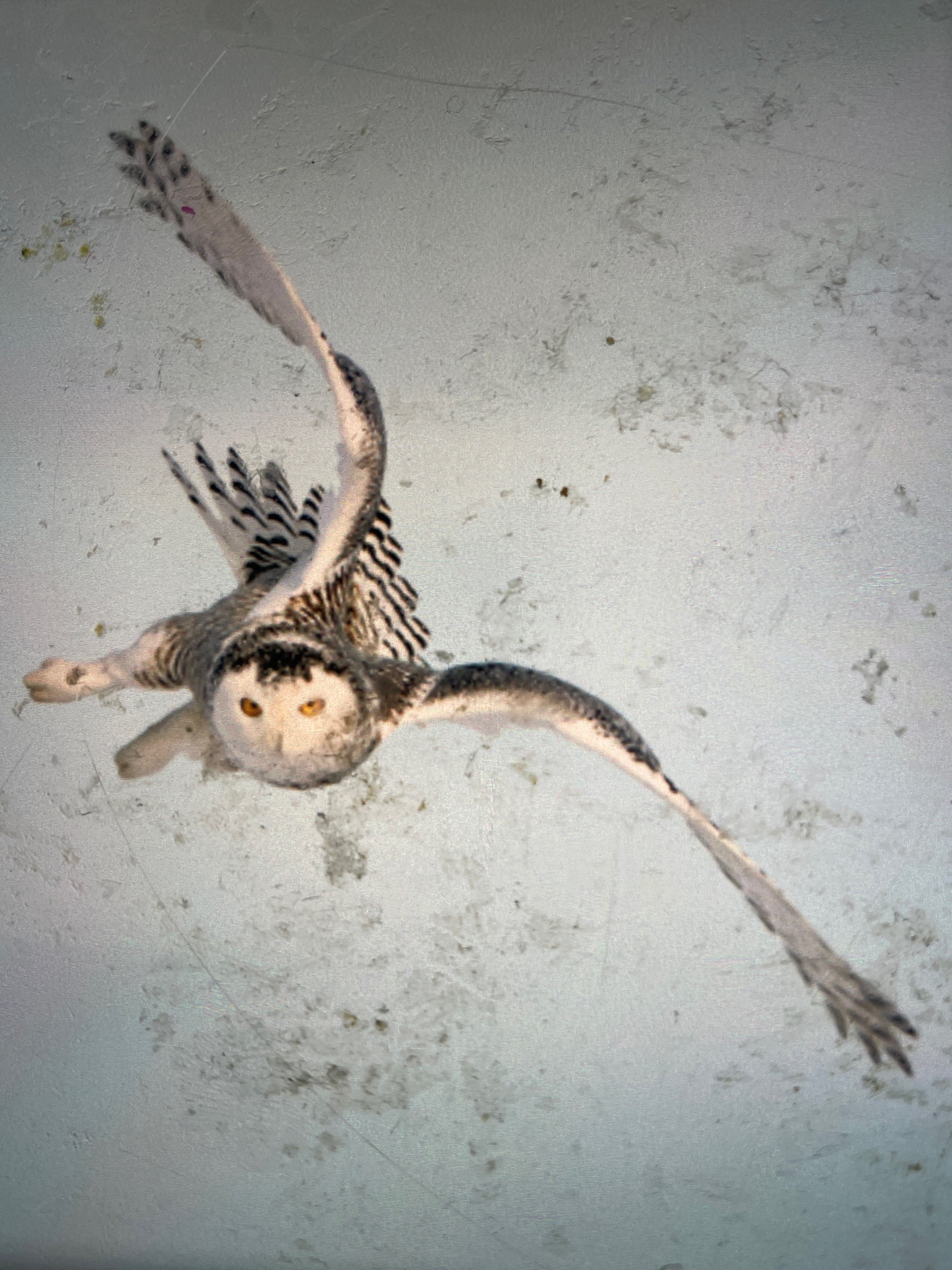
Brief Description
A large, white owl native to Arctic regions of North America and Eurasia, easily recognized by its white plumage and bright yellow eyes.
Characteristics
Large size with a smooth, rounded head lacking ear tufts. Adult males are almost pure white, while females and juveniles have dark brown barring or spotting. They have brilliant yellow eyes and heavily feathered feet for insulation.
Habitat
Arctic tundra during breeding season; during winter, they move south to open habitats like prairies, fields, shorelines, and airports that mimic the flat tundra.
When to Find It
Diurnal (active during the day), especially during the continuous daylight of the Arctic summer. Observed in southern latitudes primarily in winter.
Conservation Status
Vulnerable
Ecological Role
Apex predator in the tundra ecosystem, playing a critical role in controlling lemming and vole populations. Their breeding success is closely tied to prey availability.
Easily Confused With
Barn Owls are smaller and heart-faced; Gyrfalcons share the habitat and color but have pointed wings and dark eyes. The Snowy Owl's round head and yellow eyes are diagnostic.
Observation Tips
Look for them sitting on the ground or low perches in wide-open areas. Use binoculars to scan for what looks like a 'white lump' of snow. Maintain a respectful distance to avoid stressing the bird during winter survival.
Interesting Facts
Unlike most owls that are nocturnal, Snowy Owls are diurnal. An adult Snowy Owl can eat more than 1,600 lemmings in a single year.