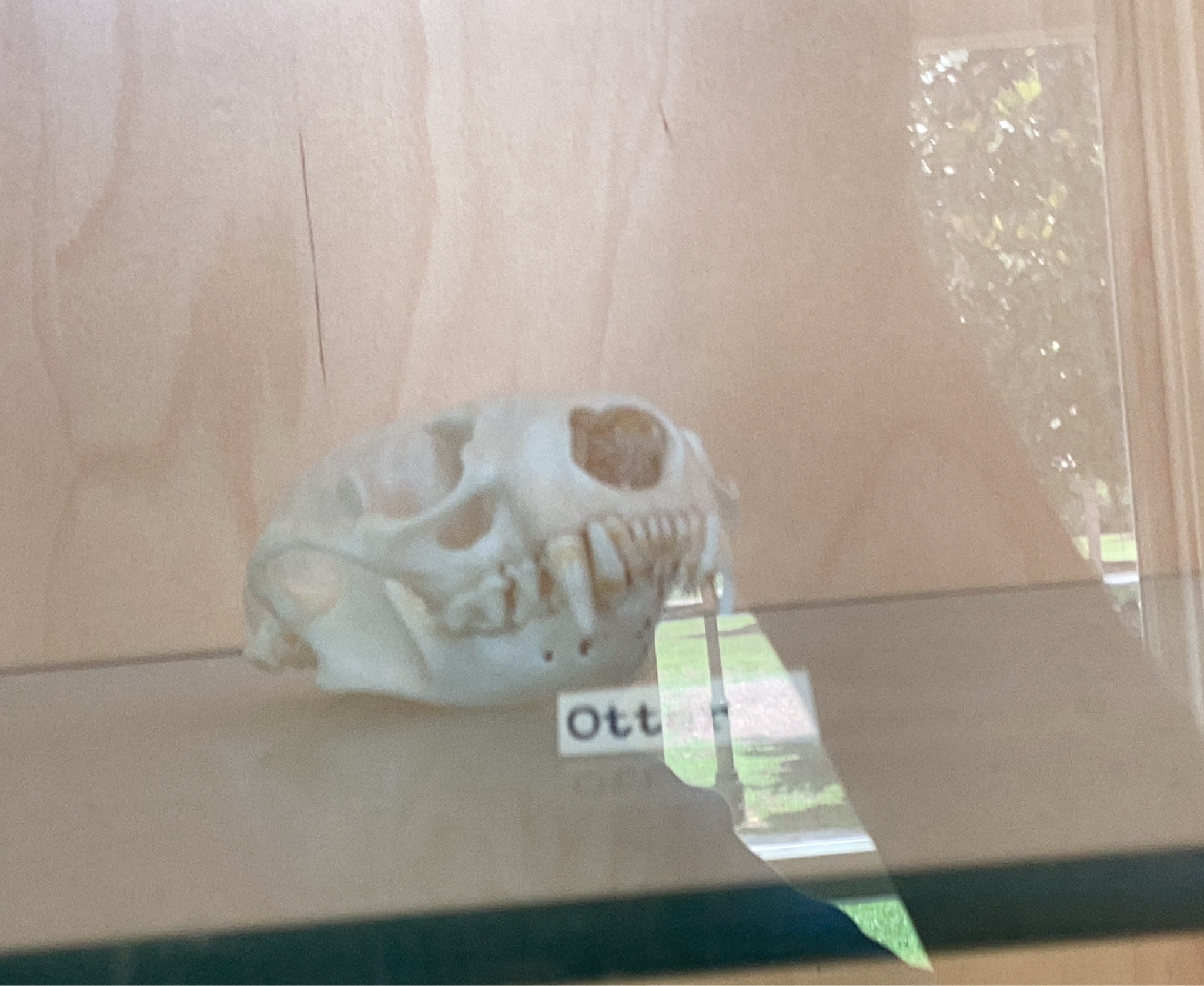
River Otter Skull
Scientific Name: Lontra canadensis
Category: mammal
Brief Description
The skull of a semi-aquatic carnivorous mammal belonging to the mustelid family, adapted for hunting fish and aquatic prey.
Characteristics
Characterized by a flattened, streamlined skull profile, short robust snout, relatively large eye sockets, and powerful jaws equipped with sharp canine teeth and specialized carnassial molars for shearing flesh.
Habitat
Found near freshwater and marine aquatic environments, including rivers, lakes, marshes, and coastal shorelines.
When to Find It
N/A
Conservation Status
Least Concern
Ecological Role
As apex or near-apex predators in aquatic ecosystems, river otters help maintain healthy fish populations and indicate good overall water quality.
Easily Confused With
Skulls of other mustelids such as minks, badgers, or small canids like foxes, distinguished by specific dental formulas, cranial proportions, and palatal shapes.
Observation Tips
Often found in museums, nature centers, or educational displays; in the wild, look for tracks, slides, and scat near water bodies.
Interesting Facts
River otters have extremely dense fur to keep warm in cold water and possess whiskers that help them detect prey in murky aquatic environments.