Eastern Cottonwood leaf
Scientific Name: Populus deltoides
Category: tree
Brief Description
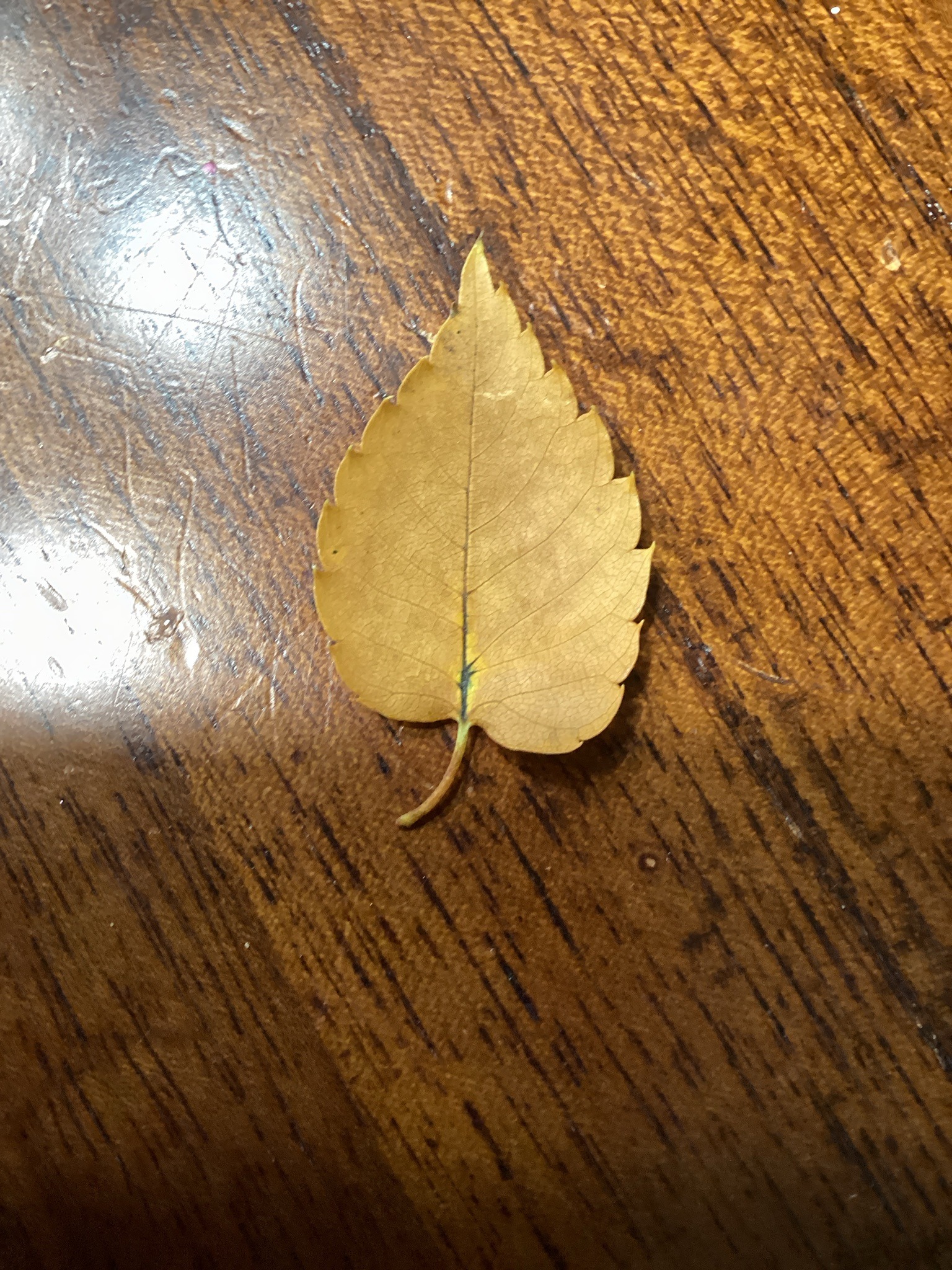
A single yellow autumn leaf with a distinctly triangular or deltoid shape, pointed tip, and flattened petiole.
Characteristics
Leaves are deltoid (triangle-shaped) to broadly ovate, typically 5 to 10 cm long, with coarsely crenate-serrate margins, an acuminate tip, and a flattened stem (petiole) that causes the leaf to flutter in the slightest breeze.
Habitat
Riparian zones, along streams, rivers, floodplains, and damp lowlands.
When to Find It
Leaves turn bright yellow in autumn (September to November) before dropping.
Conservation Status
Least Concern
Ecological Role
Provides food and cover for various wildlife, stabilizes riverbanks, and creates nesting sites for birds like the bald eagle.
Easily Confused With
Other poplar species such as Black Poplar (Populus nigra) or Balsam Poplar (Populus balsamifera), distinguished by petiole shape and leaf base contours.
Observation Tips
Look near bodies of water or low-lying moist areas during autumn for fallen yellow triangular leaves.
Interesting Facts
Eastern cottonwood is one of the largest broadleaf trees in North America and produces copious cottony seed masses in the spring.