Bald Eagle
Scientific Name: Haliaeetus leucocephalus
Category: bird
Brief Description
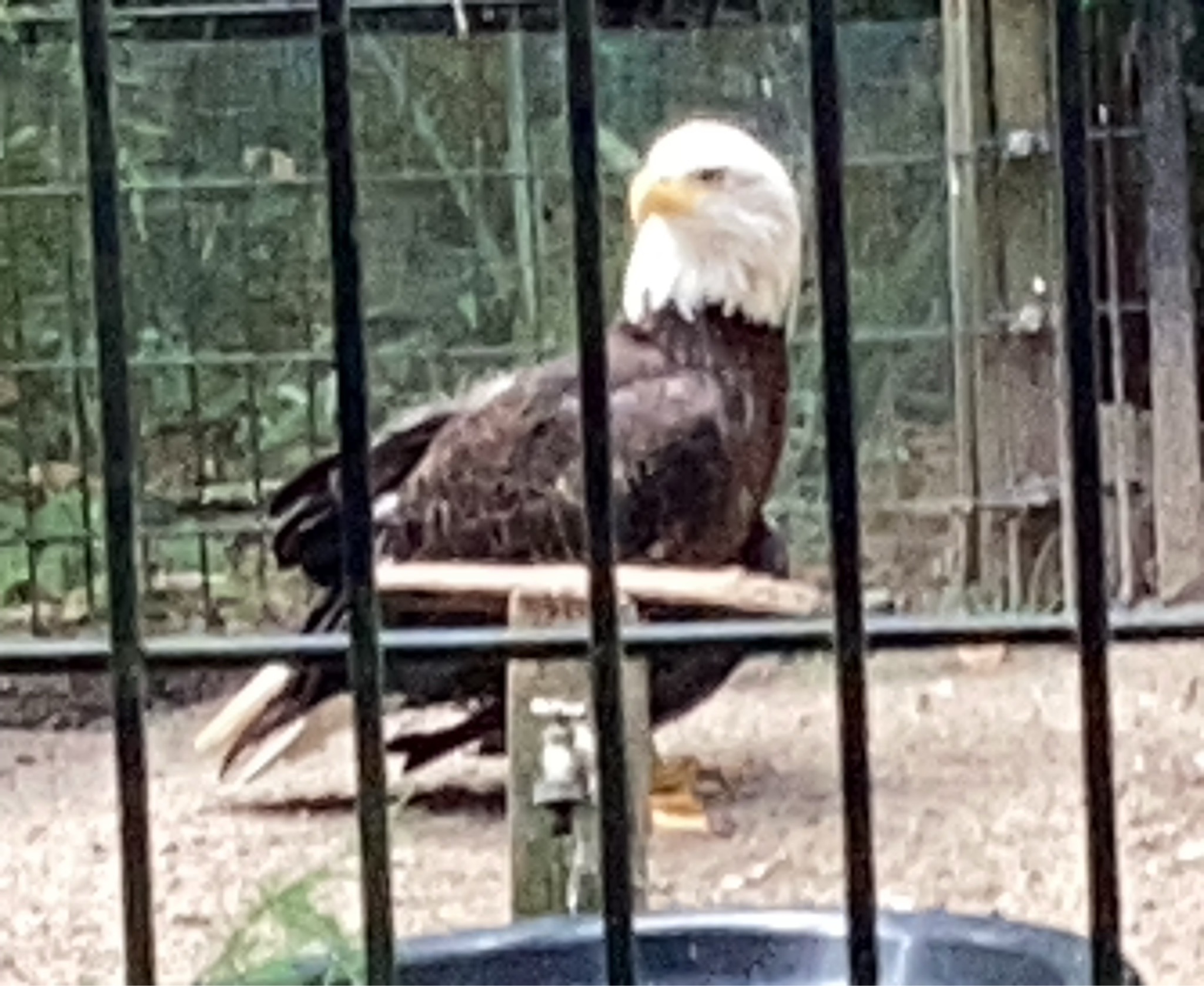
A large North American bird of prey, easily recognized by its distinctive white head and tail contrasting with a dark brown body.
Characteristics
Adults have a bright white head and tail, dark brown body, and bright yellow hooked bill, eyes, and feet. Juveniles are mostly brown with mottled white patches until they reach maturity around four to five years of age.
Habitat
Found near large bodies of open water with an abundant food supply and old-growth trees for nesting, such as lakes, reservoirs, rivers, and coastal areas.
When to Find It
Year-round resident in many parts of its range, though northern populations migrate south for the winter when waters freeze.
Conservation Status
Least Concern, having recovered significantly from near-extinction due to the ban on DDT.
Ecological Role
As an apex predator, it plays a crucial role in maintaining the balance of aquatic and terrestrial ecosystems by preying on fish, waterfowl, and scavenging carrion.
Easily Confused With
Golden Eagle (Haliaeetus leucocephalus juveniles can look similar, but Golden Eagles have fully feathered legs and lack the pure white head/tail of adult Bald Eagles).
Observation Tips
Look near water sources perched high in tall trees. Bring binoculars or a spotting scope to avoid disturbing them.
Interesting Facts
Female bald eagles are noticeably larger than males. Their nests can be massive, sometimes weighing over a ton and reused for many years.