Emerald Tree Boa
Scientific Name: Corallus caninus
Category: reptile
Brief Description
A non-venomous constrictor snake known for its vibrant green coloration and nocturnal, arboreal lifestyle in the rainforest.
Characteristics
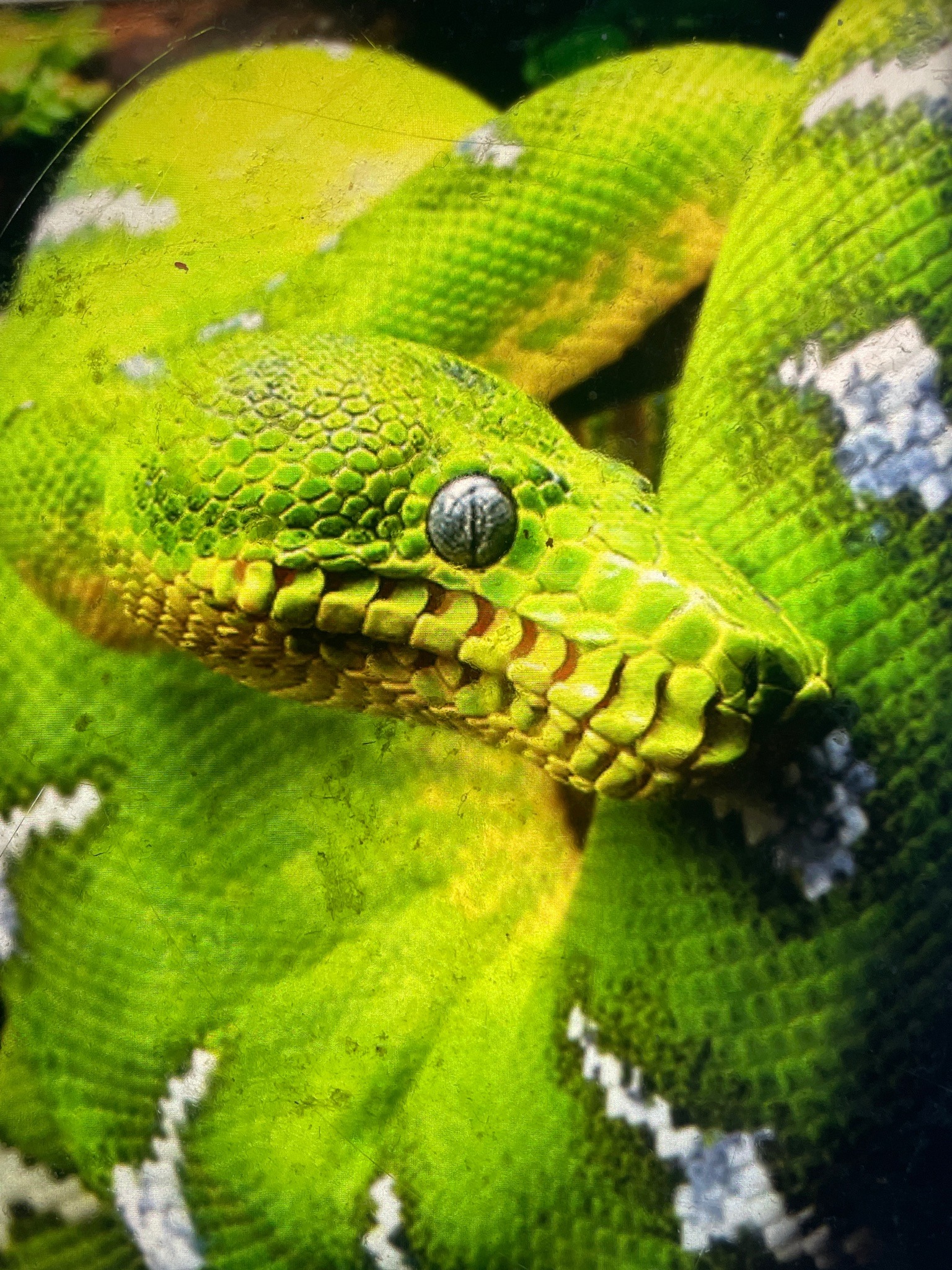
Striking emerald green body with white zigzag or 'lightning' patterns along the back. It has a large, blunt head with highly visible heat-sensing pits on the labial scales (around the mouth) and exceptionally long front teeth for gripping prey through feathers/fur. It often rests in a characteristic coil over a branch.
Habitat
Primary and secondary lowland rainforests, typically found high in the canopy or perched on branches overhanging water.
When to Find It
N/A - found year-round in tropical climates; primarily nocturnal.
Conservation Status
Least Concern (IUCN), but threatened by habitat loss and the illegal pet trade.
Ecological Role
An important predator in the rainforest canopy, controlling populations of small mammals, birds, and occasionally lizards.
Easily Confused With
Green Tree Python (Morelia viridis). They look nearly identical but can be distinguished by the location of their heat pits: Emerald Tree Boas have pits located in the scales around the mouth (labial), while Green Tree Pythons only have them on the lower labial scales and rostral area. Their geographic ranges also never overlap.
Observation Tips
Look for the distinctive 'saddle' coil where the snake loops its body over a single branch with its head tucked in the center. They are most active and easier to spot at night using a flashlight to catch eyeshine.
Interesting Facts
Despite their similar appearance to the Green Tree Python of Australia/New Guinea, they are not closely related; they are a classic example of convergent evolution. Juveniles are born brick-red or orange and change to green as they mature.