Northern Cottonmouth
Scientific Name: Agkistrodon piscivorus
Category: reptile
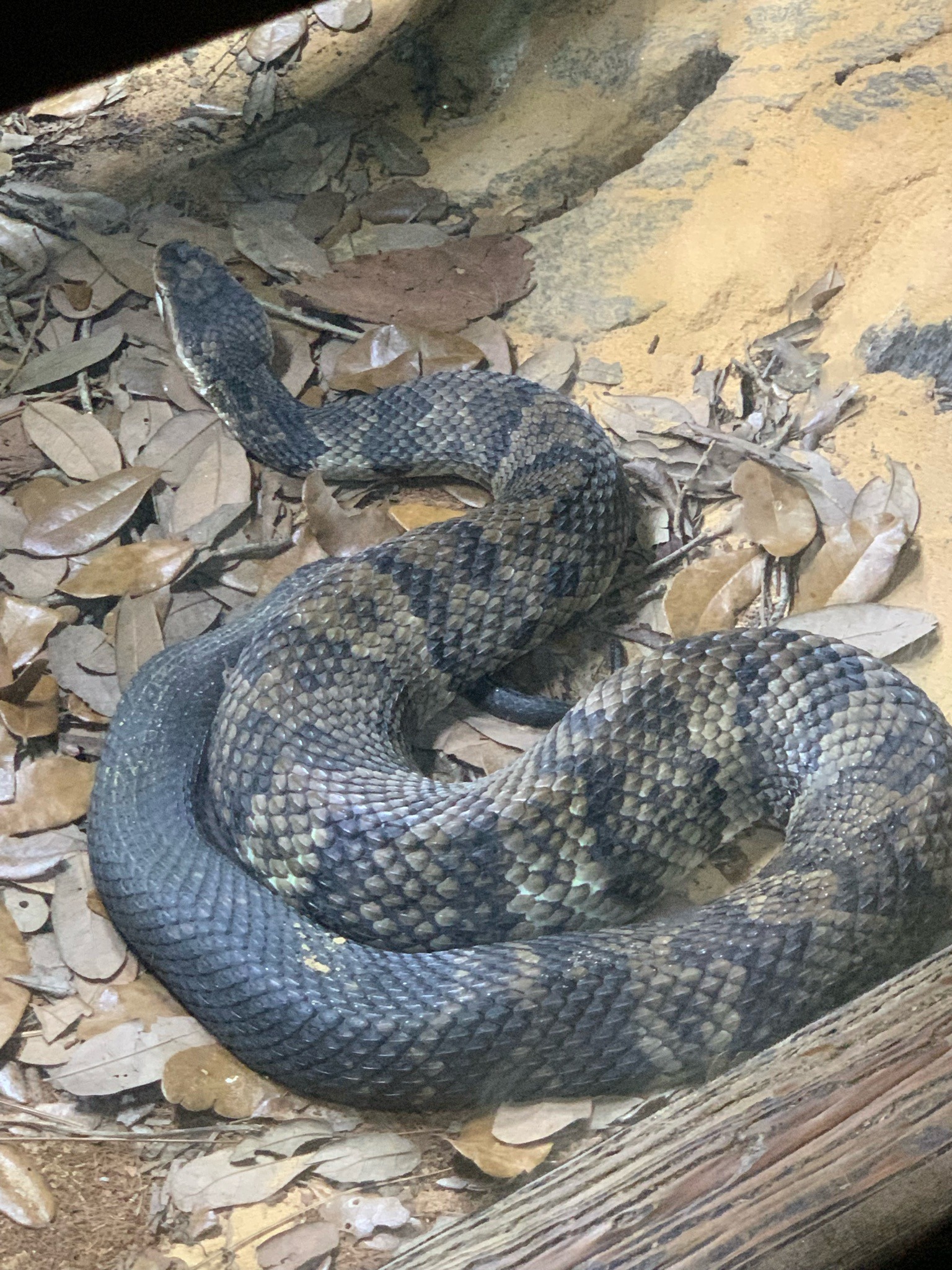
Brief Description
A large, heavy-bodied venomous pit viper often found in or near water. It is known for its defensive display of opening its mouth to show a white 'cottony' interior.
Characteristics
Thick body, keeled scales, and a triangular-shaped head with a dark stripe through the eye. Coloration is typically dark brown or black with crossbands that often fade with age. Juveniles are more brightly patterned with a yellow tail tip.
Habitat
Semiaquatic environments including swamps, marshes, drainage ditches, and the edges of ponds or slow-moving streams. Found throughout the Southeastern United States from Virginia to Texas and up the Mississippi River valley.
When to Find It
Diurnal in spring and fall; becomes nocturnal during the hot summer months. Brumates in winter.
Conservation Status
Least Concern
Ecological Role
Apex predator in wetland ecosystems, controlling populations of fish, amphibians, rodents, and other snakes.
Easily Confused With
Common Watersnakes (Nerodia species) which lack the heat-sensing pits and have round pupils rather than vertical ones. Copperheads have a distinct hourglass pattern and are usually lighter in color.
Observation Tips
Observe from a distance. If the snake coils and opens its white mouth, it is feelng threatened. Do not attempt to handle or relocate without professional assistance. Use a telephoto lens for photography.
Interesting Facts
It is the world's only semiaquatic viper. They are excellent swimmers and can bite even when underwater. Their venom is hemotoxic, causing tissue damage.