White Campion
Scientific Name: Silene latifolia
Category: plant
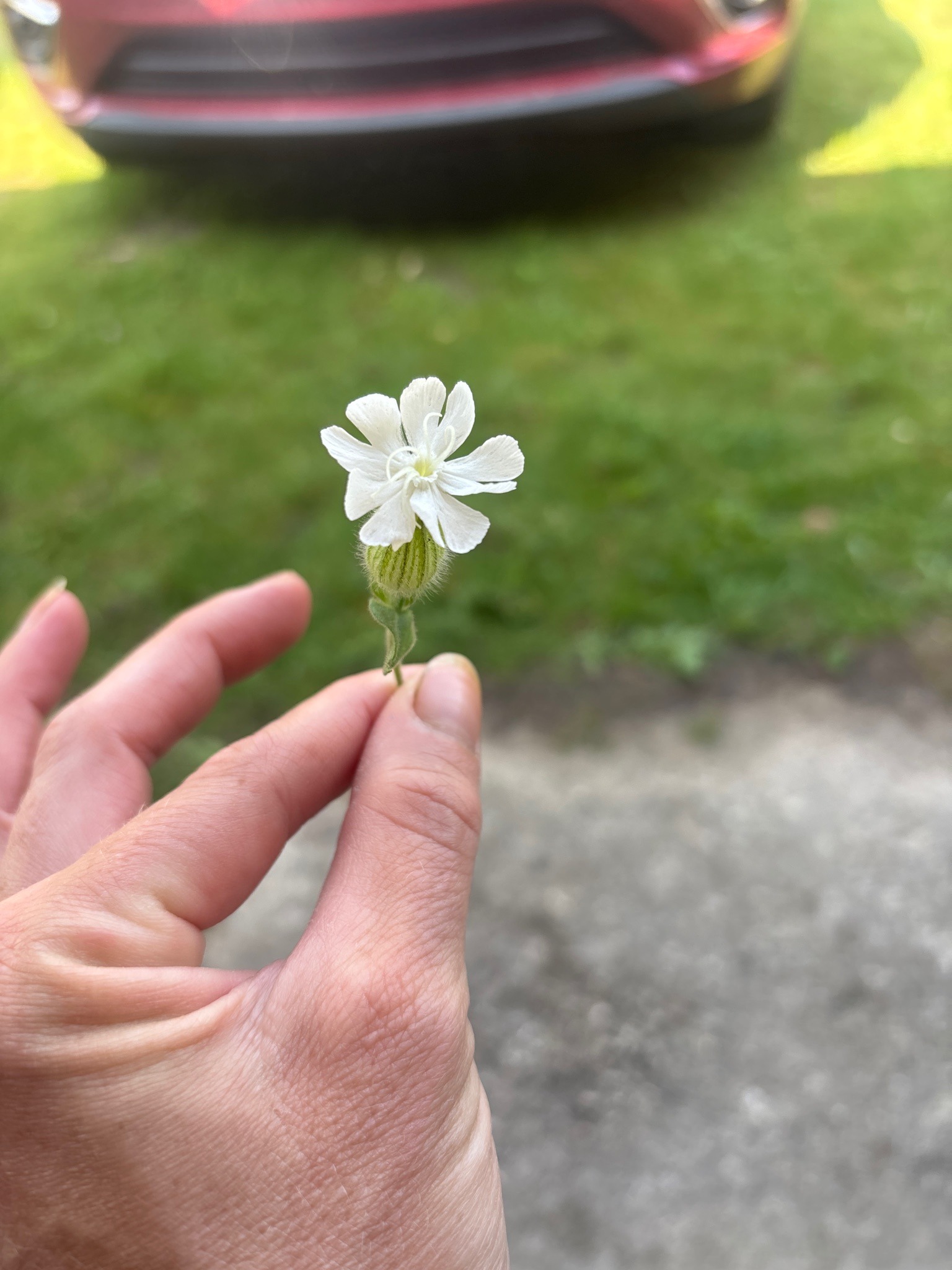
Brief Description
A herbaceous perennial or biennial plant with striking white flowers that open in the evening and a swollen, hairy calyx.
Characteristics
Features five deeply notched or bilobed white petals, a distinct tubular green calyx with noticeable veining and glandular hairs, and opposite lance-shaped leaves on branching stems.
Habitat
Commonly found in disturbed soils, roadsides, fields, agricultural margins, and waste areas.
When to Find It
Blooms from late spring through autumn, typically opening wider in the evening to attract nocturnal pollinators.
Conservation Status
Least Concern, widely naturalized and abundant in many temperate regions.
Ecological Role
Provides nectar for a variety of pollinators, particularly nocturnal moths such as the campion moth, and serves as a host plant for specialized herbivores.
Easily Confused With
Red Campion (Silene dioica), which has pinkish-red flowers, though they can occasionally hybridize resulting in intermediate pink-flowered forms.
Observation Tips
Look along roadsides or field edges during late afternoon or evening when the white blossoms are fully open and fragrant.
Interesting Facts
White campion flowers are dioecious, meaning individual plants bear either entirely male or entirely female flowers. They are also known to emit a sweet fragrance at dusk to guide nocturnal pollinators.