American Pokeweed
Scientific Name: Phytolacca americana
Category: plant
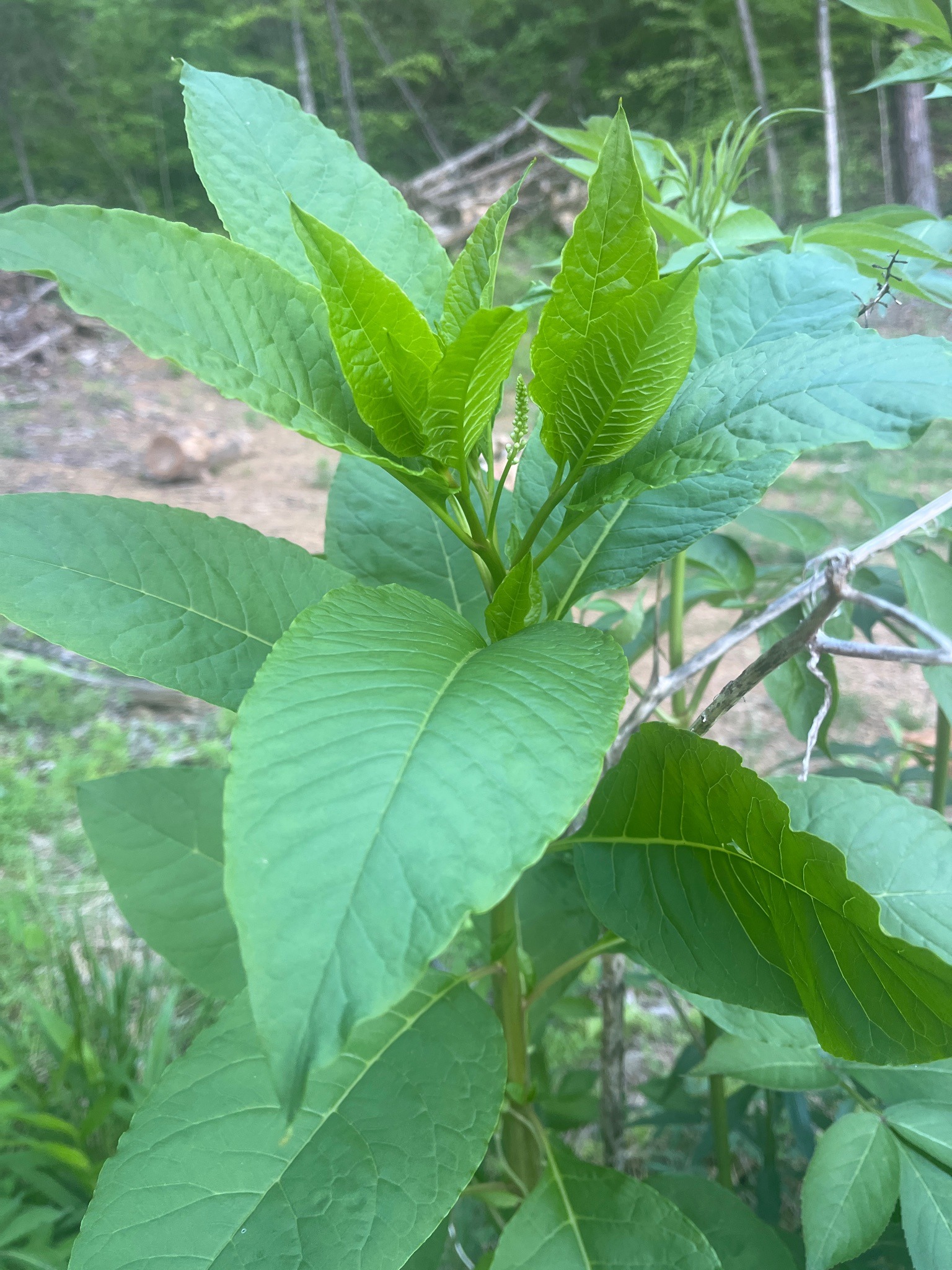
Brief Description
A large, herbaceous perennial plant known for its poisonous properties and dark purple berries.
Characteristics
Features large, alternating green leaves with smooth edges, reddish-purple stems when mature, and clusters of small white/green flowers that develop into dark purple-black berries.
Habitat
Disturbed areas, forest edges, pastures, and garden borders throughout North America.
When to Find It
Grows throughout the spring and summer, with berries ripening in late summer and autumn.
Conservation Status
Common / N/A
Ecological Role
Provides a significant food source for birds, such as mockingbirds and cedar waxwings, which spread its seeds without being harmed by the toxins.
Easily Confused With
Often confused with Japanese Knotweed or Elderberry; it is distinguished by its distinct fleshy, magenta-red stems and drooping racemes of berries.
Observation Tips
Wear gloves if handling, as all parts of the plant are toxic. Observe the unique color transition of the stems as they mature.
Interesting Facts
While highly toxic to humans and mammals if raw, it was historically used as a source of ink and dye; 'poke' is derived from a Native American word for 'blood' or 'red dye'.