Giant Green Anemone
Scientific Name: Anthopleura xanthogrammica
Category: other
Brief Description
A large, solitary sea anemone common to the Pacific coast tide pools, known for its vibrant green or reddish-brown color and stocky column.
Characteristics
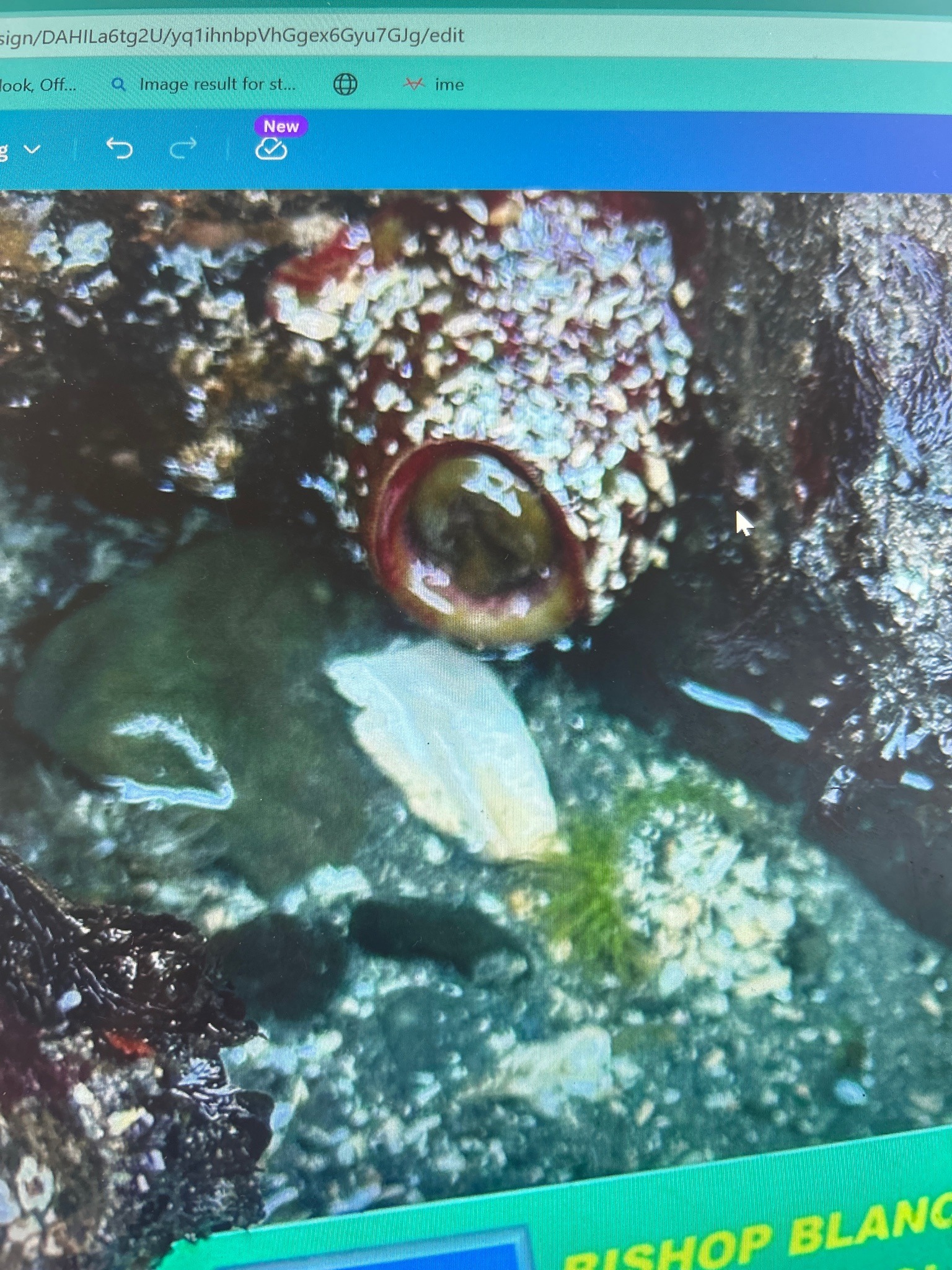
Large cylindrical column covered in sticky protuberances (verrucae) that often hold bits of shell and sand. It has numerous short, thick tentacles surrounding a central mouth. While usually green due to symbiotic algae, individuals in dark areas may appear white or brown.
Habitat
Intertidal and subtidal zones on rocky shores, often in areas with strong wave action or shaded crevices.
When to Find It
Visible year-round, best observed during low tides.
Conservation Status
N/A
Ecological Role
A major predator in tide pool ecosystems, consuming mussels, crabs, and sea urchins. It also hosts symbiotic algae and dinoflagellates that provide it with nutrients through photosynthesis.
Easily Confused With
Sunburst Anemone (Anthopleura sola) which is usually smaller and has radiating lines on the oral disc, or the Aggregating Anemone (Anthopleura elegantissima) which is much smaller and clones itself to form dense colonies.
Observation Tips
Look for them in deep tide pools or shaded rock faces. Avoid touching the tentacles as they contain stinging cells (nematocysts) which, while generally harmless to human skin, can cause irritation or harm the animal.
Interesting Facts
The vibrant green color comes from a combination of the animal's natural pigments and zoochlorellae (green algae) and zooxanthellae (dinoflagellates) living within its tissues. A chemical found in this anemone is used as a heart stimulant in medical research.
User Notes
Puget Sound