Tobacco Plant
Scientific Name: Nicotiana tabacum
Category: plant
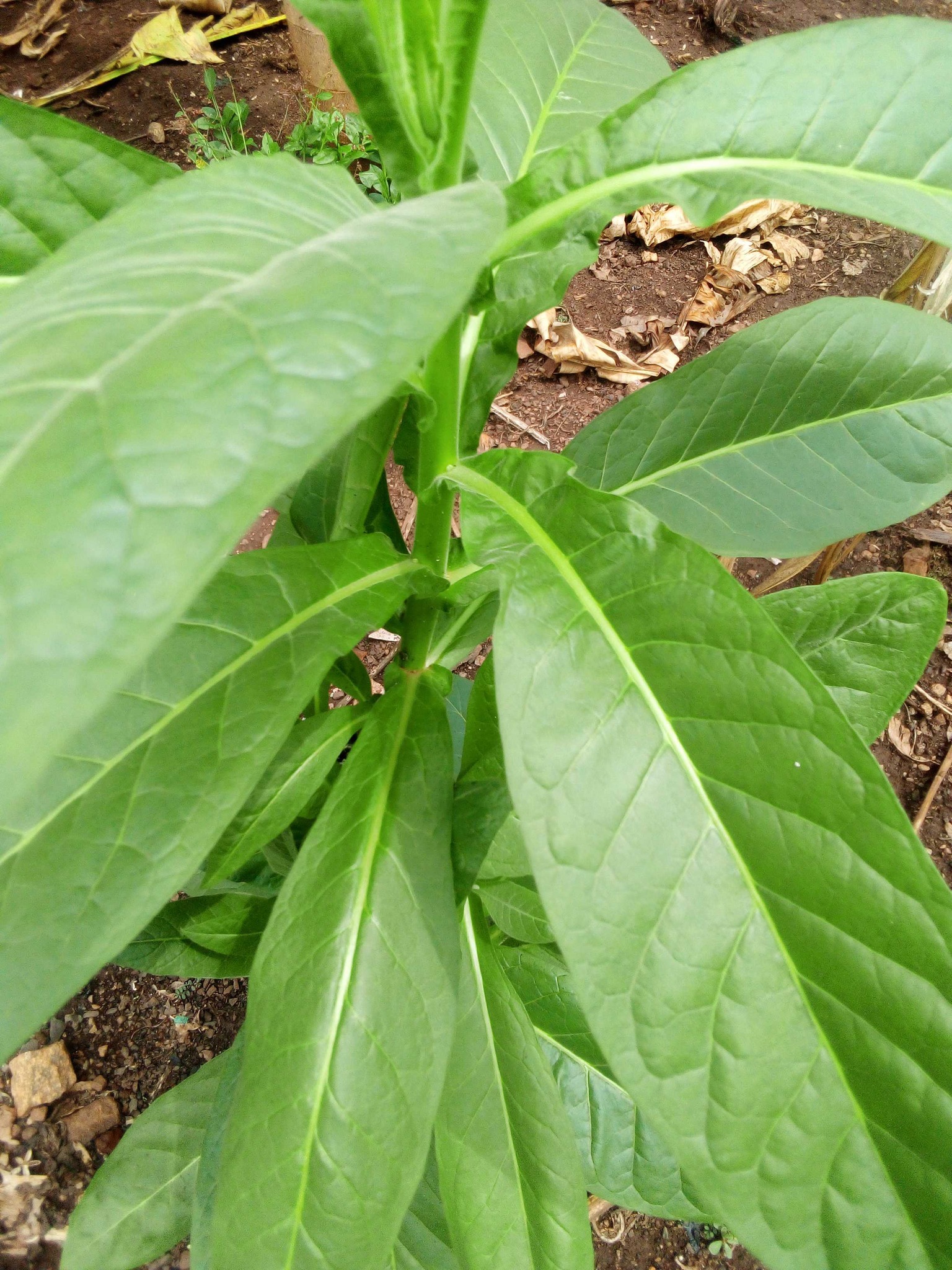
Brief Description
A broad-leaved herbaceous plant belonging to the nightshade family, known for its large leaves and prominent central stem.
Characteristics
Features large, simple, alternate leaves with sticky, glandular hairs, prominent pale veins, and a stout central stem. The leaves are typically oblong to lanceolate and can grow quite large.
Habitat
Cultivated globally in warm, temperate to tropical climates in well-drained, fertile soils; rarely found truly wild.
When to Find It
Grown as an annual crop, planted in spring and harvested in summer to autumn depending on the region.
Conservation Status
N/A
Ecological Role
Acts as a host plant for specific insect species, though its high nicotine content serves as a natural deterrent against many herbivores.
Easily Confused With
Can be confused with other large-leaved Solanaceae members like mullein or certain datura species, distinguished by its sticky glandular foliage and specific floral structures when blooming.
Observation Tips
Observe in agricultural fields or botanical gardens during daylight; avoid handling wild specimens without protection due to potential toxicity and nicotine absorption through the skin.
Interesting Facts
Nicotine acts as a natural neurotoxin that protects the plant from being eaten by insects. It has a long history of cultivation by indigenous peoples in the Americas long before European contact.