Willow branch
Scientific Name: Salix sp.
Category: tree
Brief Description
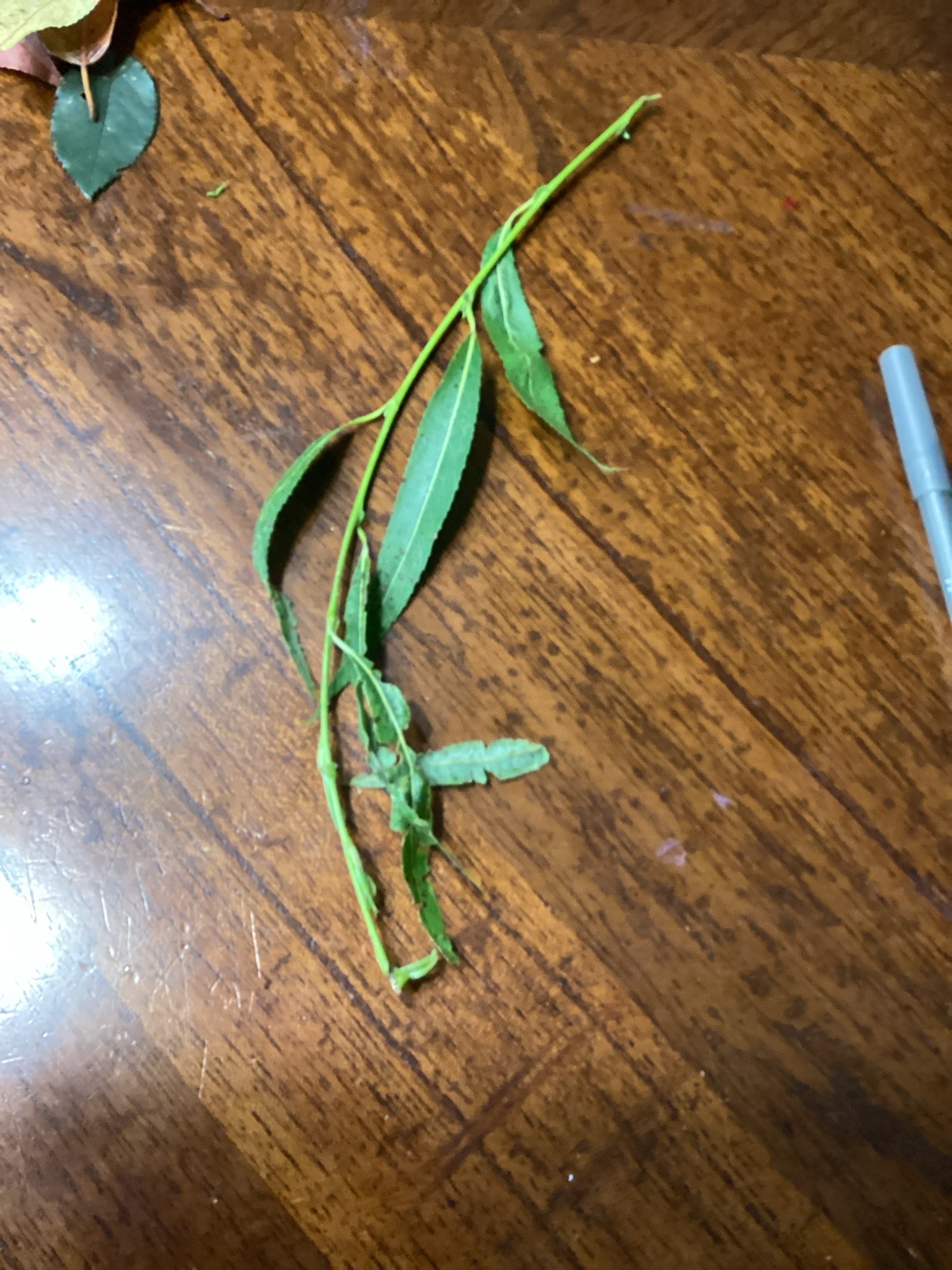
A slender green branch featuring alternate, narrow lanceolate leaves characteristic of willow species.
Characteristics
Flexible, slender stems with simple, alternate leaves that are typically long and narrow with finely toothed margins. The bark on young stems is smooth and pliable.
Habitat
Typically found near water sources such as rivers, streams, lakes, and wetlands, as well as moist lowland soils.
When to Find It
Spring and summer foliage is lush and green; winter features bare branches with distinct buds.
Conservation Status
N/A
Ecological Role
Willows stabilize riverbanks, prevent erosion, provide critical early-season nectar for pollinators, and offer habitat and food for numerous insects, birds, and mammals.
Easily Confused With
Other narrow-leaved trees such as certain poplars or water birch, distinguished by bud structure, bark texture, and exact leaf margins.
Observation Tips
Look near water bodies or damp soils. Observe the flexible stems and distinct narrow leaves.
Interesting Facts
Willow bark contains salicin, which has been used historically for centuries as a natural pain reliever and is the precursor to modern aspirin.