Common Dandelion
Scientific Name: Taraxacum officinale
Category: plant
Brief Description
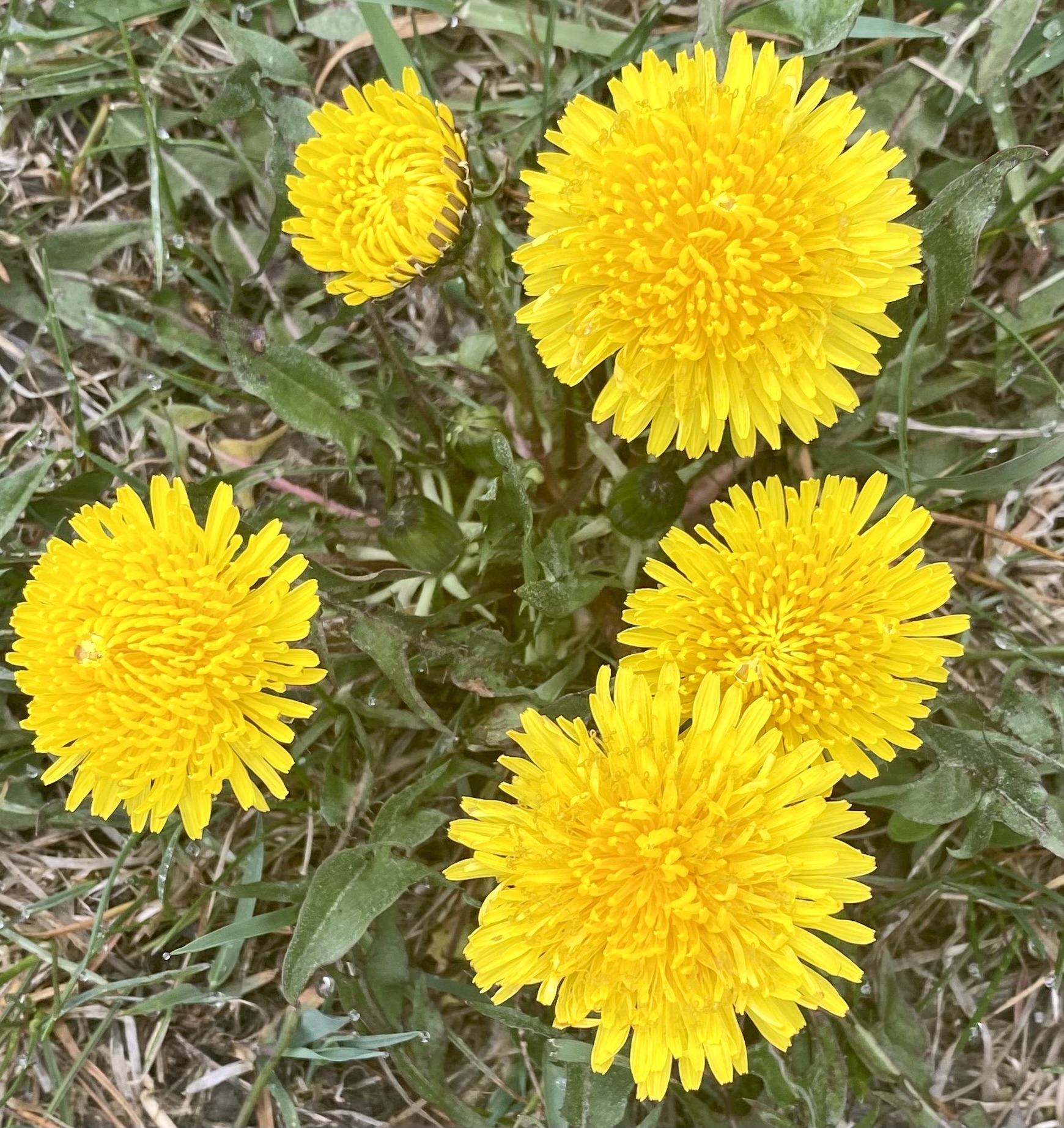
A common, hardy perennial herb known for its bright yellow flowers that eventually turn into white, fluffy seed heads.
Characteristics
Rosette of deeply notched, tooth-like basal leaves; hollow, leafless flower stalks containing milky sap; bright yellow composite flower heads composed entirely of ray florets.
Habitat
Lawns, gardens, roadsides, pastures, and disturbed areas.
When to Find It
Flowers primarily in spring (peak in May) and autumn, though can bloom year-round in mild climates. Flowers open in morning sun and close at night.
Conservation Status
Common / Secure
Ecological Role
Provides an important early-season nectar and pollen source for pollinators like bees and hoverflies; serves as a food plant for several butterfly larvae.
Easily Confused With
Catsear (Hypochaeris radicata) which has branched, solid stems and hairy leaves; Coltsfoot (Tussilago farfara) which flowers before its leaves appear.
Observation Tips
Look for them in sunny open areas; avoid picking samples from areas treated with herbicides or heavy traffic pollution.
Interesting Facts
The name 'dandelion' comes from the French 'dent-de-lion', meaning 'lion's tooth', referring to the jagged leaves. Every part of the plant is edible and has been used historically for medicinal and culinary purposes.
User Notes
Head Lake, May 19, 2026