Pacific Littleneck Clam
Scientific Name: Leukoma staminea
Category: shell
Brief Description
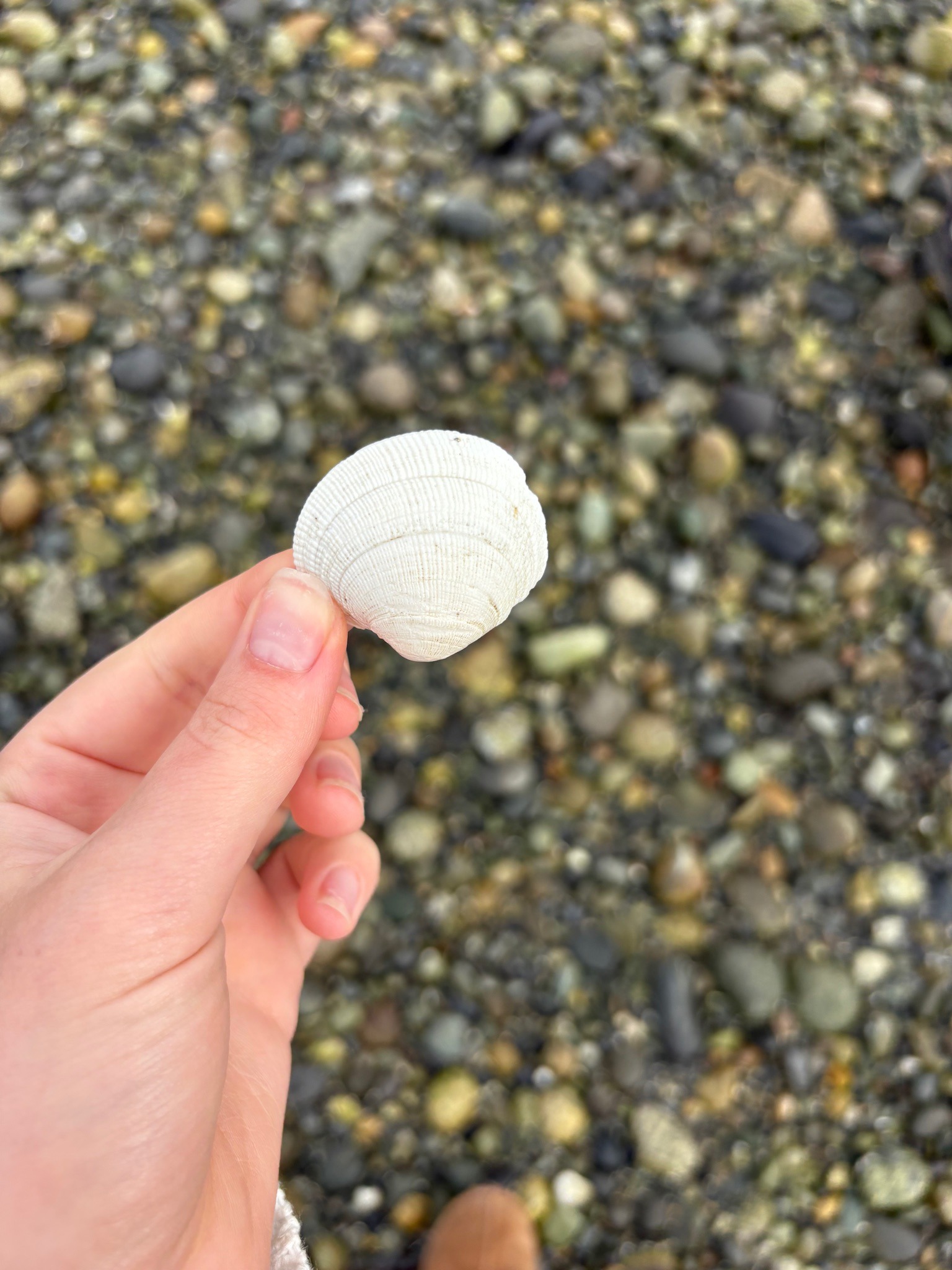
A common marine bivalve mollusk shell found on West Coast beaches, characterized by its rounded shape and distinct radiating ribs.
Characteristics
Oval to round shell shape with prominent radiating radial ribs and less prominent concentric growth lines, creating a lattice-like texture. Usually white, yellowish, or gray.
Habitat
Intertidal zone of bays and estuaries, buried in gravel, sandy mud, or firm clay.
When to Find It
Available year-round, best observed or harvested during low tides.
Conservation Status
Generally common; managed by state wildlife agencies for sustainable harvest.
Ecological Role
Filter feeders that help maintain water quality and serve as a vital food source for crabs, sea stars, shorebirds, and sea otters.
Easily Confused With
Manila Clam (Venerupis philippinarum), which is more elongated and often has dark geometric patterns; and the Butter Clam (Saxidomus giganteus), which is larger and lacks the radial ribs.
Observation Tips
Look for them buried a few inches deep in pebble-rich beaches at low tide. Check local harvesting regulations and biotoxin status if planning to collect live specimens.
Interesting Facts
These clams can live for over 10 years and are also known as 'rock clams' or 'native littlenecks' because they are indigenous to the North American Pacific coast.
User Notes
Found on a washington state beach