Serviceberry
Scientific Name: Amelanchier spp.
Category: tree
Brief Description
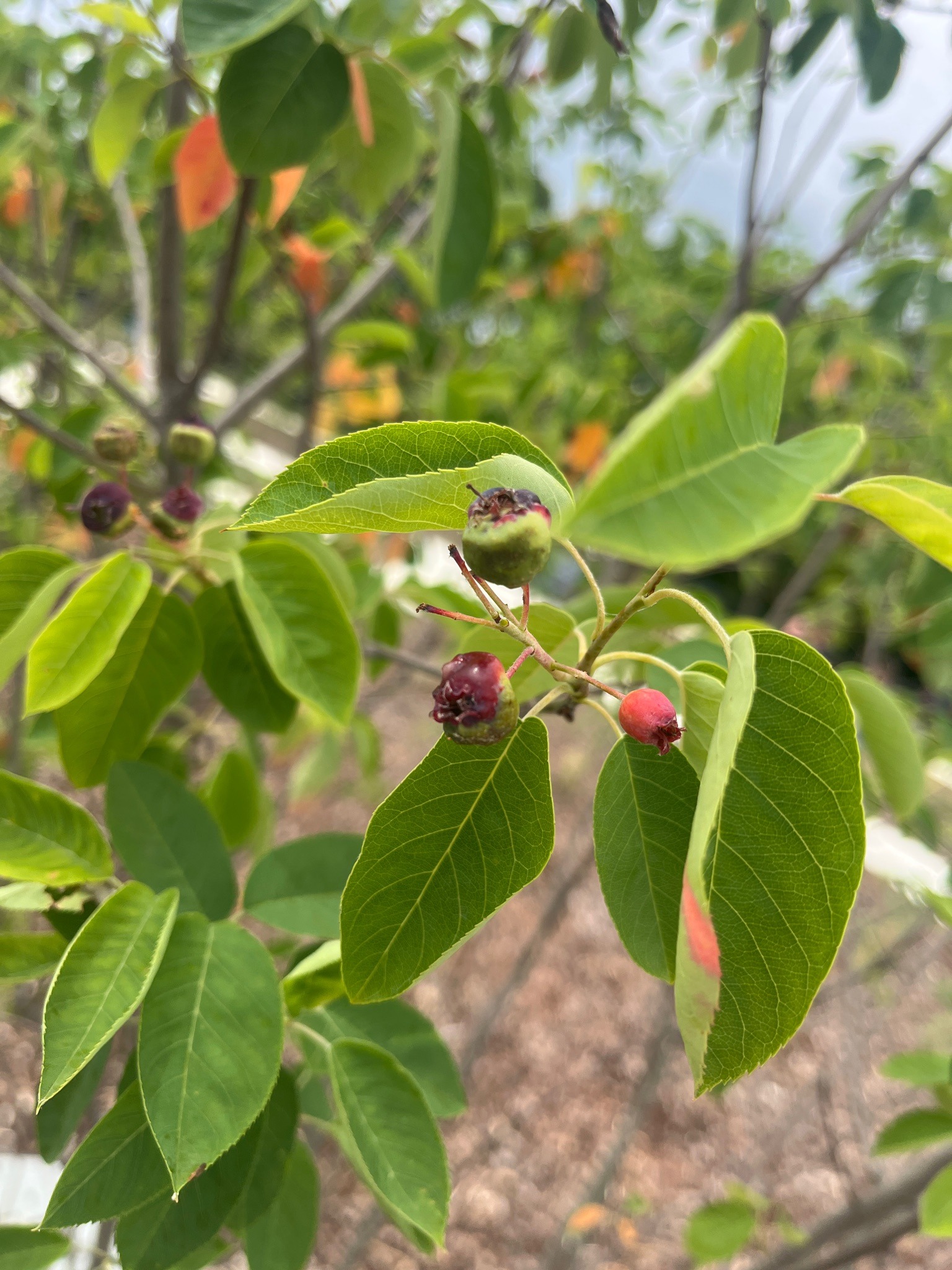
A deciduous shrub or small tree known for its edible berries that look like small apples and turn from green to red to purplish-black.
Characteristics
Oval-shaped leaves with finely serrated edges, often featuring a distinct point at the tip. The small pome fruits are clustered on stems and have a crown-like calyx at the bottom. Branches are often gray and smooth.
Habitat
Open woods, forest edges, rocky slopes, and common in urban landscaping.
When to Find It
Berries typically ripen in June or July (earning the name Juneberry). White flowers appear in early spring.
Conservation Status
Generally secure, though specific species may vary by region.
Ecological Role
Provides a vital early-summer food source for a wide variety of birds and mammals. The spring flowers are important for pollinators.
Easily Confused With
Blueberries (distinguished by different leaf shapes and lack of the 'pome' crown) or Chokecherries (which have smoother leaf margins and fruit in long racemes).
Observation Tips
Look for these in late June to find ripe fruit. The berries are often eaten by birds as soon as they turn red, so finding fully purple berries requires timing.
Interesting Facts
Serviceberries are closely related to apples and pears. They are also known as Juneberries, Saskatoon berries, or shadbush because they bloom when the shad fish run in rivers.