Canary Island Date Palm
Scientific Name: Phoenix canariensis
Category: tree
Brief Description
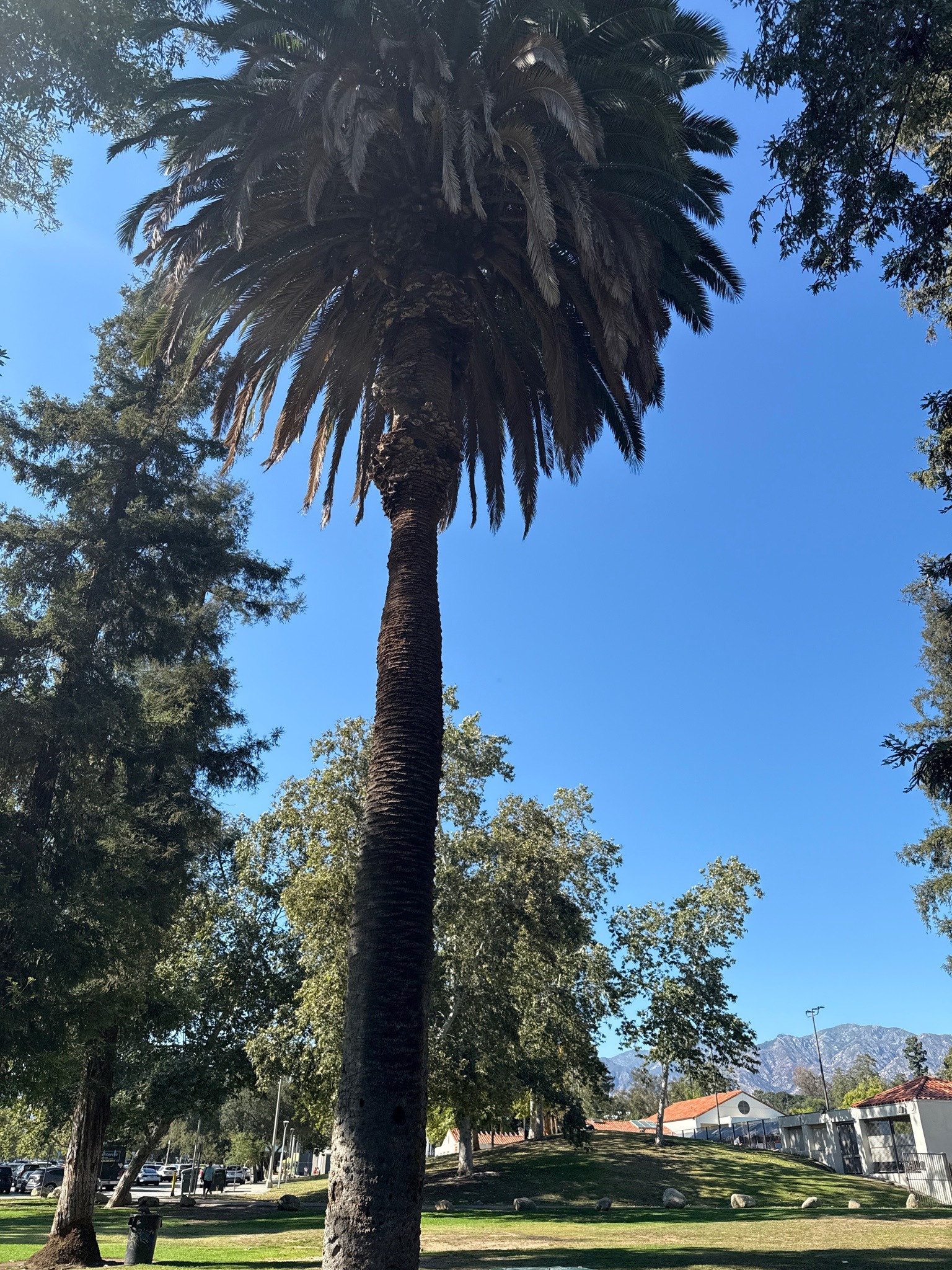
A large, iconic evergreen palm tree often used in landscaping for its majestic crown of pinnate leaves and thick, diamond-patterned trunk.
Characteristics
Features a massive trunk with a diamond-shaped pattern from old leaf bases. It has a dense, rounded crown of up to 100 long, arching green pinnate fronds. It can reach heights of 40 to 60 feet.
Habitat
Typically found in urban landscapes, parks, and coastal areas; native to the Canary Islands but widely naturalized in Mediterranean climates.
When to Find It
Green year-round. Small yellowish flowers appear in spring, followed by clusters of orange fruit in autumn.
Conservation Status
Least Concern
Ecological Role
Provides nesting sites for various bird species and serves as an important ornamental tree in many urban ecosystems.
Easily Confused With
True Date Palm (Phoenix dactylifera), which has a more slender trunk, fewer leaves, and edible fruit; Chilean Wine Palm (Jubaea chilensis), which has a much smoother, thicker trunk.
Observation Tips
Look for the distinctive 'pineapple' shape at the base of the crown where the leaves are pruned. Be cautious of the sharp spines located at the base of the leaf stems.
Interesting Facts
Despite its name and the production of dates, the fruit of the Canary Island Date Palm is generally considered inedible or very poor quality for humans, though birds and squirrels enjoy them.