Black Phoebe
Scientific Name: Sayornis nigricans
Category: bird
Brief Description
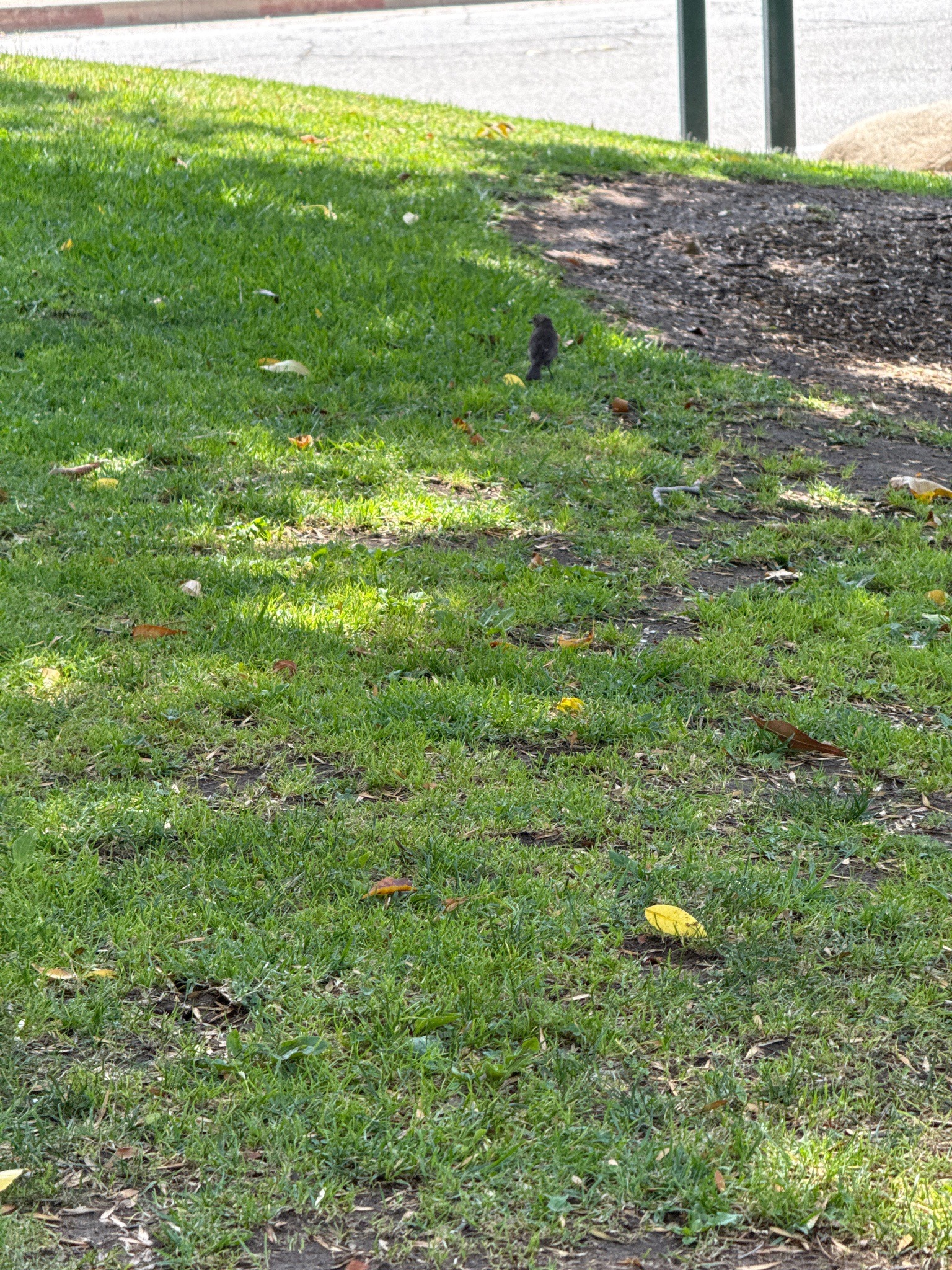
A small, slender flycatcher often seen perched near water or on open ground, recognizable by its soot-black plumage and white belly.
Characteristics
A small bird with a large head and a thin, pointed beak. It has mostly matte black or dark charcoal-grey feathers with a starkly contrasting white belly. It frequently pumps its tail up and down when perched.
Habitat
Found near water sources such as streams, ponds, or parks, as well as coastal cliffs and suburban backyards. Often seen in open areas with available perches.
When to Find It
Year-round resident throughout most of its range in the southwestern United States and Mexico.
Conservation Status
Least Concern
Ecological Role
As an insectivore, it plays a key role in controlling insect populations by catching flying insects mid-air or picking them off the ground.
Easily Confused With
Eastern Phoebe (browner, lacks deep black head), Say's Phoebe (cinnamon-colored belly), or Dark-eyed Junco (different shape, white outer tail feathers, and seed-eating beak).
Observation Tips
Look for them near edges of water. They are known for a 'sit-and-wait' hunting style, returning to the same low perch repeatedly. Listen for their sharp 'tsip' call and look for the characteristic tail-wagging.
Interesting Facts
Unlike most flycatchers that migrate, Black Phoebes are largely non-migratory and will stay in the same territory year-round as long as water is present. They build mud nests plastered to vertical surfaces like canyon walls or under the eaves of buildings.