Queen Anne's Lace
Scientific Name: Daucus carota
Category: plant
Brief Description
A common biennial wildflower in the carrot family, recognized by its flat-topped, lacy white flower clusters.
Characteristics
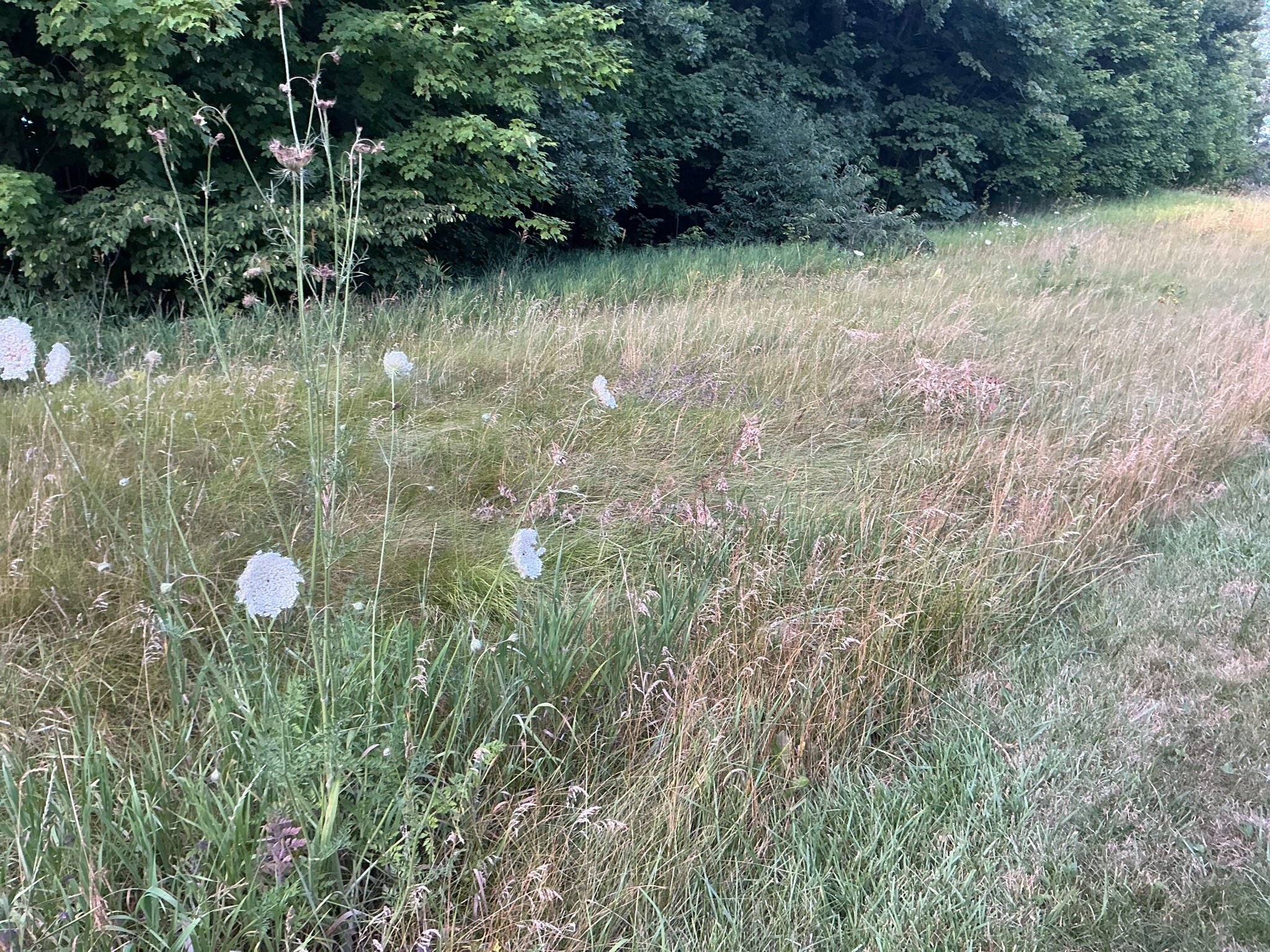
Fern-like, feathery leaves and hairy stems. The white flowers are arranged in a flat umbel, often with a single dark red or purple floret in the center. As the plant matures, the umbel curls inward, resembling a bird's nest.
Habitat
Found in meadows, pastures, roadsides, and waste areas. It thrives in sunny locations with well-drained soil.
When to Find It
Blooms from late spring through early fall. Flowers are most prominent in mid-summer.
Conservation Status
N/A - Considered a common weed or invasive species in many parts of North America.
Ecological Role
Provides a major nectar source for various pollinators, including bees, wasps, and butterflies. It is also the host plant for the caterpillars of the Black Swallowtail butterfly.
Easily Confused With
Water Hemlock (Cicuta maculata) and Poison Hemlock (Conium maculatum), both of which are extremely toxic. Queen Anne's Lace can be distinguished by its hairy stems, whereas hemlocks have smooth, often purple-spotted stems.
Observation Tips
Look for these in open fields and along roadsides. Use a magnifying glass to find the tiny dark floret in the center of the white flower cluster.
Interesting Facts
It is the wild ancestor of the domesticated garden carrot. The name 'Queen Anne's Lace' comes from a legend that the lace-like flower was handcrafted by Queen Anne of England, who pricked her finger, leaving a drop of blood in the center (represented by the red floret).
User Notes
Identify