Compound Tunicate (Sea Squirt)
Scientific Name: Botryllus schlosseri (or similar colonial ascidian)
Category: other
Brief Description
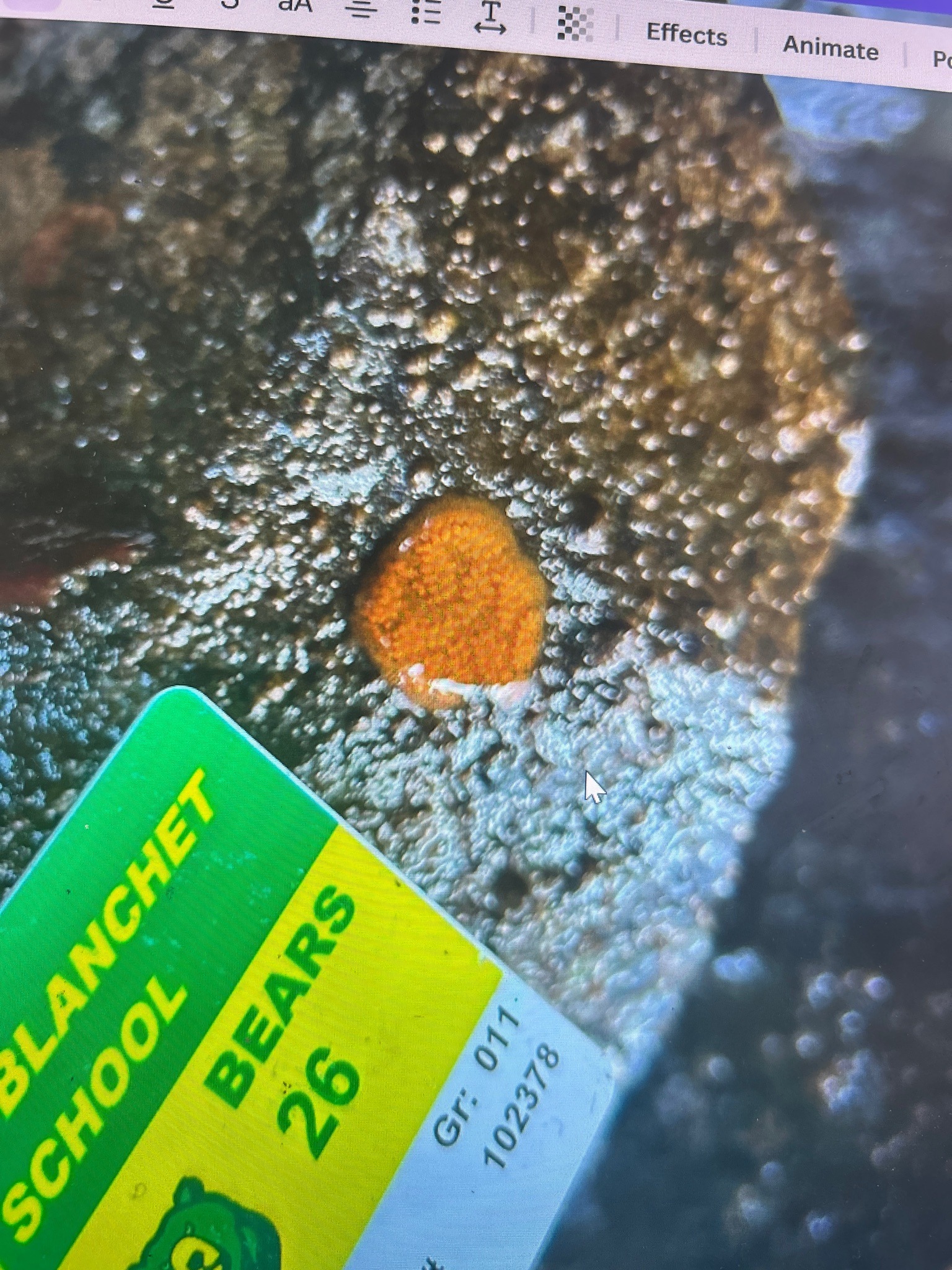
An orange, gelatinous colonial marine invertebrate common in the intertidal and subtidal zones of the Pacific Northwest.
Characteristics
Small, jelly-like orange blob with a visible star-like or pore-filled pattern under close inspection. Often grows as a flat encrusting mass or a small rounded lobe on rocks and docks.
Habitat
Found on hard surfaces like rocks, docks, pilings, and boat hulls in salt water environments like Puget Sound.
When to Find It
Found year-round, but often reaches peak size and visibility in late summer and fall.
Conservation Status
N/A - many species are common or invasive.
Ecological Role
They are filter feeders that help clean the water and provide a food source for some sea stars and nudibranchs. However, some species are invasive and may compete with native organisms for space.
Easily Confused With
Sponge (which feels rougher and lacks the specific pore organization) or sea slops (another type of gelatinous marine life).
Observation Tips
Look on the undersides of dock floats or on rocks during low tide at locations like Golden Gardens or Alki Beach in Puget Sound.
Interesting Facts
Tunicates are chordates, meaning they are more closely related to fish and humans than they are to sponges or anemones, as they have a primitive spinal cord during their larval stage.
User Notes
Puget Sound