Eastern Redcedar
Scientific Name: Juniperus virginiana
Category: tree
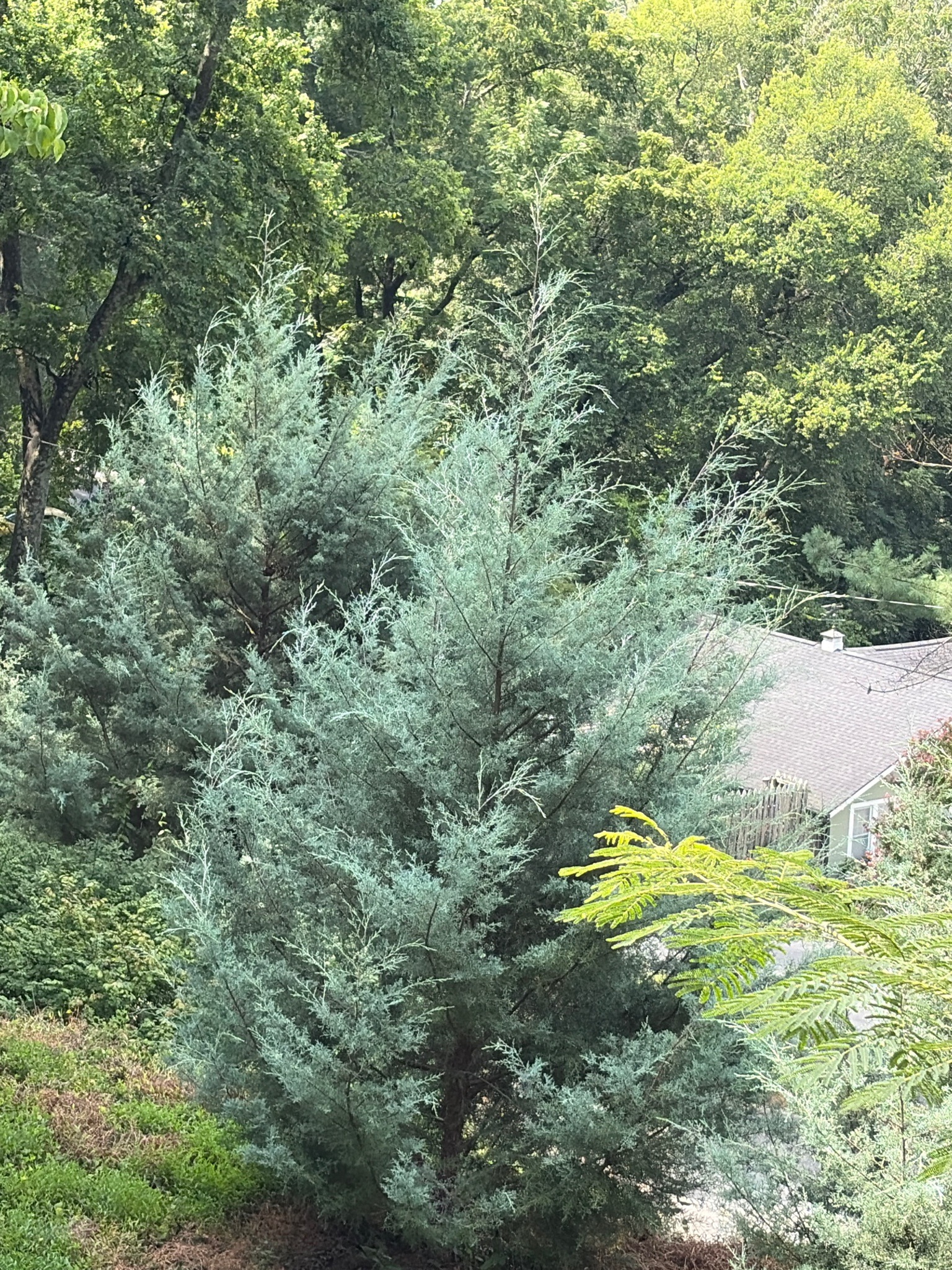
Brief Description
An evergreen conifer native to eastern North America, recognizable by its silvery-blue or green needle-like foliage and pyramidal shape.
Characteristics
Conical to columnar evergreen tree growing up to 33-66 feet tall. Bark is reddish-brown and exfoliates in thin strips. Leaves are scale-like, arranged in opposite pairs, with juvenile leaves being sharp and needle-like. Produces small, berry-like bluish-green cones covered in a whitish waxy coating.
Habitat
Found in dry, poor soils, rocky ridges, old fields, and open woodlands, showing high tolerance for diverse soil conditions from limestone to clay.
When to Find It
Evergreen, providing visual interest and foliage year-round. Cones mature in the autumn of their first year.
Conservation Status
Least Concern
Ecological Role
Provides vital food and nesting cover for numerous bird species, including cedar waxwings and bluebirds. Small mammals also consume the seeds and use the dense canopy for shelter.
Easily Confused With
Other juniper species and Atlantic white-cedar; distinguished by leaf arrangement, peeling reddish bark, and preference for dry upland soils.
Observation Tips
Look for its distinct silvery-blue hue contrasting against deciduous forests during autumn and winter months in eastern North America.
Interesting Facts
Despite its common name, the Eastern Redcedar is not a true cedar (Cedrus) but is actually a species of juniper. Its aromatic wood is naturally insect-repellent and commonly used for cedar chests and fence posts.