Honey Locust
Scientific Name: Gleditsia triacanthos
Category: tree
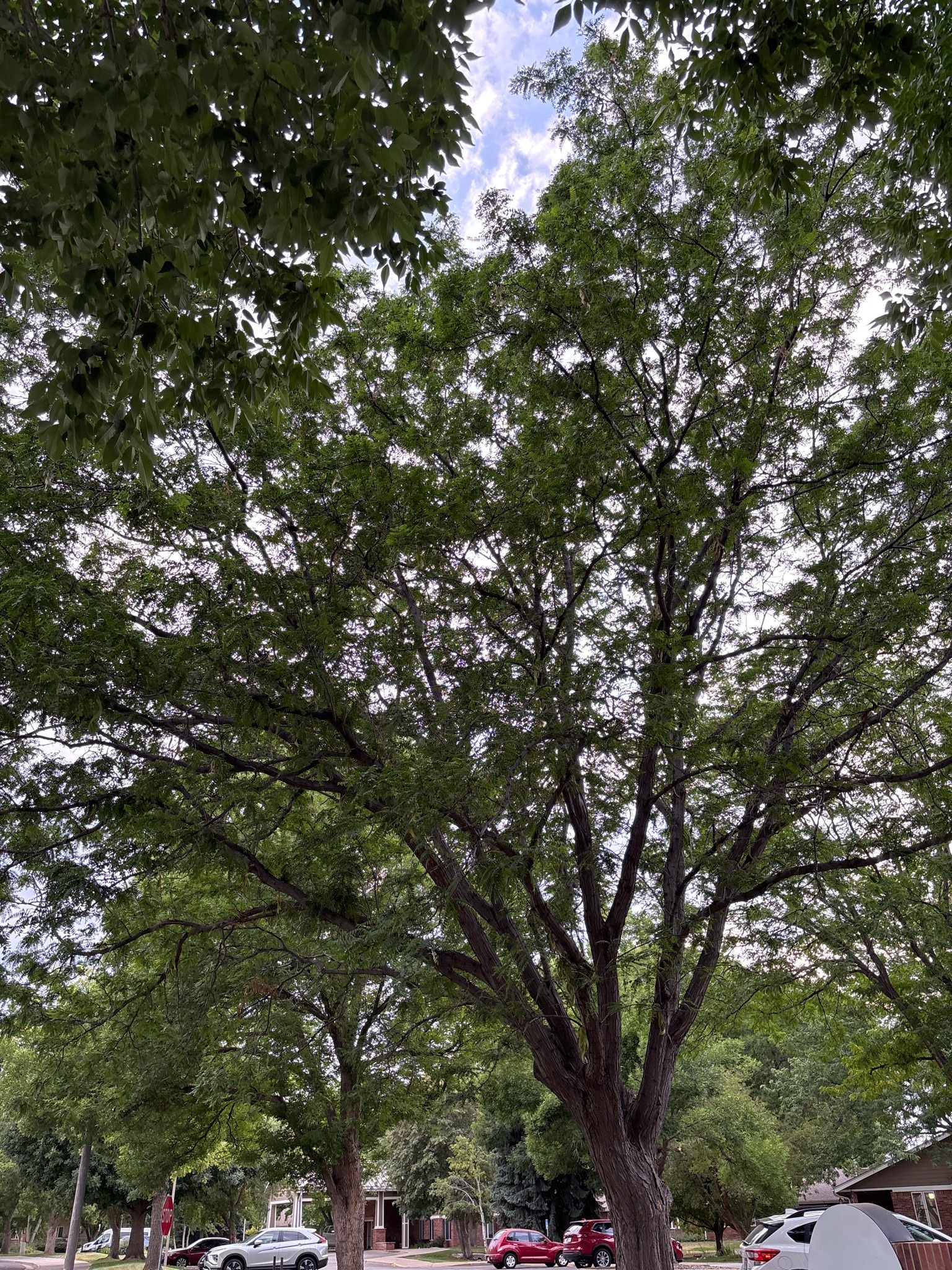
Brief Description
A medium to large deciduous tree known for its fine-textured compound leaves and wide-spreading canopy.
Characteristics
Recognized by its bipinnately compound leaves with many small leaflets, deeply furrowed gray-brown bark, and large reddish-brown seed pods. While wild varieties often have large thorns on the trunk, most urban cultivars are thornless.
Habitat
Typically found in moist fertile soils near stream banks and floodplains, though highly adaptable to urban environments and drought.
When to Find It
Observed best in summer when in full leaf or autumn when foliage turns a brilliant yellow. Seed pods often persist on the tree through winter.
Conservation Status
Least Concern
Ecological Role
Provides shade and habitat for various birds and insects. The seed pods are a food source for some mammals, and it is a nitrogen-fixing species that improves soil quality.
Easily Confused With
Black Locust (Robinia pseudoacacia) which has larger leaflets and rounder pods, and Kentucky Coffeetree which has much larger, thicker pods and larger leaflets.
Observation Tips
Look for the distinctive dappled light beneath the canopy caused by its small leaflets. In urban areas, check for the absence of large thorns characteristic of the 'Inermis' variety.
Interesting Facts
The seeds within the large pods are surrounded by a sweet, edible pulp that was used by Native Americans for food and medicine, giving the tree its common name.