Mulberry Leaf
Scientific Name: Morus
Category: tree
Brief Description
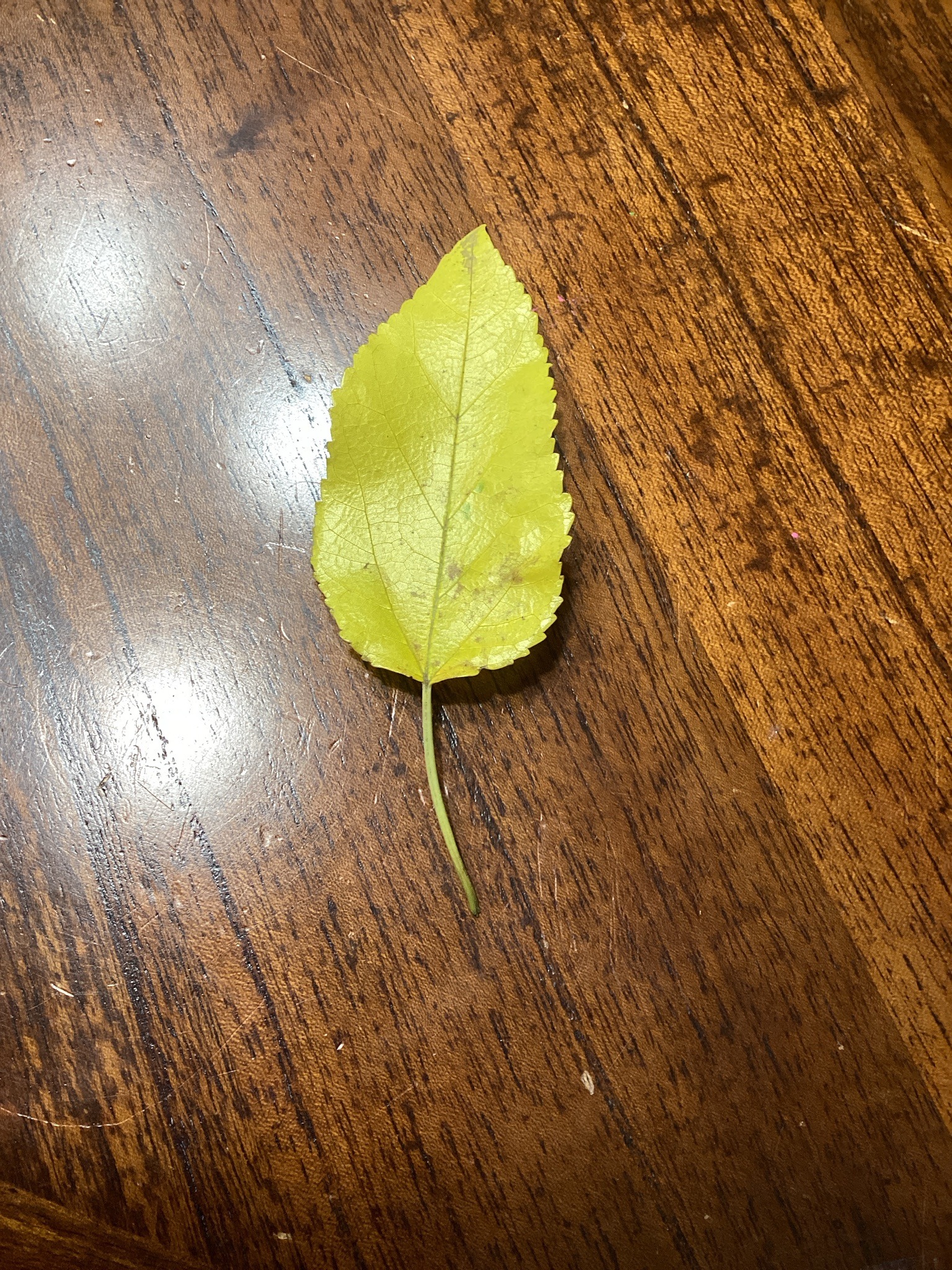
A vibrant yellow-green deciduous leaf, typically ovate with serrated margins, originating from a mulberry tree.
Characteristics
The leaf shown is simple, alternate, with an ovate to cordate shape, finely serrated (toothed) margins, an acuminate tip, and prominent palmate venation radiating from the base. The petiole is slender.
Habitat
Found in forests, woodland edges, urban areas, and disturbed sites where mulberry trees grow.
When to Find It
Leaves emerge in spring, are lush green in summer, turn yellow in autumn before dropping.
Conservation Status
N/A
Ecological Role
Mulberry leaves are famously the exclusive food source for silkworms (Bombyx mori) and provide forage for various herbivores and invertebrates.
Easily Confused With
Can be confused with basswood (Tilia) or paper mulberry (Broussonetia papyrifera) leaves, which can sometimes be lobed or have different serration patterns.
Observation Tips
Look up at the canopy or understory of mulberry trees in spring and summer to observe full leaf variation, as leaves on the same tree can be unlobed or deeply lobed.
Interesting Facts
Mulberry trees are known for rapid growth and producing sweet, edible aggregate fruits resembling blackberries.