Brown-throated sloth
Scientific Name: Bradypus variegatus
Category: mammal
Brief Description
A medium-sized arboreal mammal known for its slow movement and spending most of its life hanging upside down in tropical forest canopies.
Characteristics
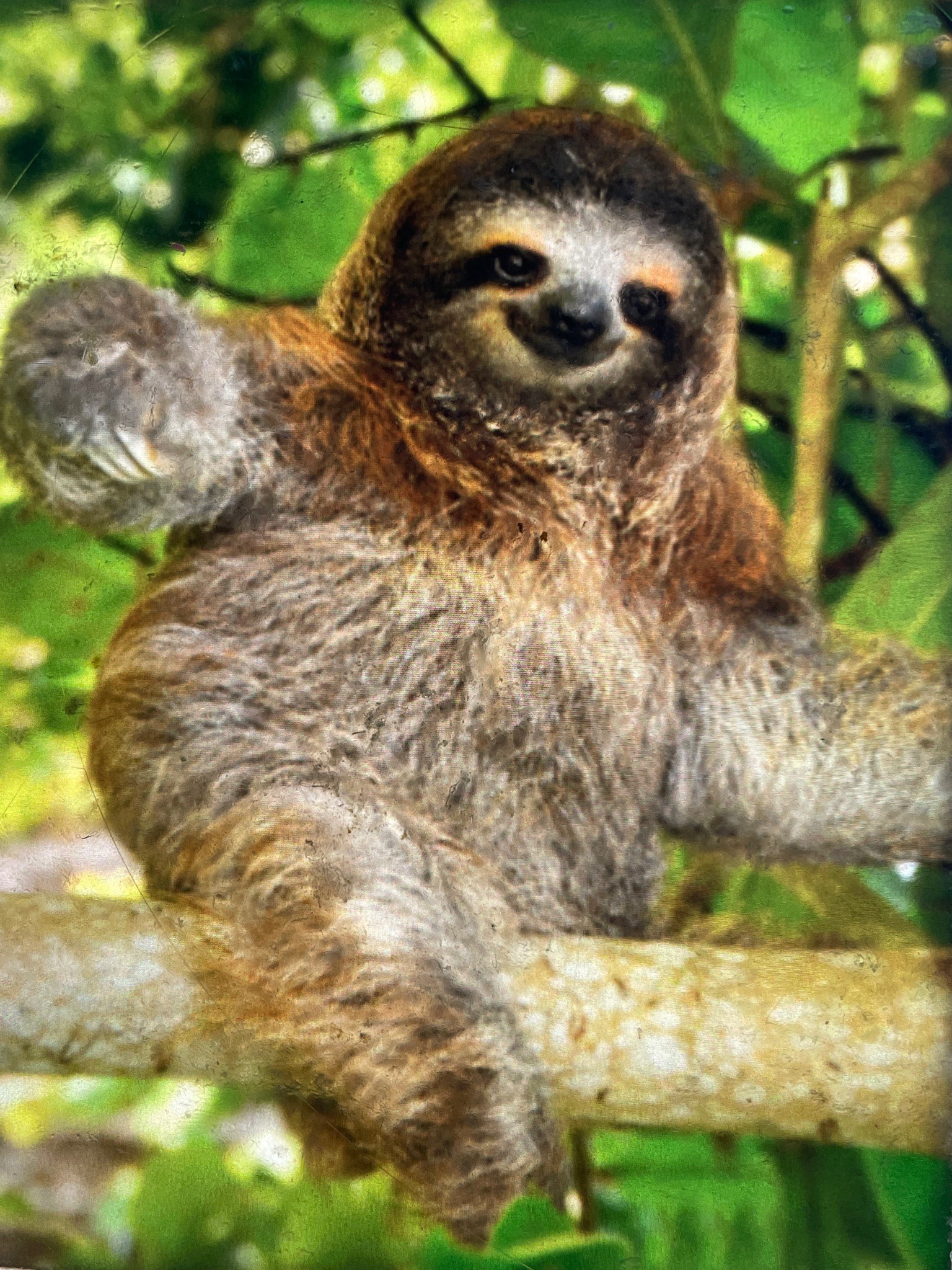
Features three claws on each limb, a rounded head with a mask-like dark stripe across the eyes, and coarse grayish-brown fur often tinged with green from symbiotic algae. It has a distinctive 'smile' caused by its facial structure.
Habitat
Lowland and montane tropical rainforests; primarily found in Central and South America.
When to Find It
Diurnal and nocturnal; active year-round without hibernation.
Conservation Status
Least Concern (IUCN)
Ecological Role
Provides a unique ecosystem on its fur for algae, moths, and fungi. It serves as a prey species for harpy eagles and jaguars and helps in seed dispersal.
Easily Confused With
Pale-throated sloth (distinguished by different throat coloration) and Hoffmann's two-toed sloth (which has only two claws on the front paws and no facial 'mask').
Observation Tips
Look high in the canopy of Cecropia trees; they are best spotted when they move slowly. Use binoculars as they are well-camouflaged. Always maintain a respectful distance to avoid causing stress.
Interesting Facts
Sloths have a very slow metabolism and it can take up to a month for them to digest a single meal. They only descend to the ground once a week to defecate.