Red-osier Dogwood
Scientific Name: Cornus sericea
Category: tree
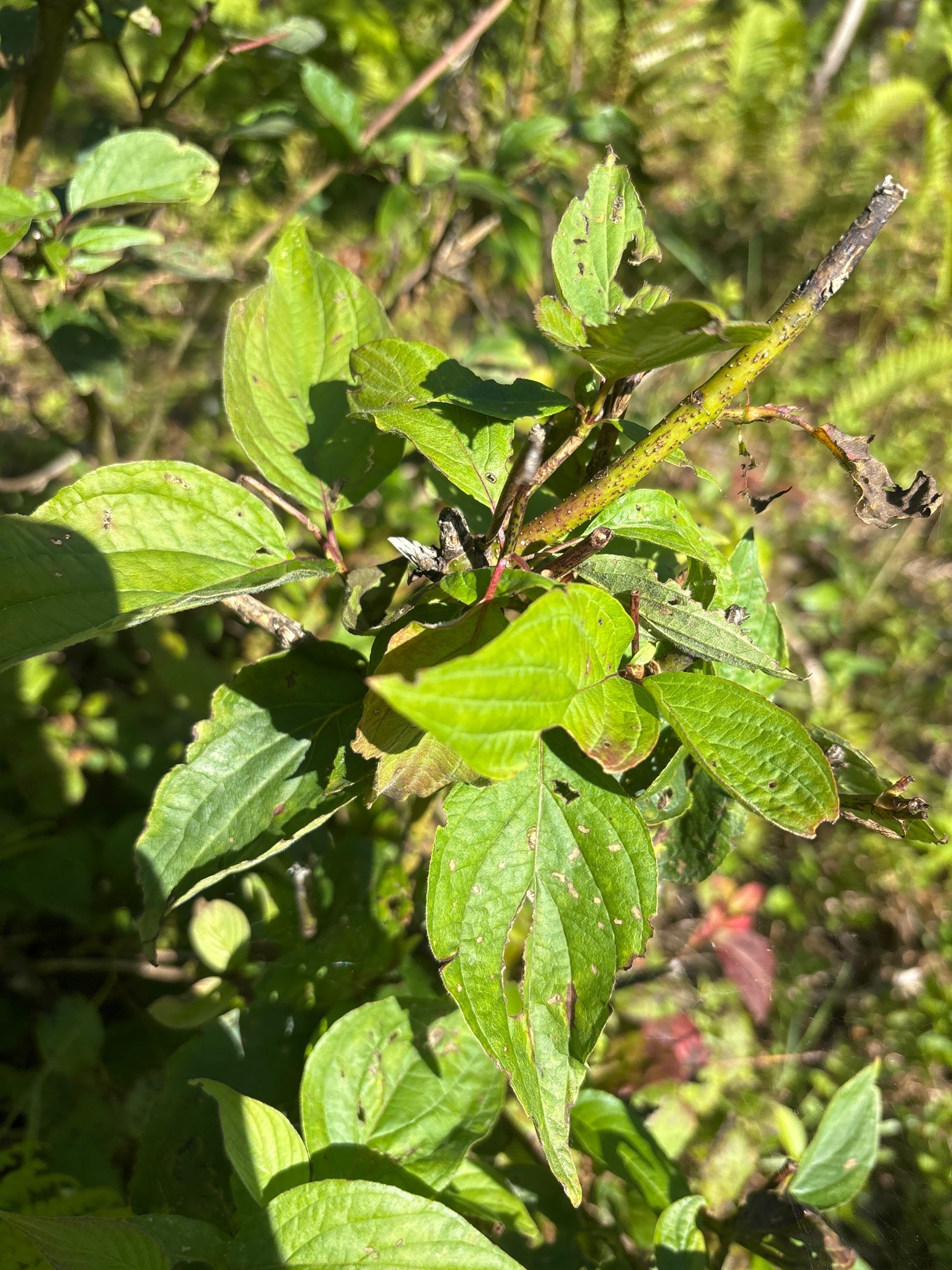
Brief Description
A deciduous shrub known for its bright red stems and opposite leaves with curved veins, commonly found in moist soils and wetland borders.
Characteristics
Features opposite, simple leaves with prominent, strongly curved veins that run parallel to the margin. Stems are often reddish, especially in winter or on young growth, and twigs may have white pith.
Habitat
Wetlands, marshes, stream banks, damp thickets, and moist forest edges.
When to Find It
Best observed in spring and summer for foliage and flowers, or in winter when its vibrant red twigs stand out against snow.
Conservation Status
Least Concern
Ecological Role
Provides critical food and cover for numerous birds and mammals, stabilizes riparian soils, and its flowers attract various pollinators.
Easily Confused With
Other dogwood species like Silky Dogwood (Cornus amomum), which has brownish pith, or Gray Dogwood (Cornus racemosa), which has gray branches.
Observation Tips
Look near bodies of water or low-lying damp areas. Examine the leaf arrangement—dogwoods have opposite leaves, which narrows down identification quickly.
Interesting Facts
The flexible branches of red-osier dogwood have historically been used by Indigenous peoples for basketry and weaving. Its ability to tolerate wet soils makes it a popular choice for ecological restoration and erosion control.