White Water Lily
Scientific Name: Nymphaea odorata
Category: plant
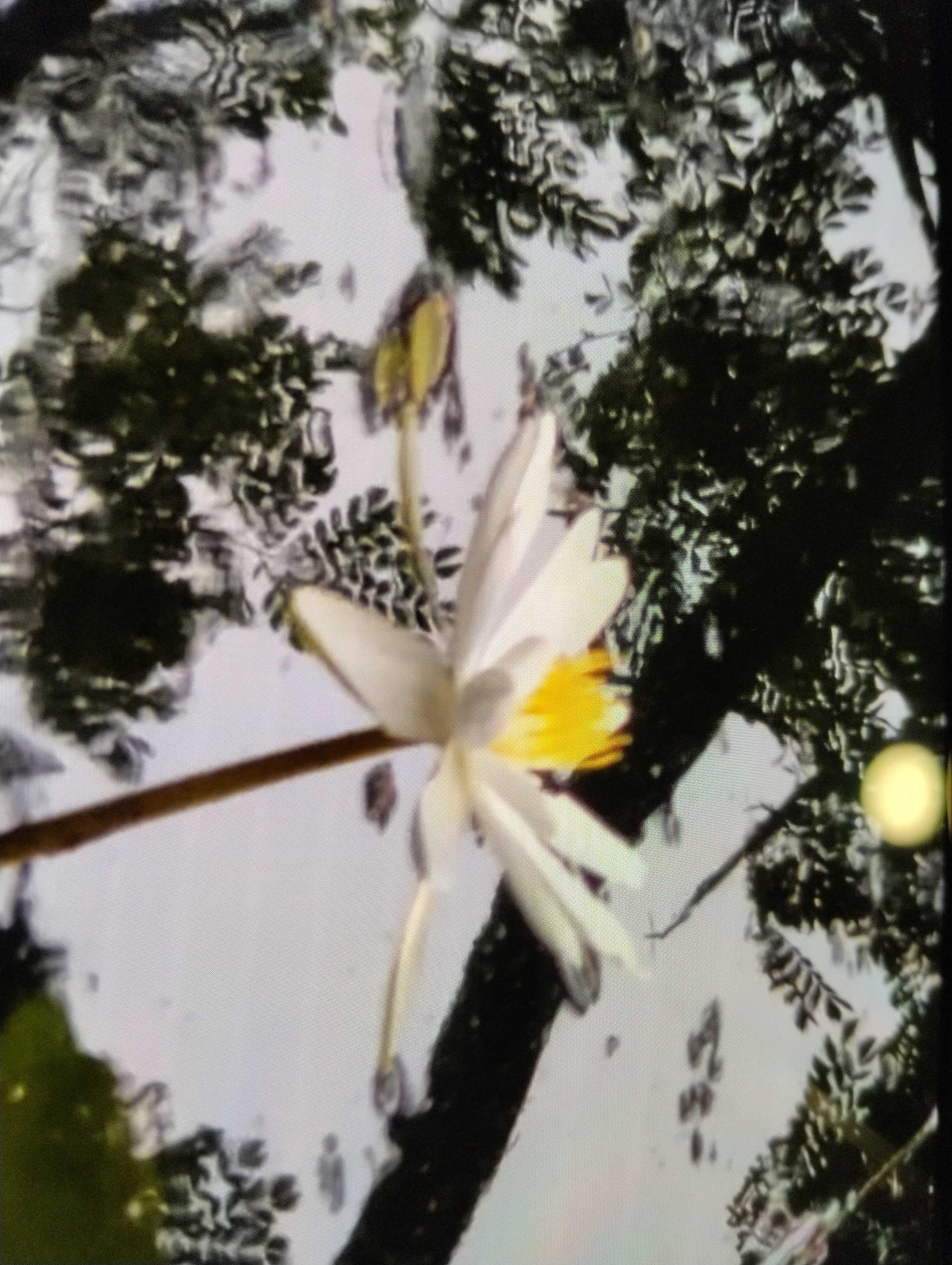
Brief Description
An aquatic perennial plant with floating leaves and showy white flowers possessing prominent yellow centers, growing in still or slow-moving freshwater habitats.
Characteristics
Features large, rounded floating leaves (lily pads) with a split notch extending to the center. Flowers are white with numerous petals and a dense cluster of bright yellow stamens in the center, typically opening in the morning and closing in the afternoon.
Habitat
Found in shallow, quiet freshwater bodies such as ponds, lakes, slow-moving streams, and marshes.
When to Find It
Flowers bloom from late spring through early autumn; best observed during sunny morning hours when the flowers are fully open.
Conservation Status
Least Concern
Ecological Role
Provides vital shade and shelter for fish and aquatic invertebrates, and the leaves serve as resting and feeding surfaces for various insects and amphibians.
Easily Confused With
Can be confused with other water lily species (Nymphaea spp.) or American lotus (Nelumbo lutea); distinguished by petal count, exact flower color, and whether leaves are floating or elevated above the water surface.
Observation Tips
Observe from the shore or by boat using binoculars or a macro lens to capture details of the flower center without disturbing the aquatic ecosystem.
Interesting Facts
Water lily roots and rhizomes are a major food source for muskrats, beavers, and waterfowl, and the flowers emit a sweet fragrance to attract insect pollinators like beetles.