Weddell Seal
Scientific Name: Leptonychotes weddellii
Category: mammal
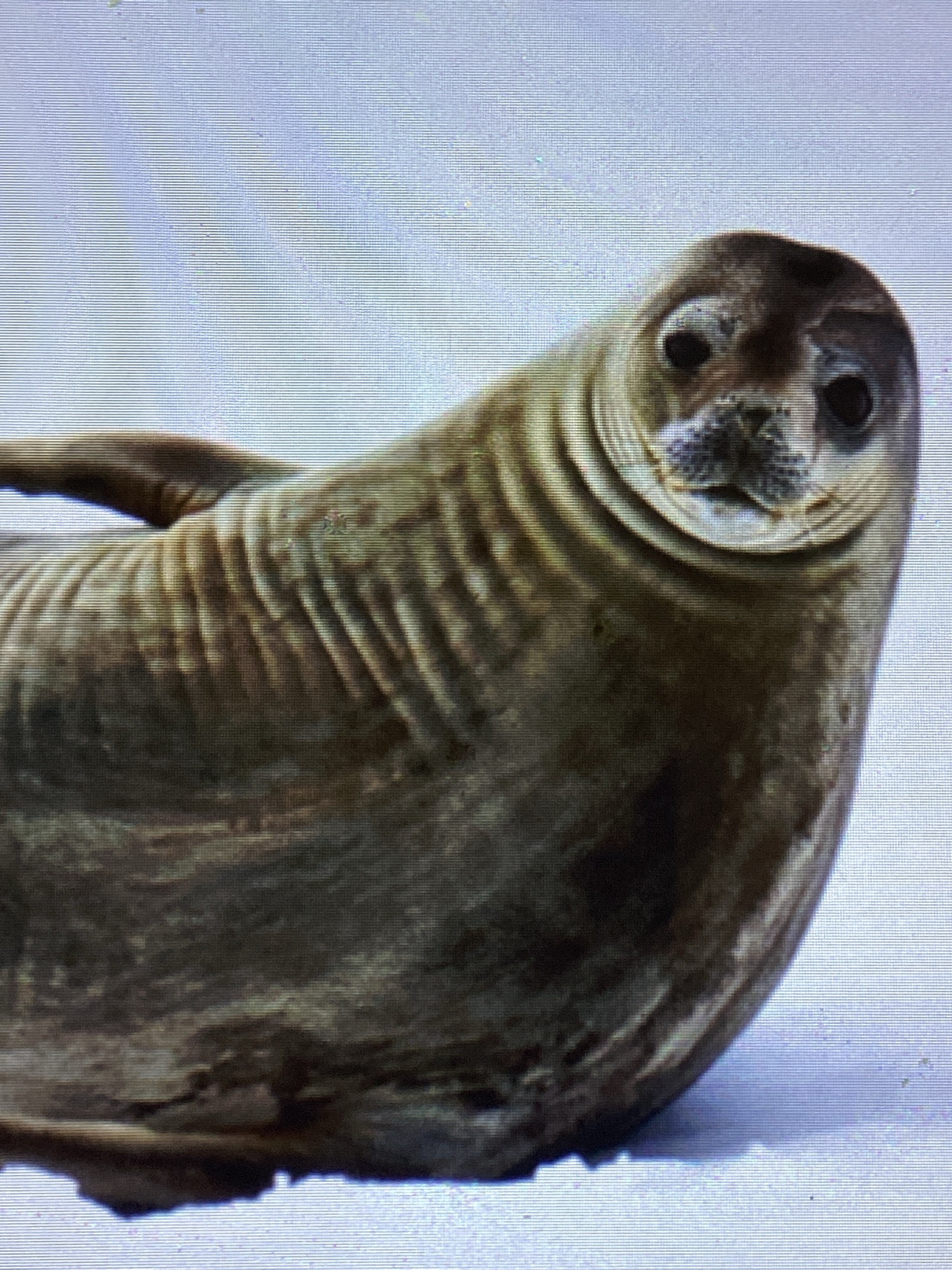
Brief Description
A medium-to-large true seal native to the Antarctic region, recognizable by its cat-like face, dark spotted pelt, and thick layer of blubber.
Characteristics
Dark gray to brownish coat with silvery-white and dark spots, small snout relative to head size, rounded body, and notable skin folds along the neck when twisting.
Habitat
Fast ice, pack ice, and coastal Antarctic waters.
When to Find It
Observable year-round in Antarctica; during spring (October-November) females haul out on fast ice to give birth and pup.
Conservation Status
Least Concern (IUCN Red List)
Ecological Role
Key mesopredator in the Antarctic marine ecosystem, feeding on fish (such as Antarctic toothfish), squid, and krill while serving as prey for killer whales and leopard seals.
Easily Confused With
Crabeater Seal (lighter color, specialized multi-cusped teeth, sleeker body), Leopard Seal (much larger, long snake-like head, predatory mouth with large canine teeth).
Observation Tips
Observe from a safe distance on Antarctic ice expeditions to avoid disturbing their natural behaviors or resting periods.
Interesting Facts
Weddell seals can dive to depths of over 600 meters (2,000 feet) and stay underwater for up to 80 minutes. They use their teeth to wear down ice holes to maintain breathing access during the polar winter.