Asiatic Dayflower
Scientific Name: Commelina communis
Category: plant
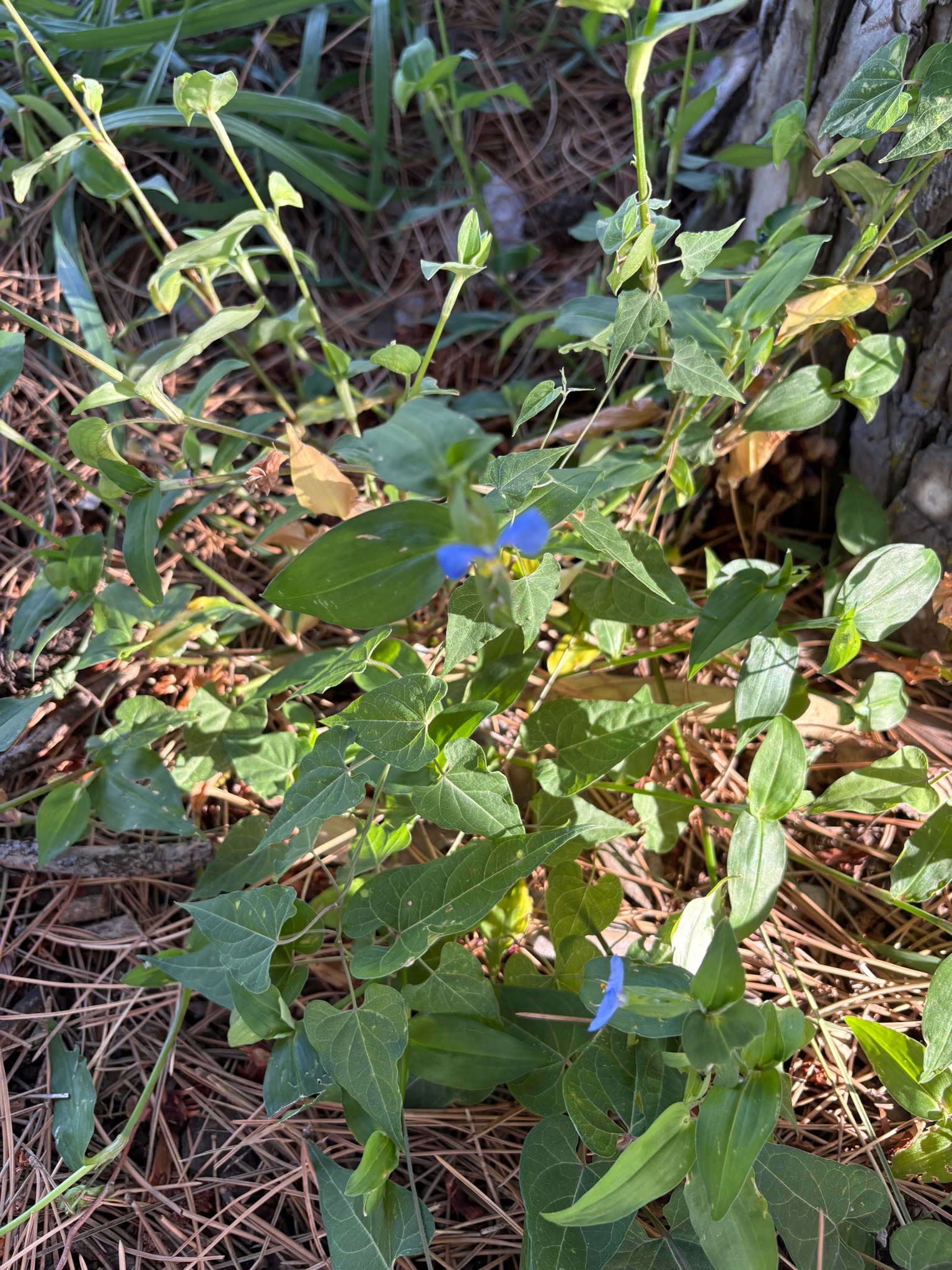
Brief Description
An herbaceous annual weed featuring distinctive small blue flowers with two prominent upper petals and a smaller, less noticeable lower petal.
Characteristics
Stems are creeping and branch out, rooting at the nodes. Leaves are alternate, lanceolate to ovate, with parallel veins and a sheathing base clasping the stem. The flowers have two bright blue rounded upper petals and one tiny white lower petal, emerging from a folded, heart-shaped green bract (spathe).
Habitat
Disturbed areas, gardens, agricultural fields, waste places, roadsides, and shaded moist soil.
When to Find It
Blooms from early summer until the first frost in autumn.
Conservation Status
N/A
Ecological Role
Provides nectar for various small pollinators such as bees and syrphid flies, though it is often considered an invasive or troublesome agricultural weed in non-native ranges.
Easily Confused With
Virginian dayflower (Commelina virginica) and spreading dayflower (Commelina diffusa), which can be distinguished by subtle differences in floral structures, leaf shapes, and the glands or hairs on the spathes.
Observation Tips
Look in moist, shaded garden beds or forest edges during morning hours, as the delicate blue flowers typically open in the morning and wither by afternoon.
Interesting Facts
The genus name Commelina honors the Dutch botanists Jan and Caspar Commelin, with the two prominent blue petals representing the two publishing botanists and the third small petal representing a third brother who died young without publishing.