Black-staining Polypore
Scientific Name: Meripilus sumstinei
Category: fungi
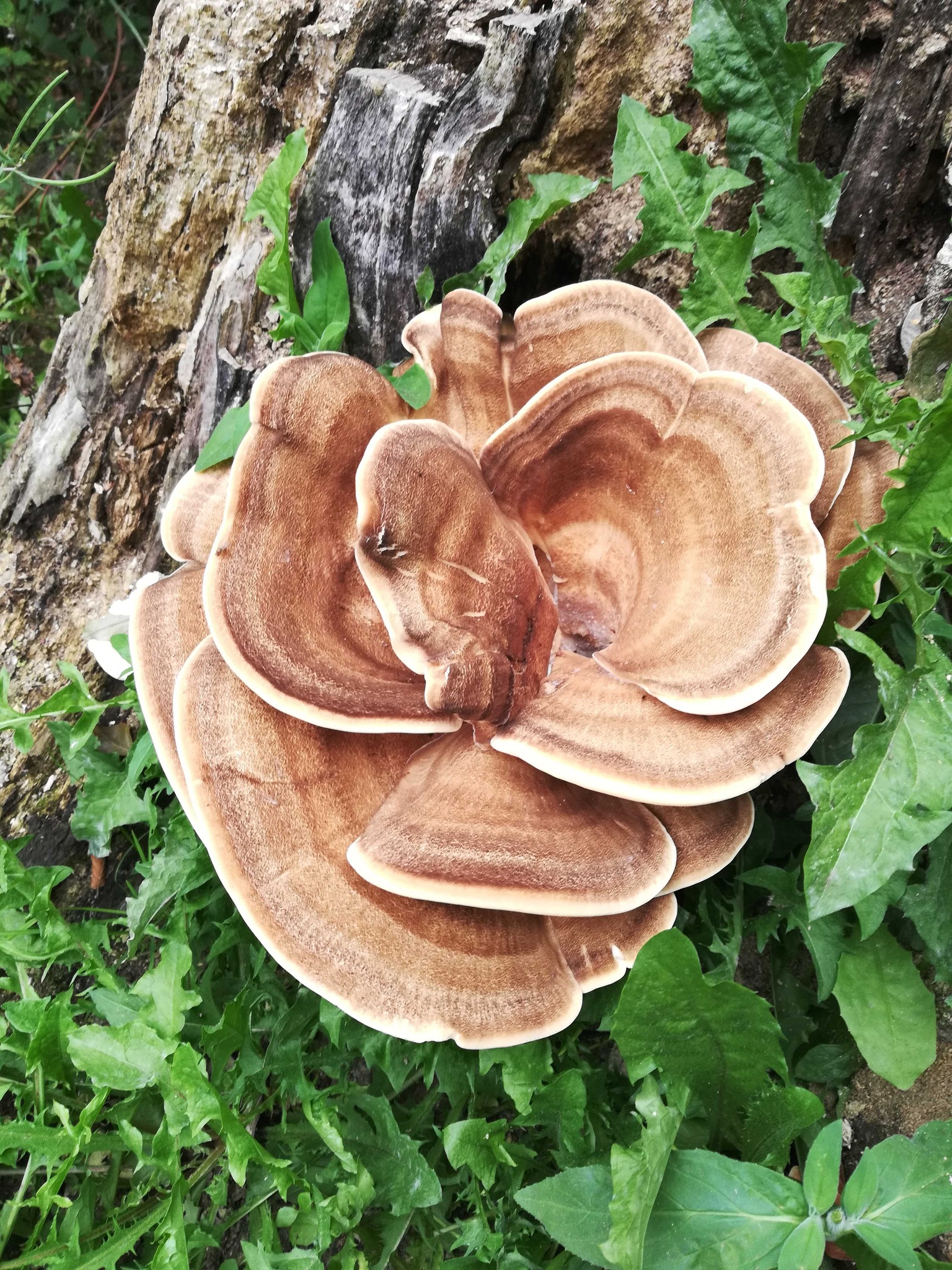
Brief Description
A large, fleshy, multi-capped bracket fungus that grows in clusters at the base of trees. It is known for turning black when bruised or aged.
Characteristics
The fungus consists of multiple fan-shaped or rosette-like overlapping caps. Caps are yellowish-brown to dark brown with paler edges. It has a white pore surface underneath that bruises dark brown or black almost immediately when handled.
Habitat
Found at the base of living deciduous trees (especially oaks) or growing from buried wood and stumps. Common in hardwood forests.
When to Find It
Late summer to autumn.
Conservation Status
Common
Ecological Role
It is a parasitic and saprobic fungus that causes white rot in the root systems and heartwood of its host trees, eventually helping to decompose dead wood.
Easily Confused With
Hen-of-the-Woods (Grifola frondosa), which has smaller, more numerous grayish caps and does not stain black when bruised. Giant Polypore (Meripilus giganteus) is its European relative.
Observation Tips
To confirm the identity, gently scratch the white underside; it should turn black within minutes. It is best photographed when young before it becomes tough and blackened by age or insects.
Interesting Facts
While it is considered edible when young and tender, it quickly becomes too fibrous and tough to eat as it matures. It is one of the largest fungi found in North American forests.