Common Eastern Bumble Bee
Scientific Name: Bombus impatiens
Category: insect
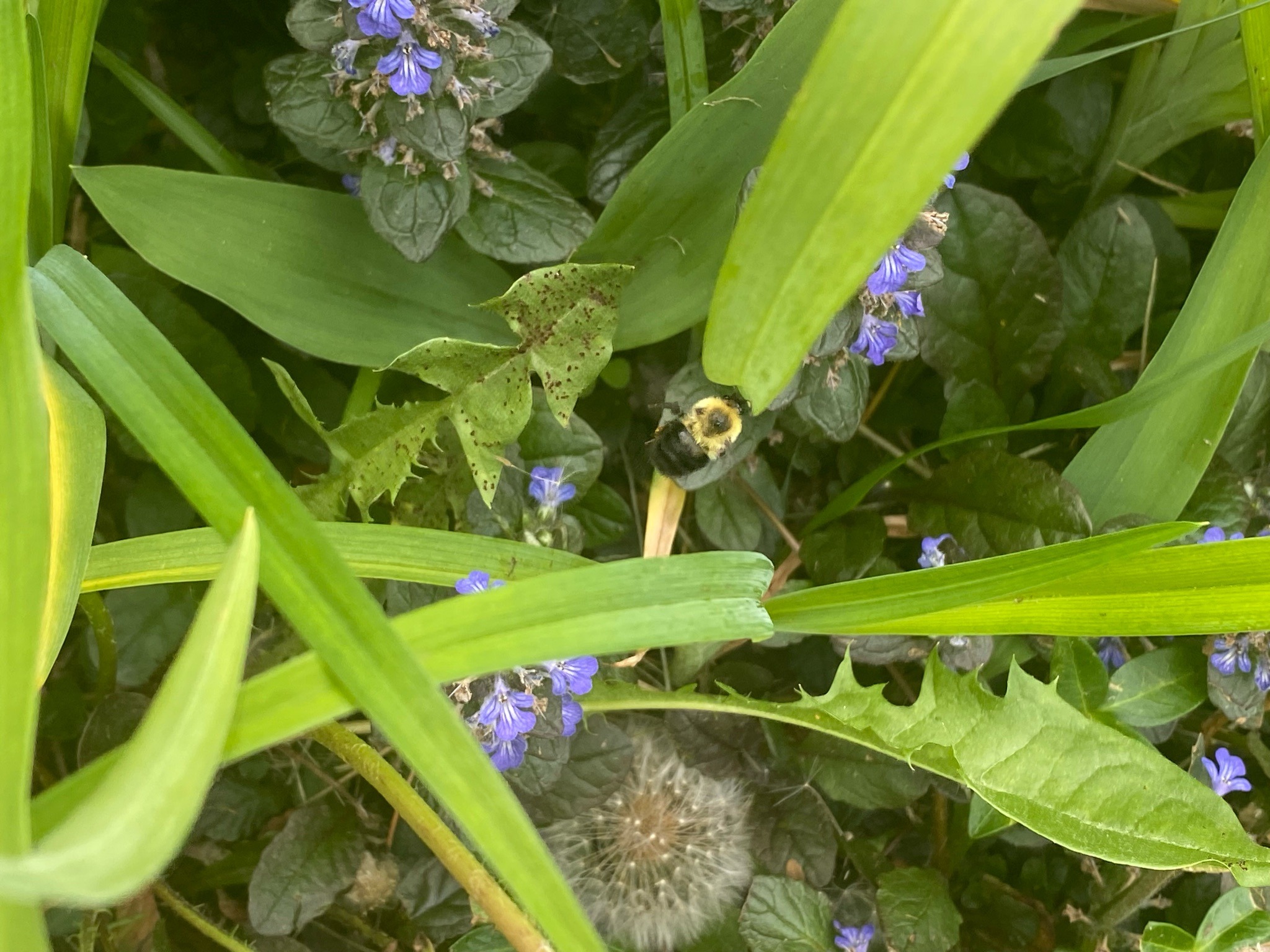
Brief Description
A large, fuzzy social bee commonly found in gardens and wild areas of eastern North America.
Characteristics
The thorax is covered in yellow fuzz with a small black spot in the center; the abdomen is mostly black except for the first segment closest to the thorax, which is yellow.
Habitat
Temperate forests, gardens, wetlands, and urban areas; nests are typically underground in abandoned rodent burrows.
When to Find It
Active from early spring to late autumn, specifically during daylight hours when temperatures are above 50°F.
Conservation Status
Common / Least Concern
Ecological Role
A critical generalist pollinator for both wildflowers and agricultural crops like tomatoes, blueberries, and cranberries.
Easily Confused With
Two-spotted Bumble Bee (Bombus bimaculatus) which has two yellow spots on the second abdominal segment, and Carpenter Bees which have shiny, hairless abdomens.
Observation Tips
Look for them hovering near blue or purple nectar-rich flowers like the Ajuga (bugleweed) shown in the image. They are generally non-aggressive if not handled.
Interesting Facts
This is the most popular species used in commercial greenhouse pollination. Unlike honey bees, bumble bees can perform 'buzz pollination' by vibrating their flight muscles to release pollen.
User Notes
Head Lake, June 2026