White-tailed Deer
Scientific Name: Odocoileus virginianus
Category: mammal
Brief Description
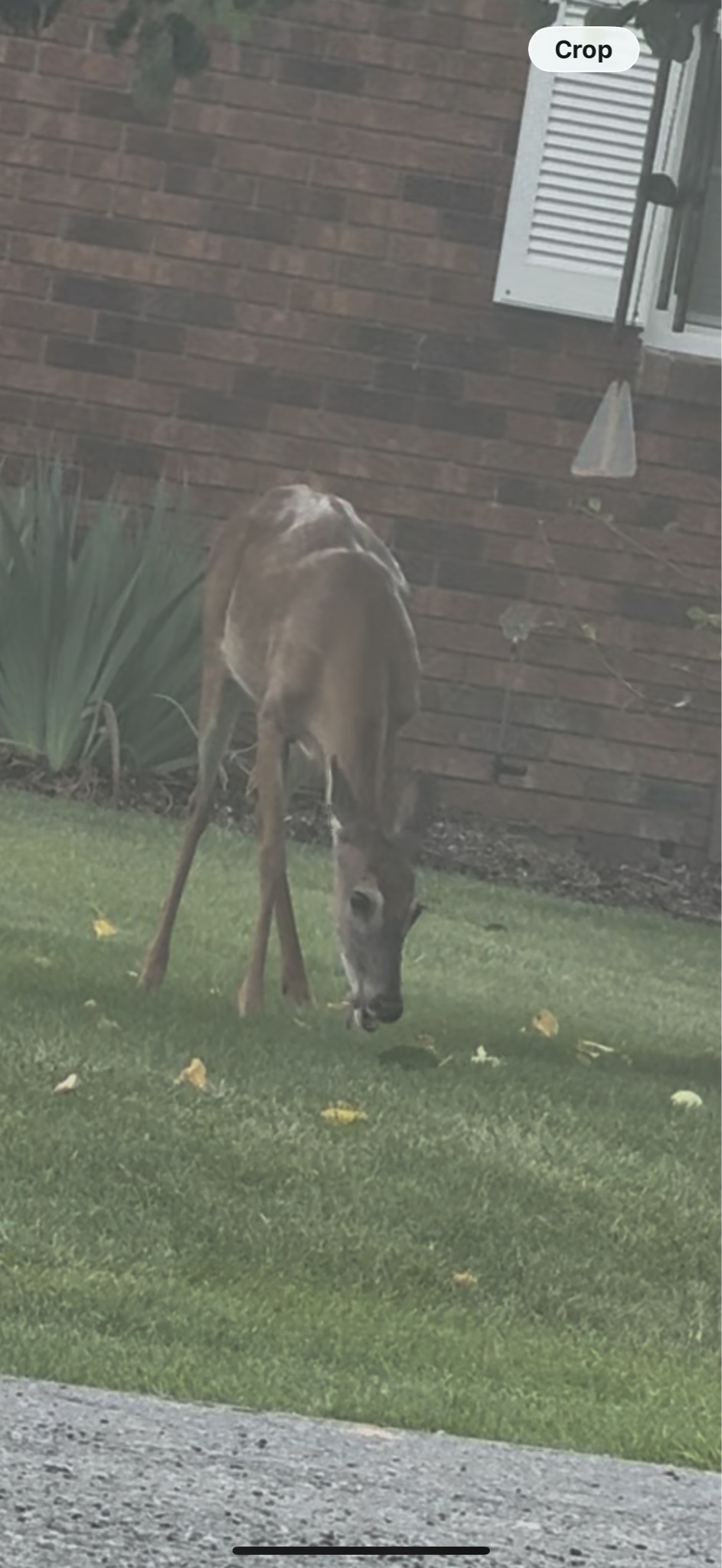
A medium-sized deer native to North America, recognized by the white underside of its tail which it raises when alarmed.
Characteristics
Reddish-brown coat in summer turning grayish-brown in winter; white fur on the belly, throat, and around the eyes/nose; large ears and a long tail with a white underside. Only males (bucks) typically grow antlers, which are shed annually.
Habitat
Found in a variety of environments including forests, brushy areas, meadows, and increasingly suburban gardens and parks.
When to Find It
Crepuscular (most active at dawn and dusk); seen year-round, with the 'rut' (mating season) occurring in late autumn.
Conservation Status
Least Concern; populations are abundant and even overpopulated in many suburban areas.
Ecological Role
Acts as a major herbivore and prey species for large carnivores; they influence plant community composition through browsing but can overbrowse in areas without natural predators.
Easily Confused With
Mule Deer (distinctive black-tipped tail and larger ears) and Key Deer (a much smaller subspecies found only in the Florida Keys).
Observation Tips
Keep a respectful distance to avoid causing stress; use binoculars for a better view. Look for them feeding in open fields near forest edges during twilight hours.
Interesting Facts
White-tailed deer are excellent swimmers and can run at speeds up to 30 miles per hour and leap as high as 8 feet.