American Lady
Scientific Name: Vanessa virginiensis
Category: insect
Brief Description
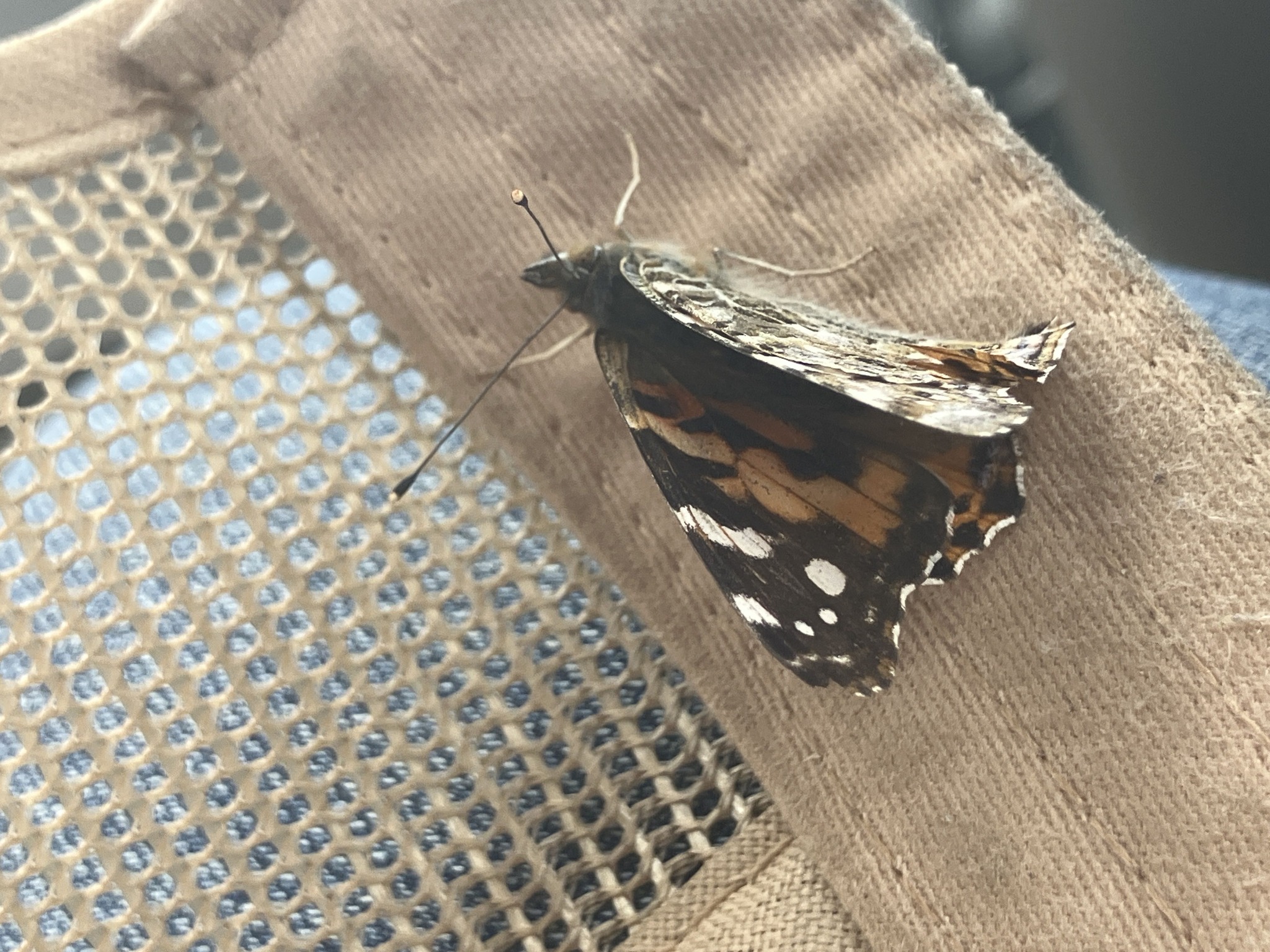
A medium-sized migratory butterfly with orange, black, and white markings, recognized by the large eyespots on the underside of its hindwings.
Characteristics
The upper wings are orange with black margins and white spots near the tips. The diagnostic feature is the underside of the hindwing, which features two large, distinct eyespots (compared to four smaller ones on the Painted Lady). The forewing also typically has a small white spot set within an orange field.
Habitat
Found in open areas such as meadows, fields, forest edges, gardens, and disturbed sunny sites.
When to Find It
Commonly seen from spring through autumn, with multiple generations per year in warmer climates.
Conservation Status
Secure / Not at risk
Ecological Role
Acts as a pollinator for various wildflowers. Their larvae feed on plants in the sunflower family (Asteraceae), particularly pussytoes and everlastings.
Easily Confused With
Painted Lady (Vanessa cardui), which has four smaller eyespots on the hindwing underside, and the West Coast Lady (Vanessa annabella), which lacks the white spot in the orange cell of the forewing.
Observation Tips
Look for them basking on flat rocks or bare ground in the sunlight. They are frequent visitors to butterfly gardens and can be approached slowly while feeding on nectar.
Interesting Facts
The American Lady caterpillar constructs a protective silk 'nest' at the top of its host plant to hide from predators while it feeds.