Differential Grasshopper
Scientific Name: Melanoplus differentialis
Category: insect
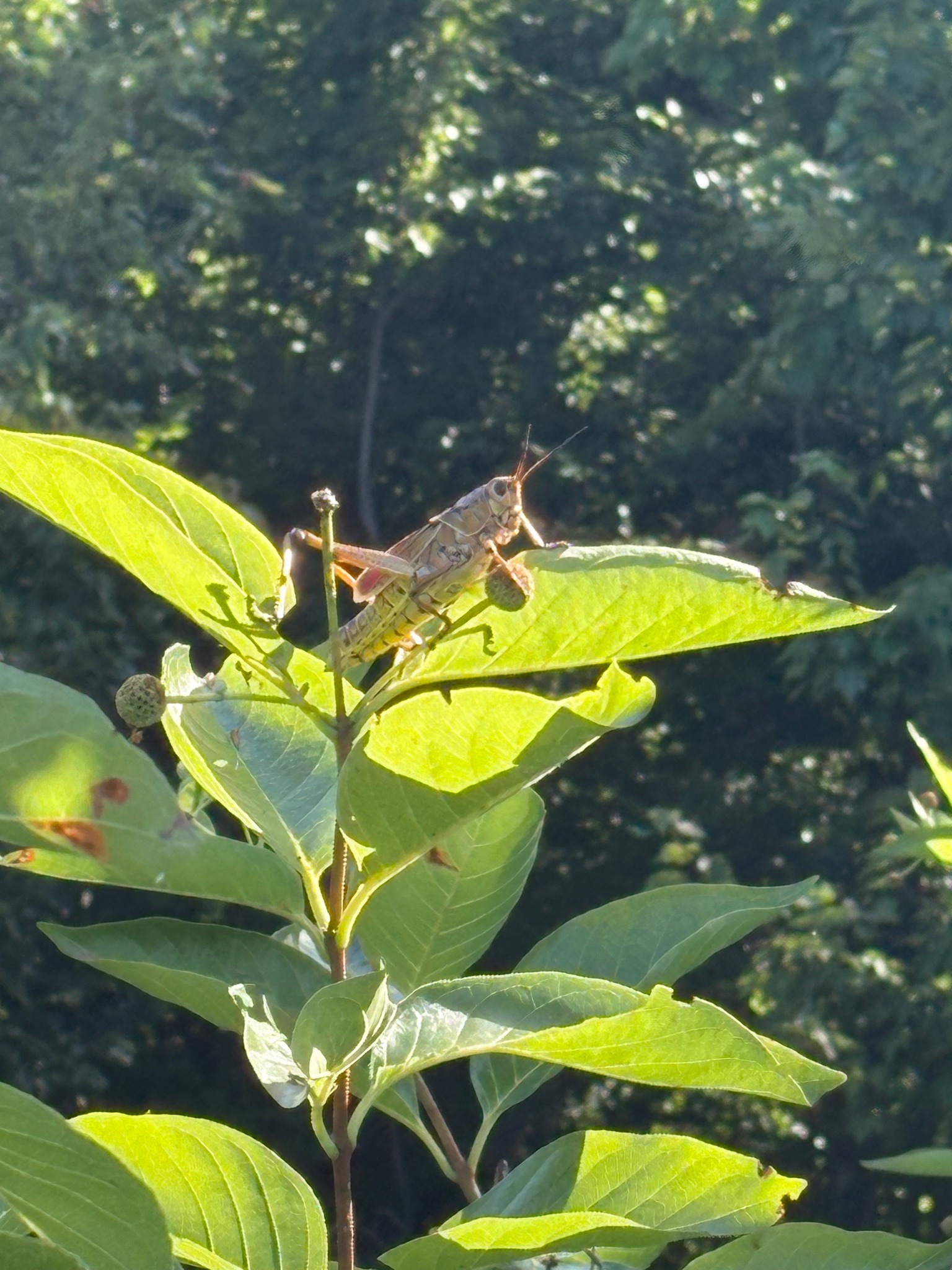
Brief Description
A large, olive-green to yellowish grasshopper with distinctive herringbone patterns on its hind thighs.
Characteristics
Large size (up to 2 inches long), brownish-green body, and a black 'chevron' or herringbone pattern on the upper part of the hind legs. They have long, powerful hind legs and yellowish-green underparts.
Habitat
Grasslands, agricultural fields, gardens, and meadows. They prefer areas with tall vegetation and moisture.
When to Find It
Most active during late summer and early autumn (July through October).
Conservation Status
Common/Least Concern
Ecological Role
They are significant primary consumers and serve as a vital food source for birds, spiders, and small mammals. However, they can be agricultural pests when populations spike.
Easily Confused With
Two-striped Grasshopper (Melanoplus bivittatus), which has two distinct light-colored stripes running from the head to the wingtips, whereas the Differential lacks these stripes and features the chevron leg pattern.
Observation Tips
They are easiest to observe in the morning when the dew keeps them sluggish or in late afternoon on top of vegetation enjoying the sun. Approach slowly to avoid triggering their powerful jump.
Interesting Facts
Differential grasshoppers do not migrate; they lay their eggs in the soil over winter, which hatch in the spring. They are polyphagous, meaning they can eat a massive variety of plant species.