Common Comfrey
Scientific Name: Symphytum officinale
Category: plant
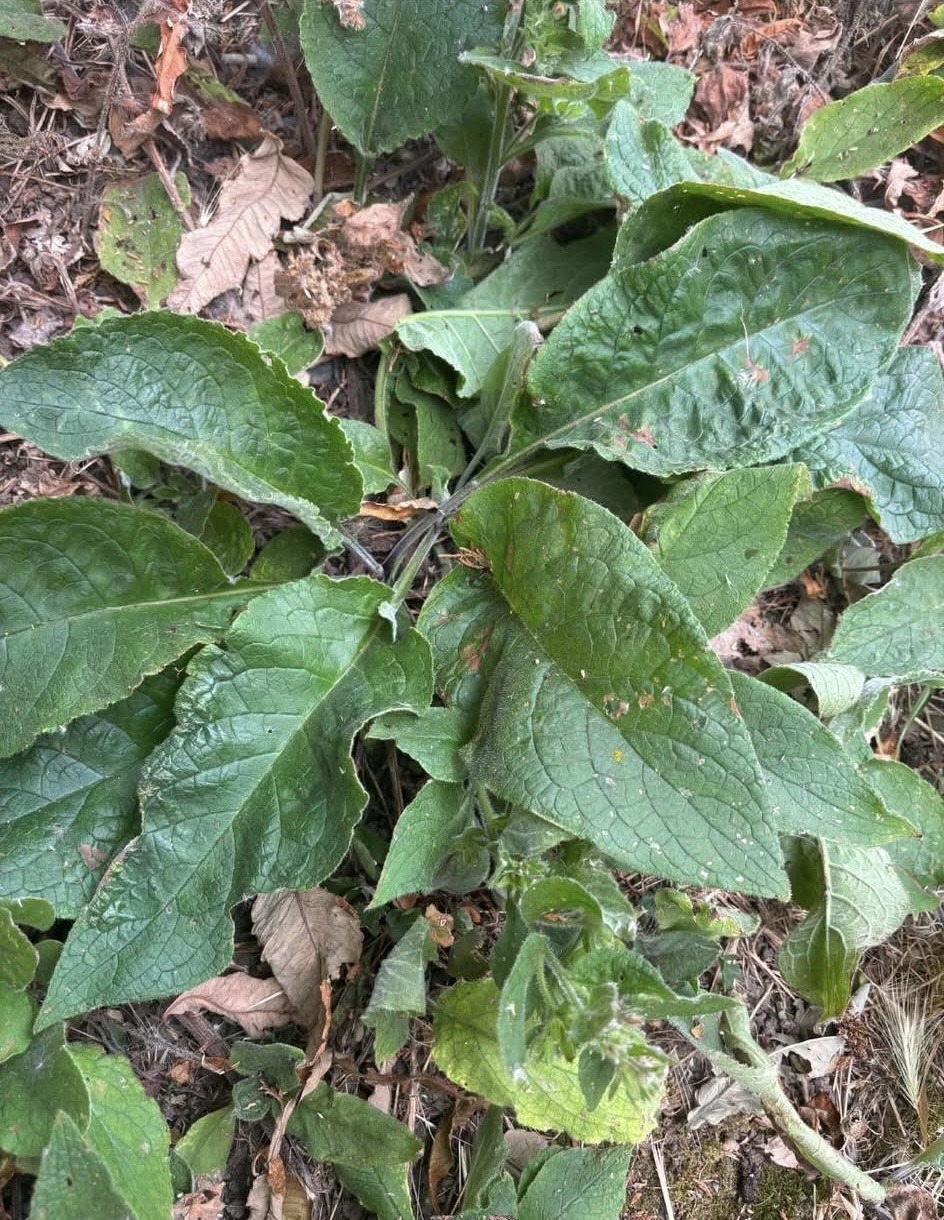
Brief Description
Common comfrey is a perennial herb of the borage family, easily recognized by its large, rough, hairy leaves and clusters of bell-shaped flowers.
Characteristics
Large, ovate to lance-shaped basal leaves that are rough and hairy to the touch. Stems are branching and winged, growing up to 1 meter tall. Flowers are tubular, typically purple, blue, cream, or pink, blooming in drooping clusters.
Habitat
Damp meadows, riverbanks, ditch sides, and moist waste places, often thriving in nitrogen-rich soils.
When to Find It
Grows vigorously from spring through summer, with flowering occurring from May to June.
Conservation Status
Least Concern
Ecological Role
Provides a rich nectar source for bumblebees and other long-tongued insects. Its deep taproot also acts as a dynamic accumulator, bringing up nutrients from deep in the soil.
Easily Confused With
Foxglove (Digitalis purpurea), which has toxic leaves and lacks the rough, hairy texture and specific venation pattern of comfrey.
Observation Tips
Look for them in damp, disturbed soils along streams or shaded roadsides. Touch the leaves gently to feel the distinct coarse hairs.
Interesting Facts
Comfrey has been used for centuries in traditional herbal medicine, earning historical common names like 'knitbone' because it was believed to help heal broken bones and wounds.