Amazon River Dolphin
Scientific Name: Inia geoffrensis
Category: mammal
Brief Description
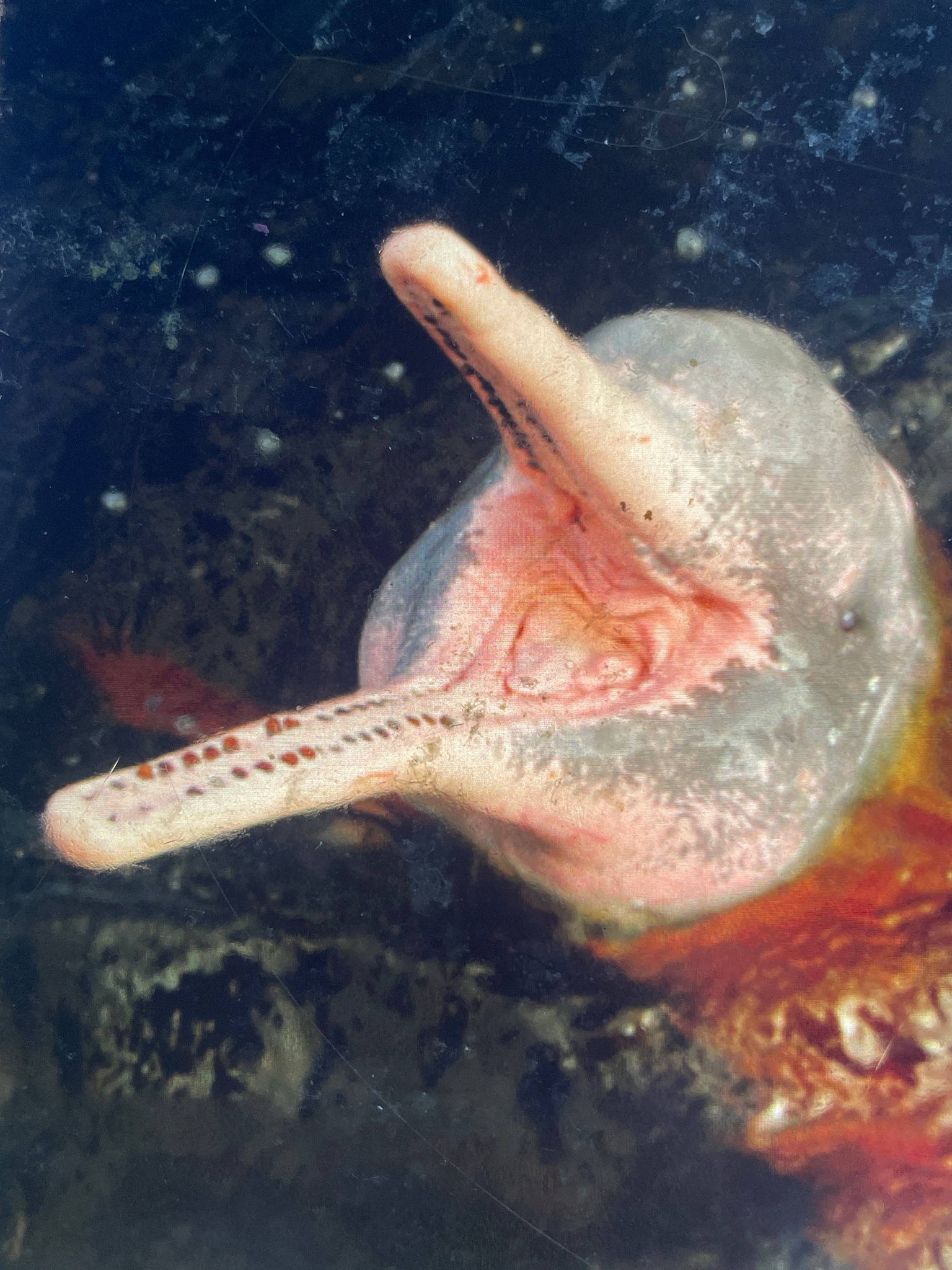
A freshwater dolphin, also known as the Boto, characterized by its pinkish coloration and long snout.
Characteristics
Pinkish-gray skin, a long beak-like snout with visible teeth, a bulbous forehead (melon), and a low, ridge-like dorsal fin. They have unfused neck vertebrae allowing them to turn their heads 90 degrees.
Habitat
Freshwater river systems, including the main river channels, tributaries, and flooded forests.
When to Find It
Can be observed year-round, but they shift into flooded forests during the high-water season to hunt.
Conservation Status
Endangered (IUCN)
Ecological Role
As an apex predator, they help regulate fish populations and are indicators of the overall health of the Amazon and Orinoco river basins.
Easily Confused With
Tucuxi (Sotalia fluviatilis), which is smaller, gray, and looks more like a traditional marine dolphin with a prominent dorsal fin.
Observation Tips
Look for them in the Amazon basin at dawn or dusk when they are most active; they are often found near river junctions or in areas with high fish density.
Interesting Facts
Their pink color is believed to be caused by scar tissue from rough play or fighting; the more scar tissue, the pinker the dolphin, which is why males are often pinker than females.