Bigleaf Maple Leaf
Scientific Name: Acer macrophyllum
Category: tree
Brief Description
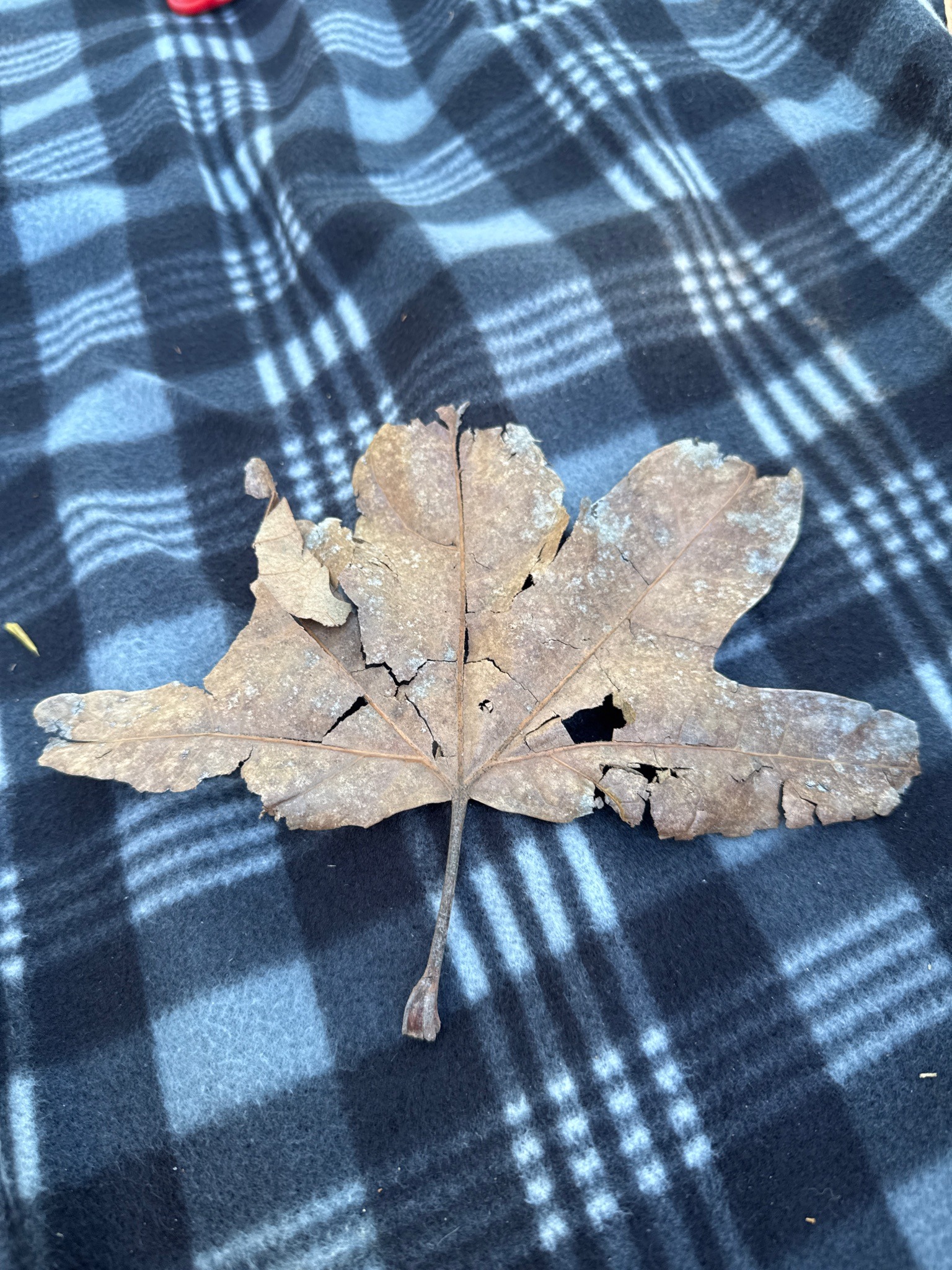
A large, five-lobed deciduous leaf from a Bigleaf Maple tree, showing signs of decomposition and desiccation.
Characteristics
Broad, palmately lobed leaf with five deep lobes. This specific specimen is brown, brittle, and weathered, featuring prominent radiating veins and a long petiole base.
Habitat
Found in moist, temperate coniferous forests and riparian zones.
When to Find It
Leaves turn yellow in autumn and are typically found as brown leaf litter on the ground during winter and early spring.
Conservation Status
Least Concern
Ecological Role
Provides vital nutrients to forest soil as leaf litter; living trees host massive communities of epiphytes like mosses and ferns.
Easily Confused With
Sycamore leaves (Platanus) have similar shapes but different vein patterns and petiole bases; other maples have significantly smaller leaves.
Observation Tips
Look on the forest floor in the Pacific Northwest for the largest maple leaves in North America; they are often covered in green moss while still on the tree.
Interesting Facts
The Bigleaf Maple produces the largest leaves of any maple species, sometimes reaching over 12 inches (30 cm) in diameter.