Honeylocust
Scientific Name: Gleditsia triacanthos
Category: tree
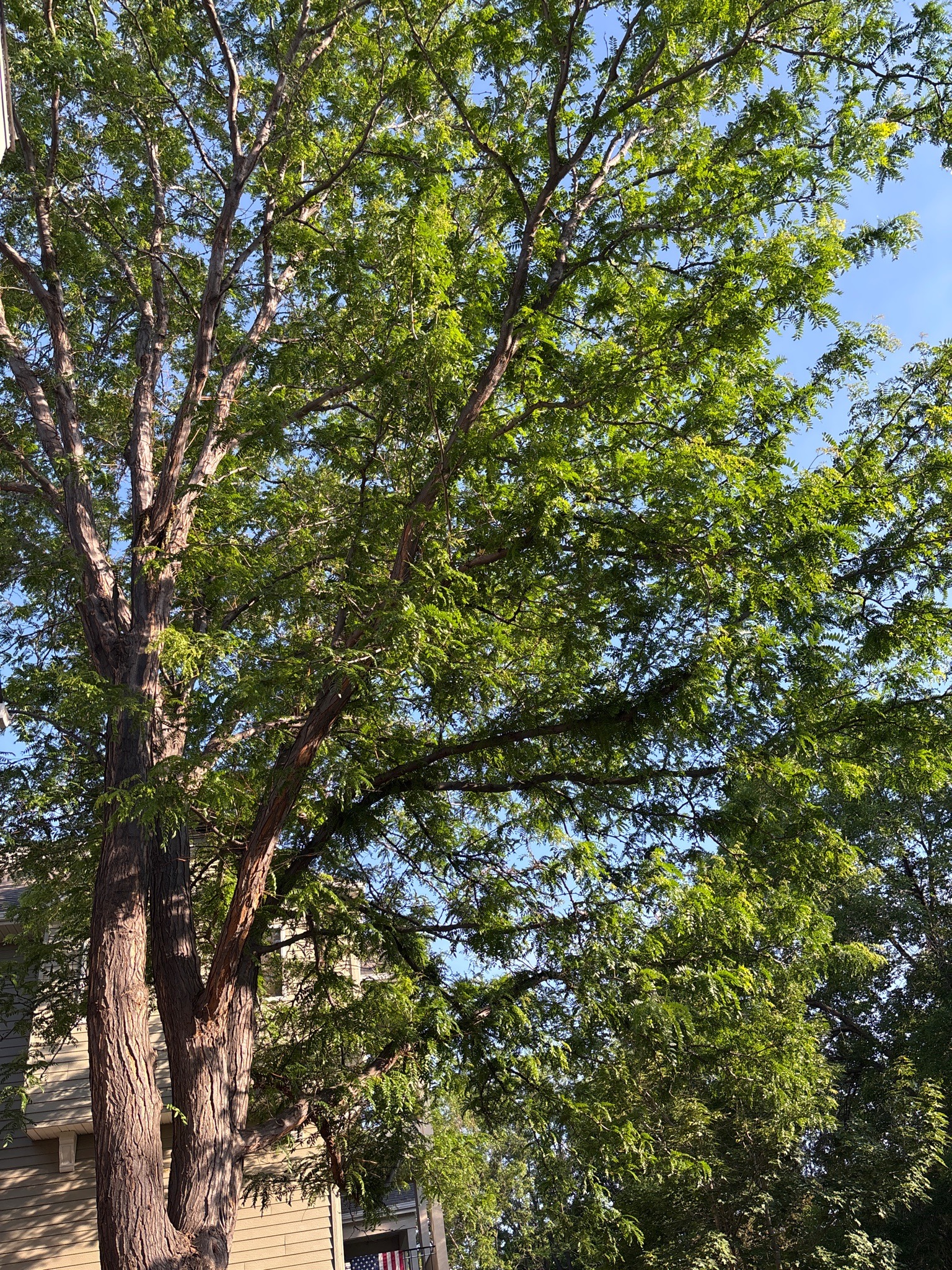
Brief Description
A medium-sized deciduous tree reaching 20-30 meters, known for its lacy, compound leaves and sometimes formidable thorns.
Characteristics
Bipinnately compound leaves with small oval leaflets; deeply furrowed, grayish-brown bark that often peels in long strips; large, flat, reddish-brown seed pods; wild specimens often feature clusters of long, branched thorns on the trunk.
Habitat
Typically found in moist, fertile soils of river valleys and upland forests, though highly adapted to urban environments.
When to Find It
Deciduous; leaves emerge late in spring and turn a clear yellow in early autumn. Large seed pods drop in late autumn and winter.
Conservation Status
Least Concern
Ecological Role
Provides food for various wildlife, including cattle and deer which eat the sweet-pulsed pods. It is also a legume, though it does not fix nitrogen like many other members of its family.
Easily Confused With
Black Locust (Robinia pseudoacacia), which has larger leaflets, shorter unbranched thorns, and white fragrant flowers; Kentucky Coffeetree (Gymnocladus dioicus), which has even larger compound leaves and thicker pods.
Observation Tips
Look for the distinctive 'filtered light' effect under its canopy due to the small leaflets. In urban areas, most planted specimens are the 'inermis' (thornless) variety.
Interesting Facts
The name 'Honeylocust' comes from the sweet, honey-like substance found in the pulp of the seed pods. Historically, these pods were a food source for Native Americans and early settlers.