Sugar Kelp
Scientific Name: Saccharina latissima
Category: other
Brief Description
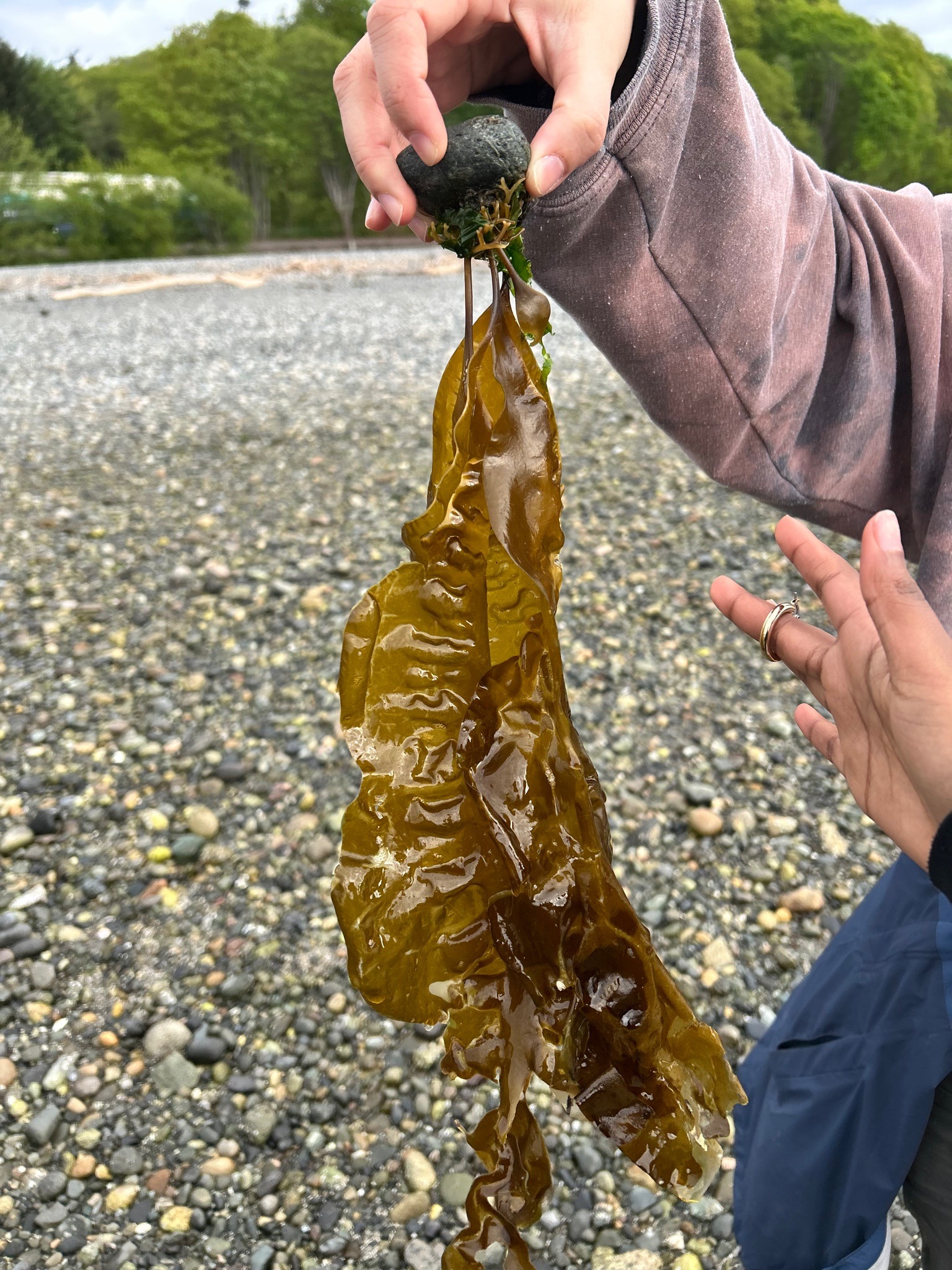
A large brown seaweed characterized by a single, long, yellowish-brown blade with a distinctive puckered or crinkled texture.
Characteristics
Long, strap-like blade that can grow up to 2-4 meters long. The blade is yellowish-brown, semi-transparent, and has a ruffled or 'dimpled' surface resembling lasagna noodles. It is attached to a substrate via a small holdfast and a short stipe.
Habitat
Found in the low intertidal and shallow subtidal zones on rocky shores, often attached to stones or shells in sheltered areas.
When to Find It
Perennial, but most visible and vibrant during the spring and summer growing seasons.
Conservation Status
Generally common, though sensitive to rising ocean temperatures and pollution.
Ecological Role
Provides critical habitat and nursery grounds for fish and invertebrates. It is a primary producer that helps sequester carbon and oxygenate the water.
Easily Confused With
Bull Kelp (Nereocystis luetkeana) which has a long whip-like stipe and a float bulb, or Winged Kelp (Alaria esculenta) which has a distinct midrib that Sugar Kelp lacks.
Observation Tips
Look for it washed up on pebble beaches after a storm or attached to rocks during extreme low tides. Be careful not to slip on wet kelp when exploring tide pools.
Interesting Facts
It is called 'Sugar Kelp' because a sweet-tasting white powder called mannitol forms on the blade as it dries. It is commercially farmed for food and cosmetic use.