Bermuda Grass
Scientific Name: Cynodon dactylon
Category: plant
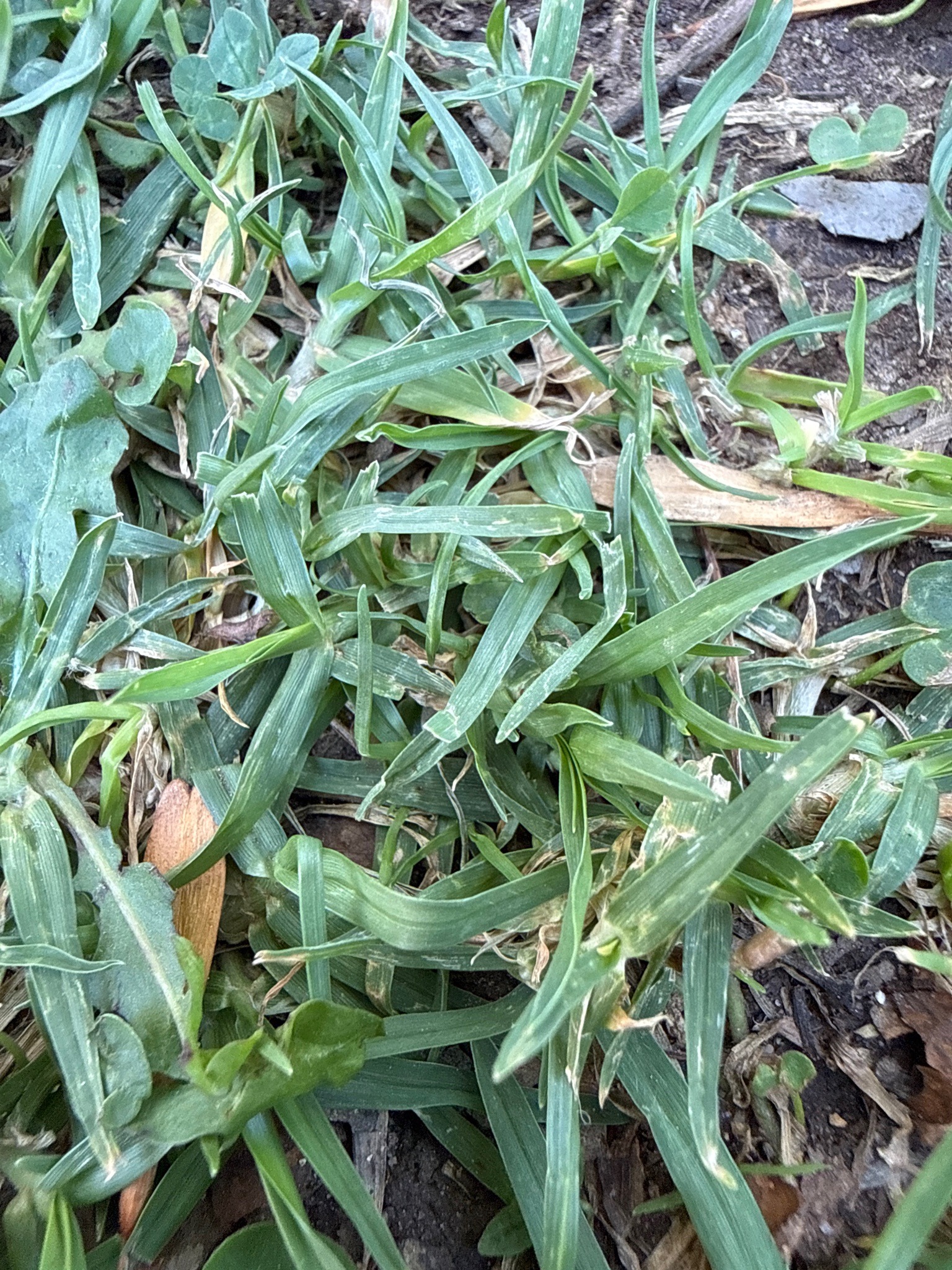
Brief Description
A highly resilient, creeping warm-season perennial grass commonly used for lawns and pastures.
Characteristics
Features gray-green, short blades with rough edges and a distinctive ligule of white hairs. It spreads via both stolons (above-ground runners) and rhizomes (underground stems).
Habitat
Thrives in open, sunny areas with well-drained soil; common in lawns, sports fields, and disturbed sites.
When to Find It
Dormant and turns brown in winter; vigorous growth occurs during hot summer months.
Conservation Status
Stable / Common
Ecological Role
Provides soil stabilization and erosion control; serves as forage for livestock and some wildlife, though can be invasive in non-native areas.
Easily Confused With
Crabgrass (Digitaria), which has wider leaves and a more tufted growth habit without extensive rhizomes.
Observation Tips
Look for the characteristic 'finger-like' seed spikes that emerge in late summer to confirm identification.
Interesting Facts
Native to Africa, it is one of the most drought-tolerant grasses and can survive heavy foot traffic due to its deep root system, which can reach over 2 meters deep.