Indian Elm or Holoptelia
Scientific Name: Holoptelia integrifolia
Category: tree
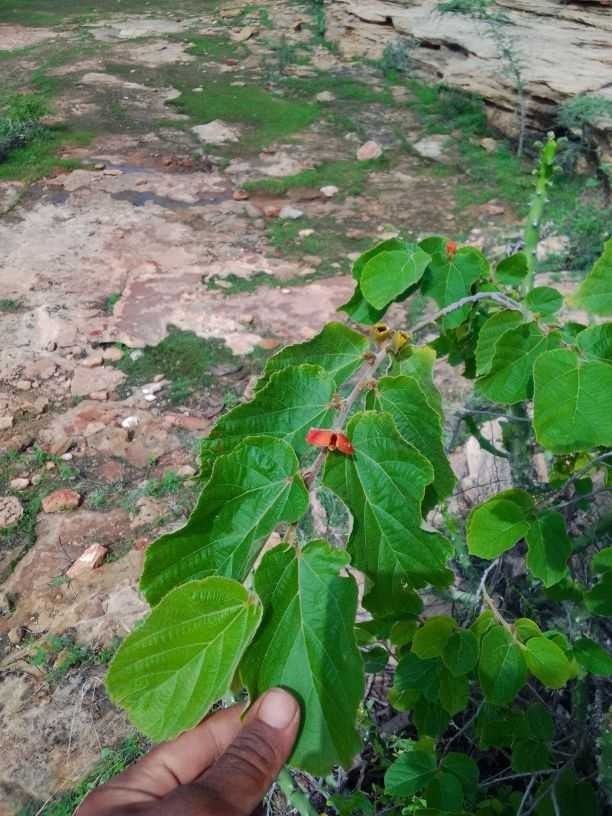
Brief Description
A deciduous tree known for its smooth grey bark, alternate leaves, and distinct winged samara fruits, commonly found in tropical and subtropical regions.
Characteristics
Features alternate, elliptic to ovate-oblong leaves with entire or sometimes toothed margins, measuring around 7-13 cm long. It produces small, greenish-yellow flowers and papery, flat, disc-shaped winged fruits (samaras).
Habitat
Dry deciduous forests, rocky terrains, hillsides, and along roadsides in dry tropical regions.
When to Find It
Flowers appear in the early hot season (February to March) before or alongside new leaves, while fruits mature by April to May.
Conservation Status
Least Concern
Ecological Role
Provides shelter and forage for various insects, birds, and herbivores. The leaves and bark are often utilized in traditional medicine.
Easily Confused With
Can be confused with other dry-forest trees bearing simple alternate leaves, but distinguished by its flattened, circular winged samara fruits.
Observation Tips
Look for its characteristic smooth grey bark and bright green foliage in rocky or dry forest patches, especially during the monsoon when leaves are lush.
Interesting Facts
The wood of Holoptelia integrifolia is durable and often used for rural construction, tool handles, and cart-making.