Giraffe
Scientific Name: Giraffa camelopardalis
Category: mammal
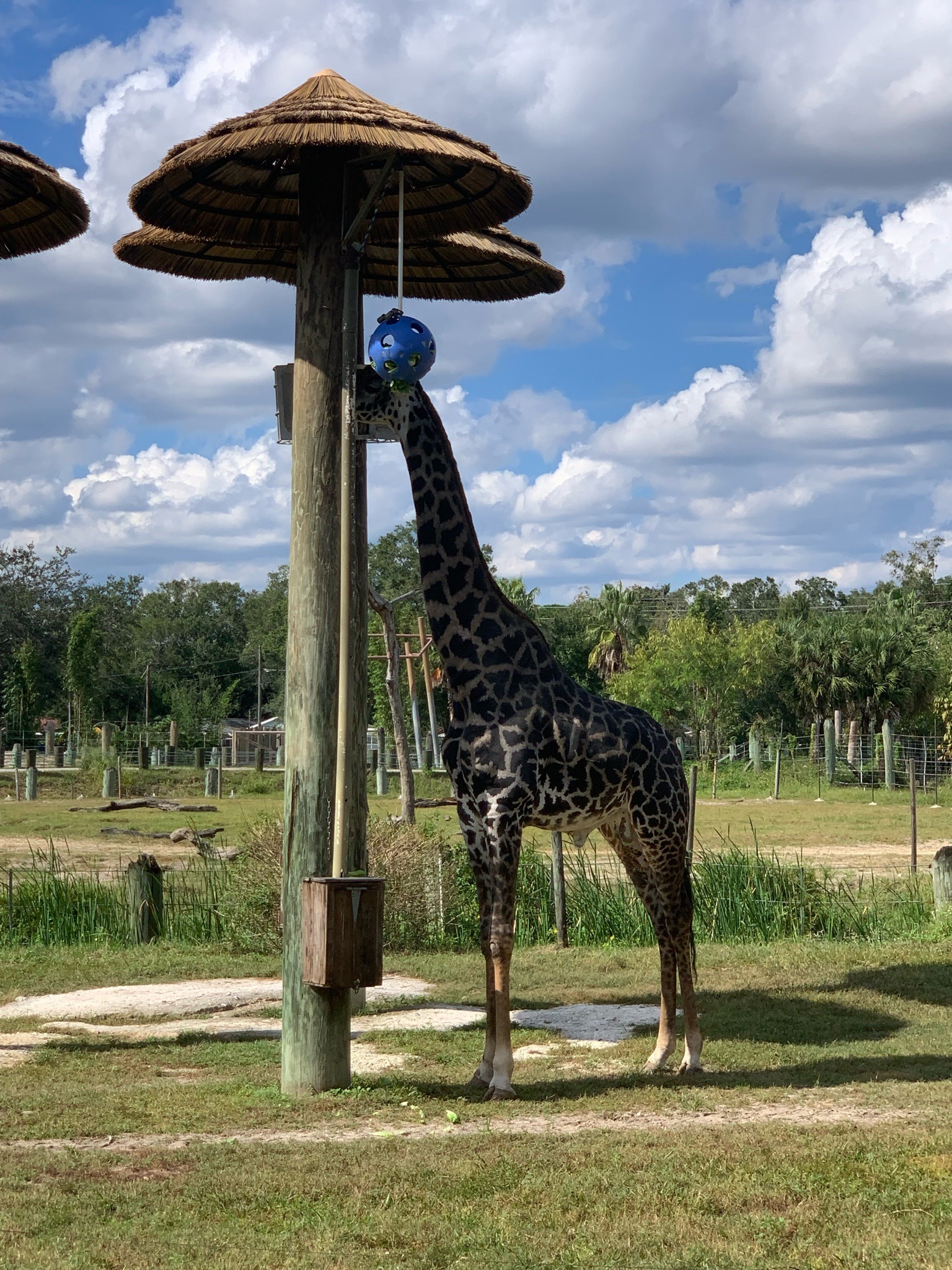
Brief Description
The tallest terrestrial animal and the largest ruminant on Earth, easily recognized by its exceptionally long neck and legs.
Characteristics
Distinguished by its long neck, ossicones (horn-like protuberances), large brown patches on its fur separated by lighter hair, and its extremely long, dark-colored tongue.
Habitat
Typically found in savannahs, shrublands, and open woodlands.
When to Find It
Diurnal and active year-round; not seasonal migrators.
Conservation Status
Vulnerable
Ecological Role
As megaherbivores, they affect the shape of trees via browsing and serve as prey for large predators like lions.
Easily Confused With
Okapi (the only other member of the Giraffidae family), which has a shorter neck and striped legs.
Observation Tips
In the wild, they are best spotted in African national parks during early morning or late afternoon when they are most active.
Interesting Facts
A giraffe's neck contains seven vertebrae, the same number as humans, but each vertebra is significantly larger. Their hearts are two feet long to pump blood up their long necks.