Puddingstone Pebble
Scientific Name: Conglomerate
Category: rock
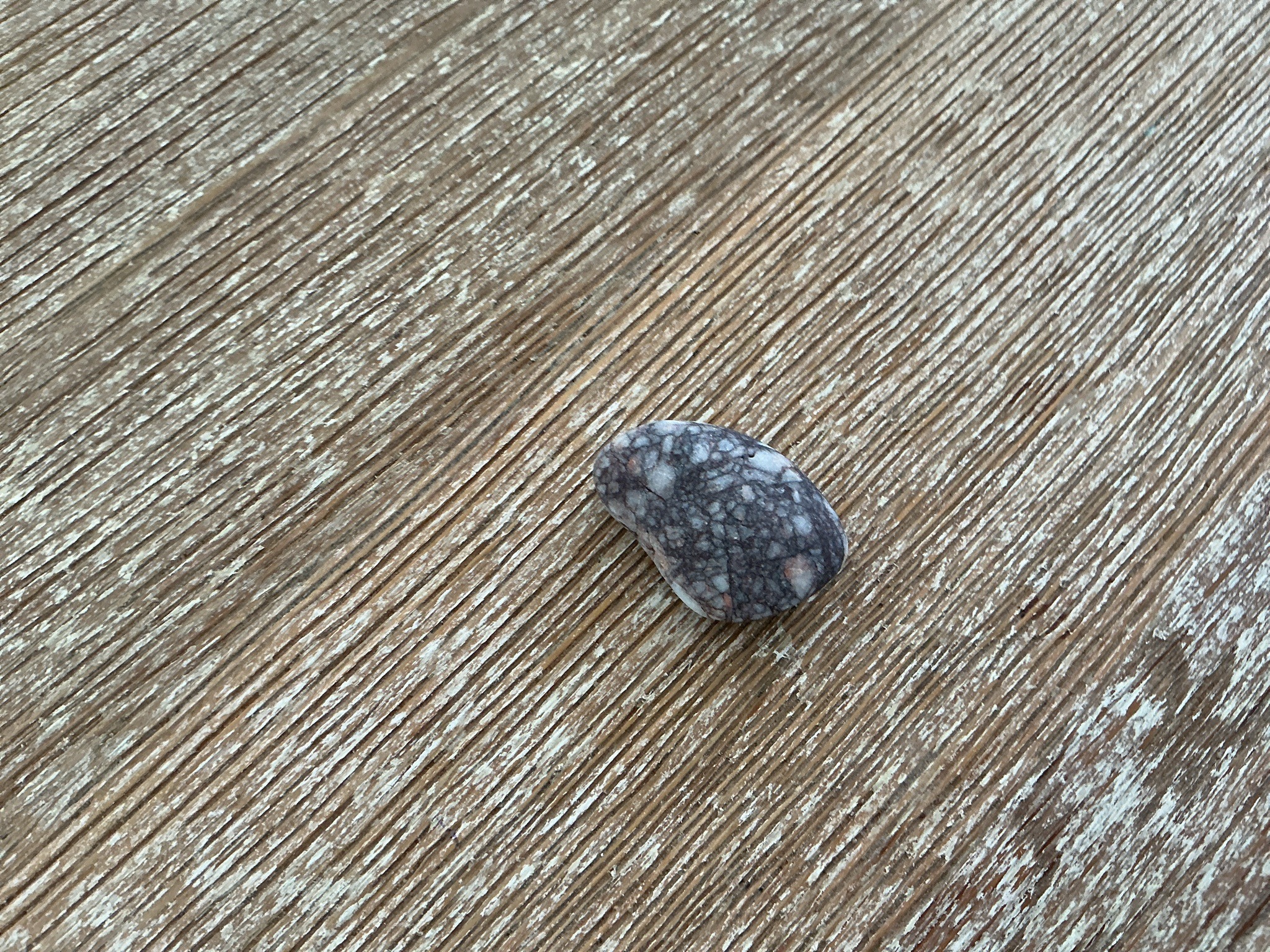
Brief Description
A smooth, rounded conglomerate rock consisting of distinct rounded pebbles or clasts cemented together by a finer-grained matrix.
Characteristics
Composed of rounded gravel or larger clasts (often quartz or chert) embedded in a matrix of sand, silt, or clay. It has a speckled, mosaic-like appearance resembling plum pudding. The texture is usually smooth due to water erosion.
Habitat
Found in riverbeds, glacial tills, and along coastlines where sediment has been transported and smoothed by water or ice.
When to Find It
N/A
Conservation Status
N/A
Ecological Role
Conglomerates provide insight into ancient environmental conditions, such as high-energy water flow in rivers or along ancient shorelines.
Easily Confused With
Breccia, which is similar but contains angular rather than rounded clasts; Porphyry, which is igneous and has distinct crystals rather than cemented pebbles.
Observation Tips
Look for these in gravel bars of rivers or on pebble beaches. Their patterns are most vibrant when wet.
Interesting Facts
The term 'Puddingstone' originated in Britain because the rock's appearance reminded people of traditional Suet or Plum pudding containing raisins and nuts.