White Mulberry
Scientific Name: Morus alba
Category: tree
Brief Description
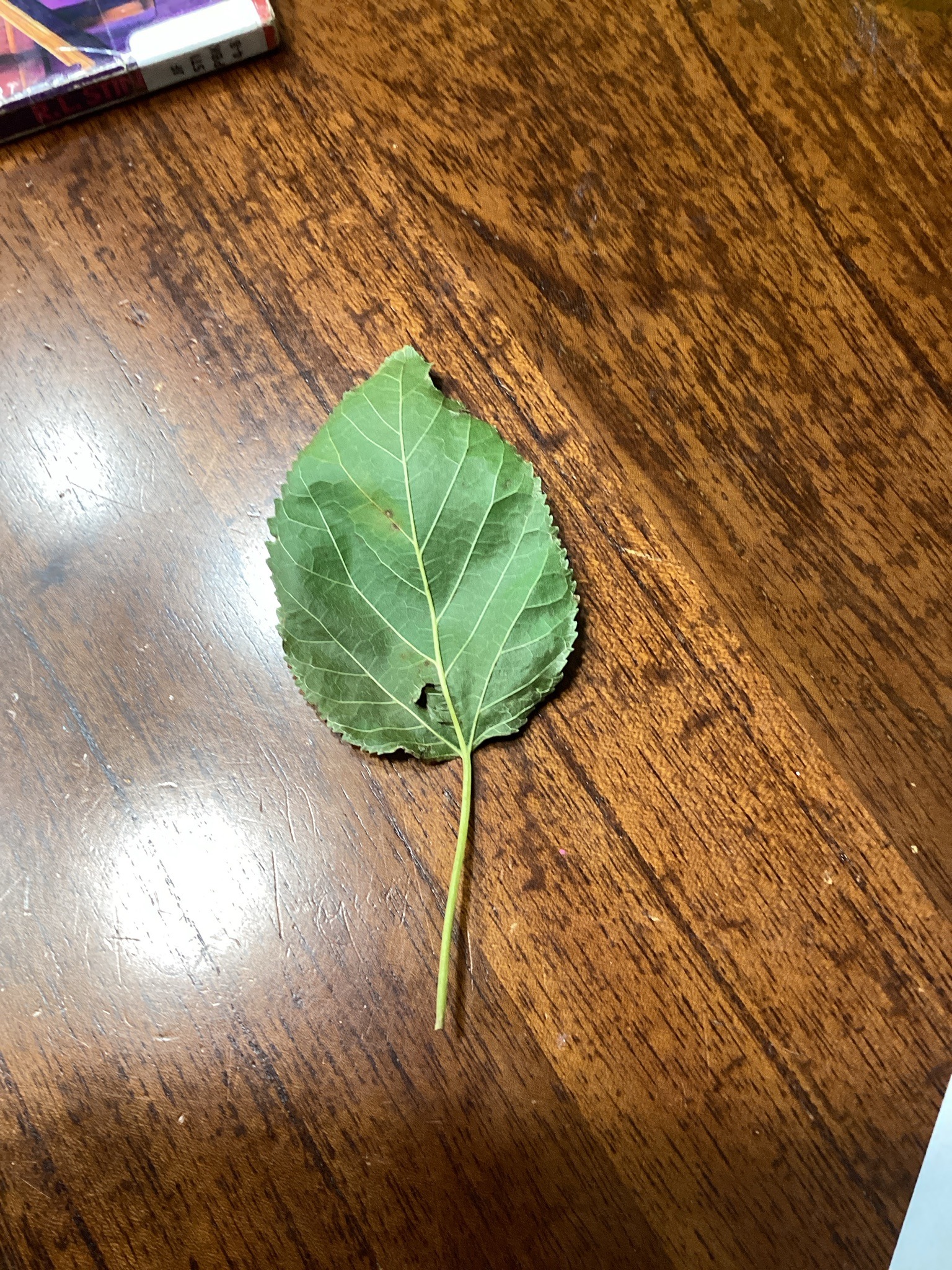
A detached, simple green leaf showing prominent palmate venation and serrated margins, typical of the Morus genus.
Characteristics
Leaves are alternate, ovate to heart-shaped, with serrate or crenate margins. Venation is typically palmate from the base. The surface is smooth and bright green above.
Habitat
Disturbed areas, forest edges, urban environments, and along roadsides.
When to Find It
Leaves are present from spring through autumn before dropping in deciduous winter.
Conservation Status
N/A
Ecological Role
Provides food for various herbivores and insects, most notably the silkworm, and fruits are eaten by birds.
Easily Confused With
Red Mulberry (Morus rubra) and Paper Mulberry (Broussonetia papyrifera). Red mulberry leaves are often rougher (sandpapery) on top, while paper mulberry leaves are usually fuzzy and sometimes lobed.
Observation Tips
Observe the tree canopy and lower branches for leaf shape variations, as mulberry trees frequently exhibit both unlobed and lobed leaves on the same branch.
Interesting Facts
White mulberry is native to northern China and was widely introduced for the silk industry, as its leaves are the sole food source for silkworms.