Wood Stork
Scientific Name: Mycteria americana
Category: bird
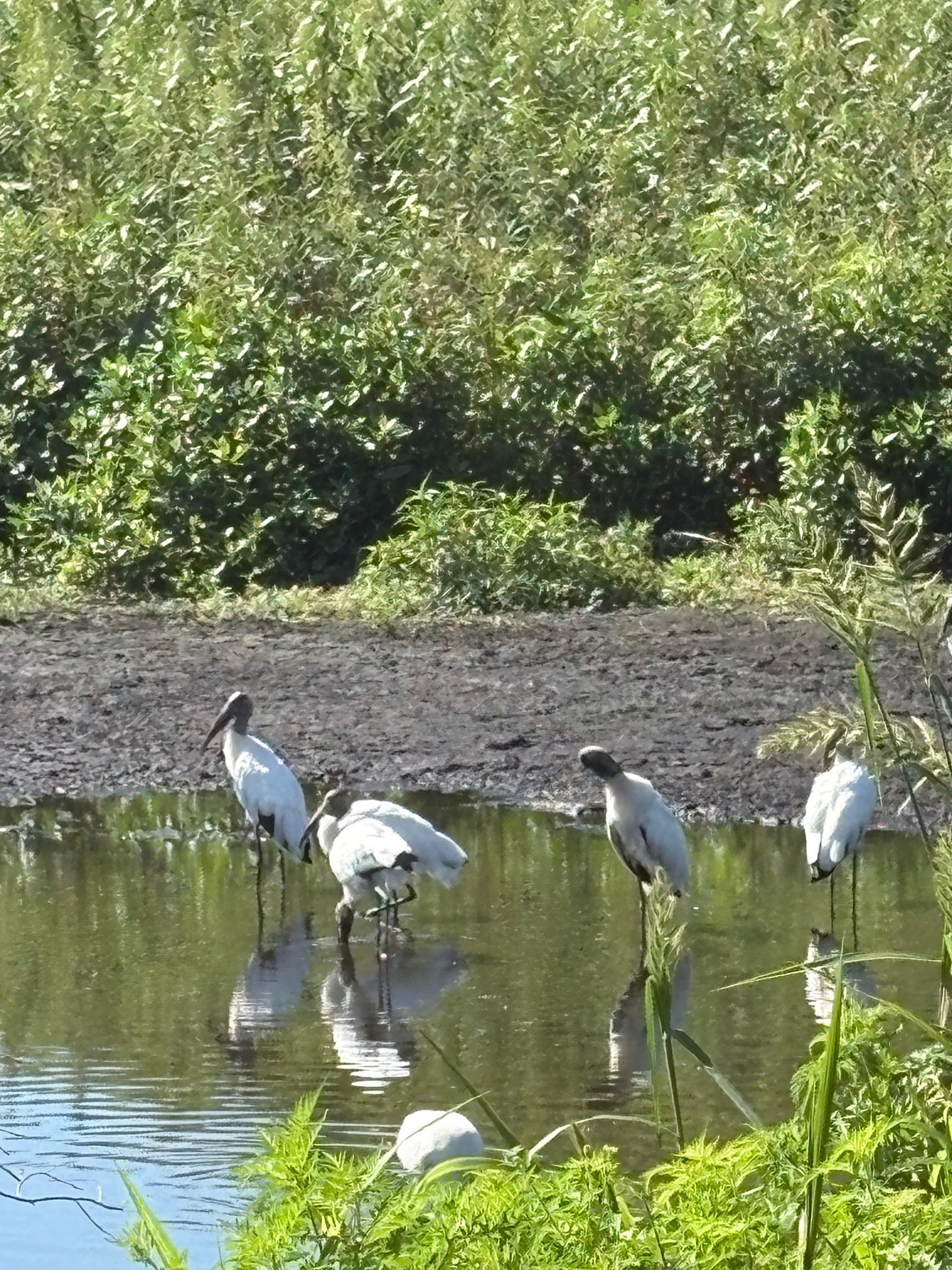
Brief Description
A large, white wading bird with a dark, featherless head and a thick, down-curved bill.
Characteristics
Adults have white plumage with black flight feathers visible in flight. The head and neck are covered in scaly, dark gray or black skin. They have long, dark legs and yellowish-pink feet.
Habitat
Freshwater and brackish wetlands, including marshes, swamps, mangroves, and flooded fields.
When to Find It
Common year-round in Florida and coastal areas of the southeastern United States; they may disperse north after breeding in the summer.
Conservation Status
Federally listed as Threatened in the United States.
Ecological Role
As apex predators of small aquatic life, they help regulate fish and invertebrate populations. They are indicator species for the health of wetland ecosystems.
Easily Confused With
White Ibis (much smaller with a red bill and face) and Great Egret (entirely white with a yellow bill and feathered head).
Observation Tips
Look for them in shallow water where they feed by holding their bill open underwater and snapping it shut when a fish touches it. Best viewed from a distance to avoid disrupting their feeding.
Interesting Facts
The Wood Stork is the only species of stork that currently breeds in North America. They use a unique 'tactile' feeding method called 'grope-feeding,' which allows them to hunt in murky waters where vision is limited.