Serviceberry
Scientific Name: Amelanchier
Category: tree
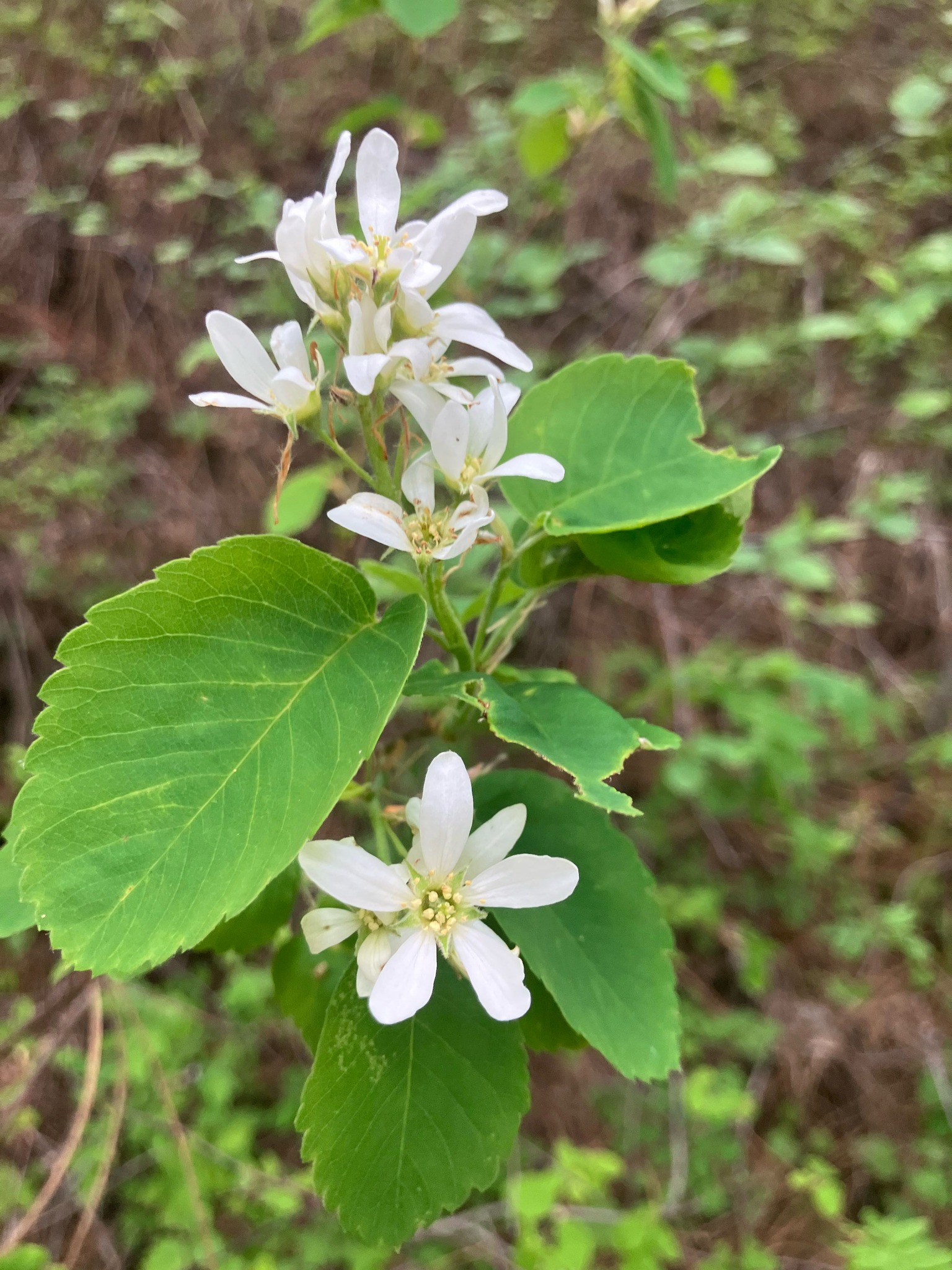
Brief Description
A deciduous shrub or small tree known for its delicate white flowers in early spring and edible dark purple berries.
Characteristics
Features small, five-petaled white flowers in drooping clusters. Leaves are oval with serrated edges, turning from green to vibrant orange or red in autumn. The bark is smooth and grey with dark vertical stripes in young trees.
Habitat
Typically found in deciduous woodlands, forest edges, rocky slopes, and moist stream banks.
When to Find It
Flowers in early spring (April-May) before or just as leaves emerge. Berries ripen in mid-summer (June-July).
Conservation Status
Generally stable, though specific regional species may vary; widely used in restoration and urban landscaping.
Ecological Role
A critical early-season nectar source for pollinators like bees and butterflies. The berries are a high-energy food source for many bird species and mammals.
Easily Confused With
Chokecherry (Prunus virginiana) has longer, denser flower spikes and more finely serrated leaves. Crabapples have larger, rounder flowers with different petal shapes.
Observation Tips
Look for the white 'clouds' of blossoms in the woods in early spring when most other trees are still bare. To see wildlife, visit the tree when the berries turn dark purple.
Interesting Facts
Also known as Juneberry, Shadbush, or Saskatoon. The name Shadbush comes from its habit of blooming at the same time that shad fish migrate upstream in Eastern rivers.