Mango
Scientific Name: Mangifera indica
Category: tree
Brief Description
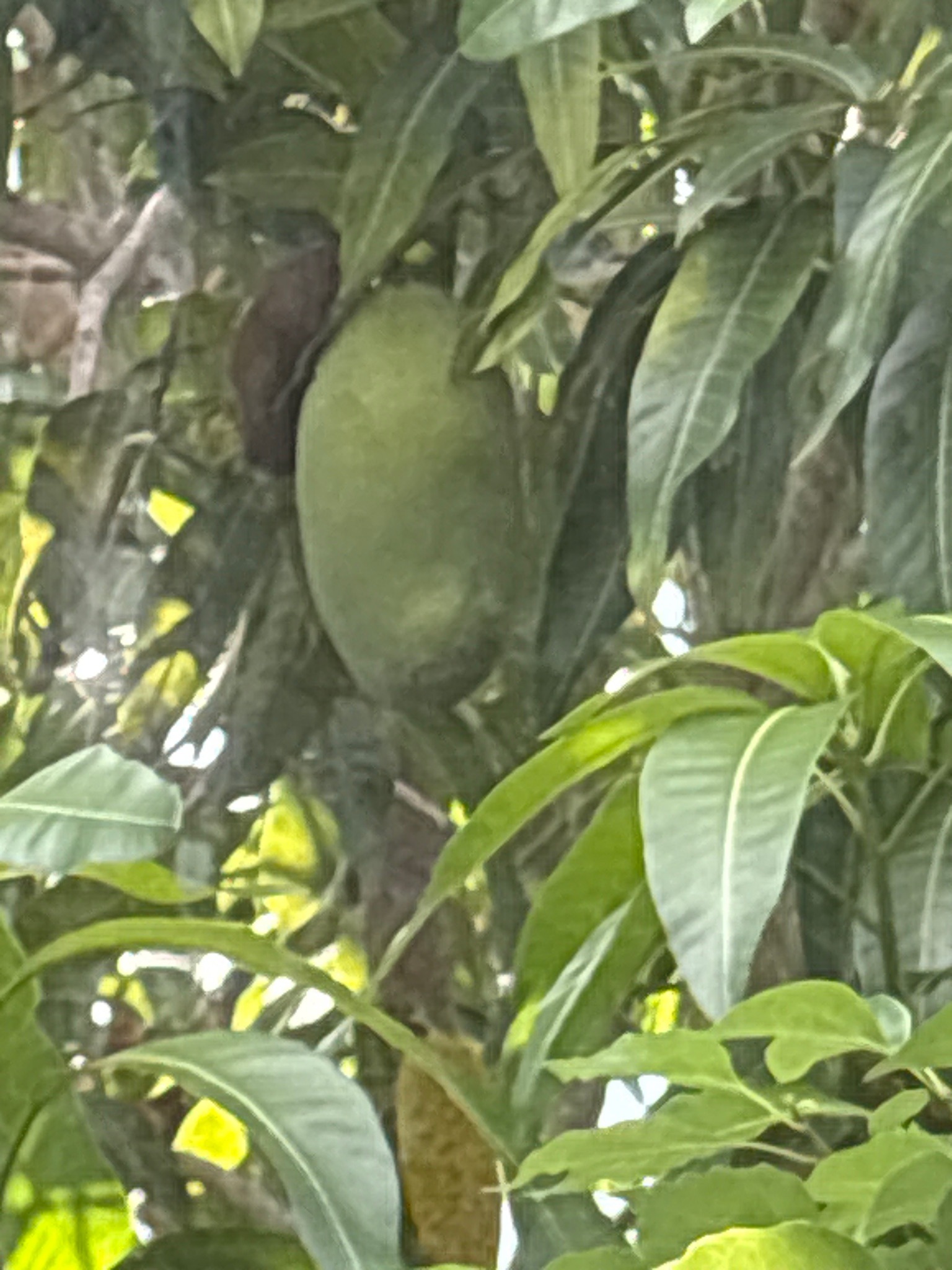
An edible stone fruit produced by the tropical tree Mangifera indica, known for its sweet flesh and distinctive oval shape.
Characteristics
Large, evergreen tree with long, leathery, lanceolate leaves. The fruit is a drupe with a smooth skin that turns from green to yellow, orange, or red as it ripens, containing a single large, flat seed.
Habitat
Tropical and subtropical climates; widely cultivated in orchards and gardens.
When to Find It
Typically flowers in late winter or spring, with fruit ripening in the summer months.
Conservation Status
N/A
Ecological Role
Provides a significant food source for various wildlife including bats, birds, and monkeys; the tree offers dense shade and carbon sequestration.
Easily Confused With
Cashew apple or Avocado. Distinguish by the mango's specific leaf shape (long and narrow) and the clustering of fruit on long panicles.
Observation Tips
Look for the distinctive long, drooping leaves and clusters of heavy fruit hanging from the branches; be cautious of the sap as it can cause skin irritation in some people.
Interesting Facts
The mango is known as the 'king of fruits' in many cultures and is the national fruit of India, Pakistan, and the Philippines.
User Notes
What are these