American Pokeweed
Scientific Name: Phytolacca americana
Category: plant
Brief Description
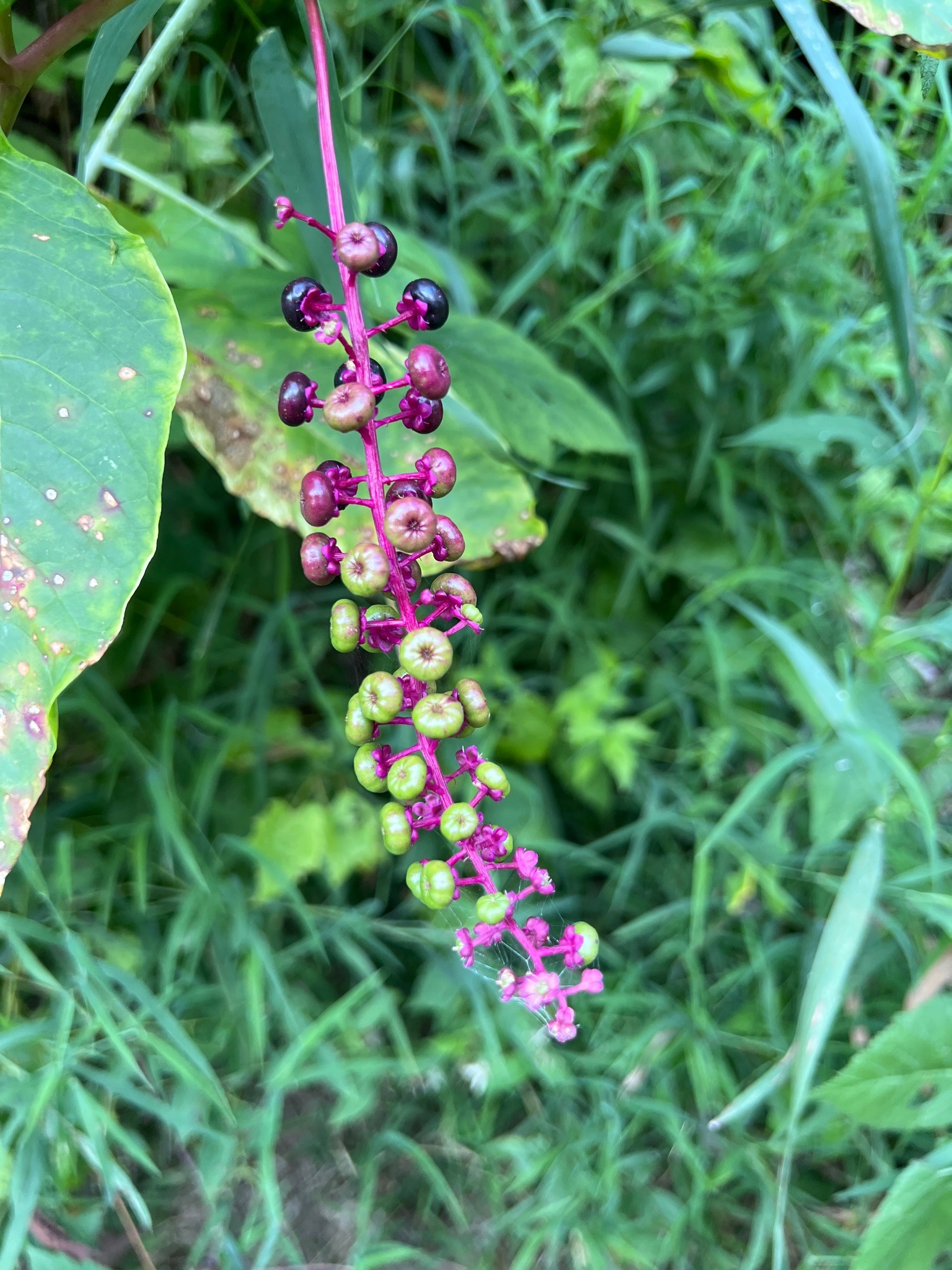
A large, herbaceous perennial plant known for its distinct magenta or bright pink stems and drooping clusters of dark purple-black berries.
Characteristics
Stems are smooth, stout, and turn a vibrant magenta or pinkish-red as the plant matures. Leaves are alternate, simple, and lance-ovate. Flowers are small, white or pinkish, arranged in drooping racemes, which develop into green berries that ripen to dark purple-black filled with a crimson juice.
Habitat
Found in disturbed soils, forest edges, clearings, pastures, fence rows, and waste areas.
When to Find It
Grows vigorously through spring and summer, producing flowers in summer and ripening berries from late summer through autumn.
Conservation Status
Secure and widespread
Ecological Role
The berries are an important food source for many species of birds, which help disperse the seeds. However, the plant contains toxins that make it unpalatable or poisonous to many mammals if consumed in large quantities.
Easily Confused With
Can sometimes be confused with other fleshy-fruited herbaceous plants, but the distinctive magenta stems and drooping racemes of segmented berries are characteristic of pokeweed.
Observation Tips
Easily spotted along woodland edges and roadsides in late summer when the brightly colored stems and contrasting berries stand out. Exercise caution and do not consume any part of the plant as all parts are toxic to humans and pets.
Interesting Facts
Historically, the vibrant red juice from the berries was used as ink and by Native Americans as a natural dye. Despite its toxicity, young spring shoots were sometimes prepared as 'poke salad' after multiple boilings, though this practice carries risks if not done correctly.