Tree of Heaven
Scientific Name: Ailanthus altissima
Category: tree
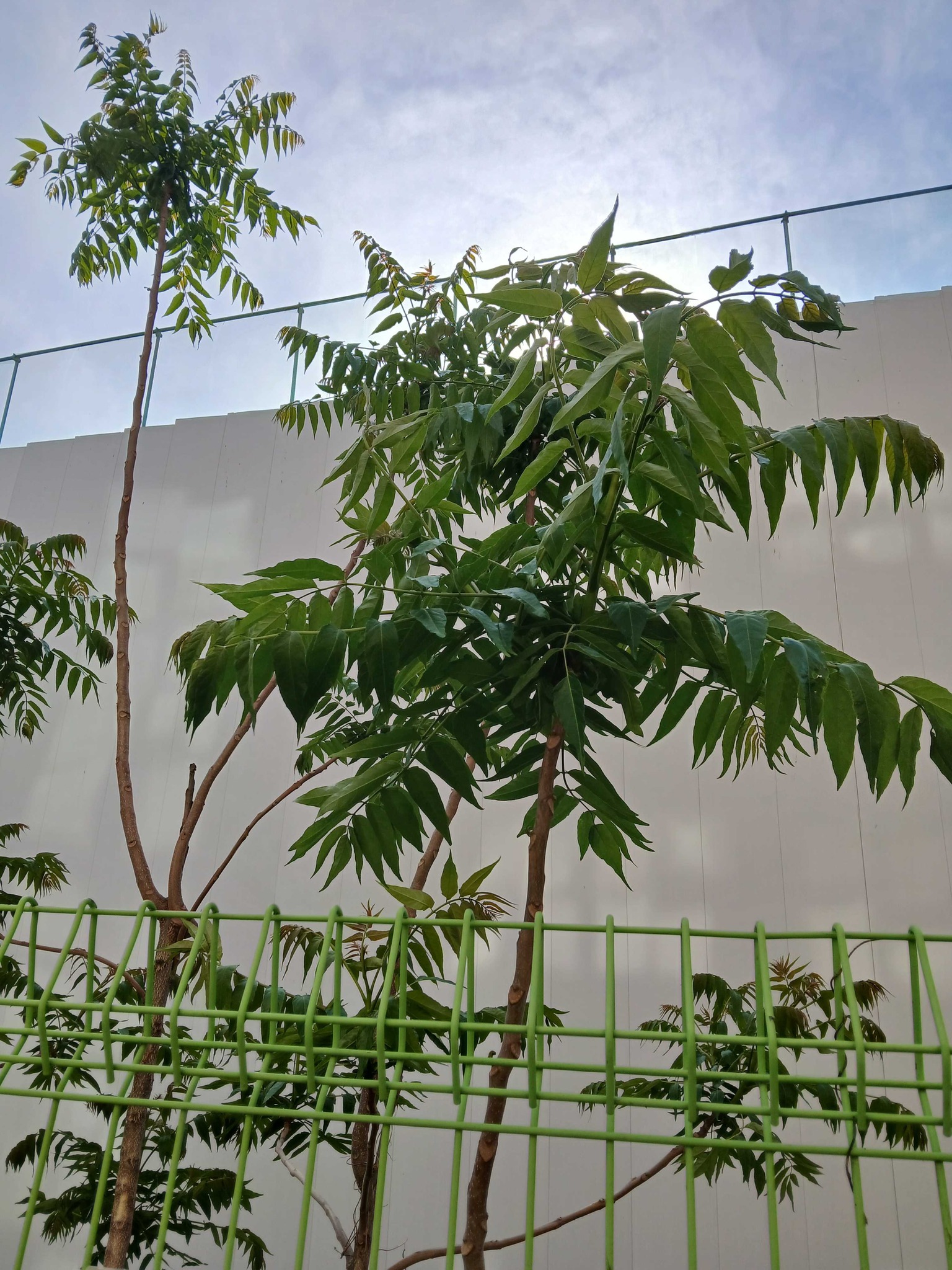
Brief Description
An invasive, rapidly growing deciduous tree known for its ability to thrive in harsh urban environments and disturbed soil.
Characteristics
Features large pinnately compound leaves (reaching up to 3 feet long) with small glandular teeth at the base of each leaflet. The bark is light gray and smooth, resembling cantaloupe skin. It has a distinct, unpleasant odor often compared to rancid peanut butter when leaves or stems are crushed.
Habitat
Commonly found in urban alleys, along highways, vacant lots, and forest edges. It is highly tolerant of pollution and poor soil quality.
When to Find It
Deciduous; leaves emerge in late spring and drop in late autumn. Large clusters of yellowish-green flowers appear in early summer.
Conservation Status
Not applicable (Invasive species)
Ecological Role
Often considered a noxious invasive species, it outcompetes native vegetation by producing chemicals that inhibit the growth of surrounding plants (allelopathy) and is the preferred host for the invasive Spotted Lanternfly.
Easily Confused With
Often confused with native Sumac (Rhus spp.) or Black Walnut (Juglans nigra). Sumac has fuzzy stems and lacks the glandular teeth at the leaflet base; Black Walnut has serrated leaflet edges and a pleasant citrus-like scent.
Observation Tips
Avoid planting this tree; if removing it, be aware that it can sprout vigorously from roots. In summer, look for the winged seed pods (samaras) on female trees.
Interesting Facts
It was introduced to the United States from China in the late 1700s and is the subject of the famous novel 'A Tree Grows in Brooklyn' due to its persistence in difficult environments.