Eastern Fox Squirrel
Scientific Name: Sciurus niger
Category: mammal
Brief Description
A large tree squirrel with a buff-to-orange underside, typically seen foraging for nuts in deciduous forests and urban parks.
Characteristics
The largest species of tree squirrel in North America, featuring a brownish-grey back and a distinctive orange or rusty-colored belly. It has a long, bushy tail with frosted tips and large, agile paws for climbing.
Habitat
Open deciduous and mixed forests with a sparse understory, as well as urban areas, parks, and residential yards with mature trees.
When to Find It
Diurnal (active during the day), most active in the early morning and late afternoon throughout the year; they do not hibernate.
Conservation Status
Least Concern (LC)
Ecological Role
They are vital seed dispersers; they bury nuts (caching) and often fail to recover them, which allows trees like oaks and walnuts to propagate.
Easily Confused With
Eastern Grey Squirrel (Sciurus carolinensis), which is smaller, typically has a white belly, and more silver-grey fur.
Observation Tips
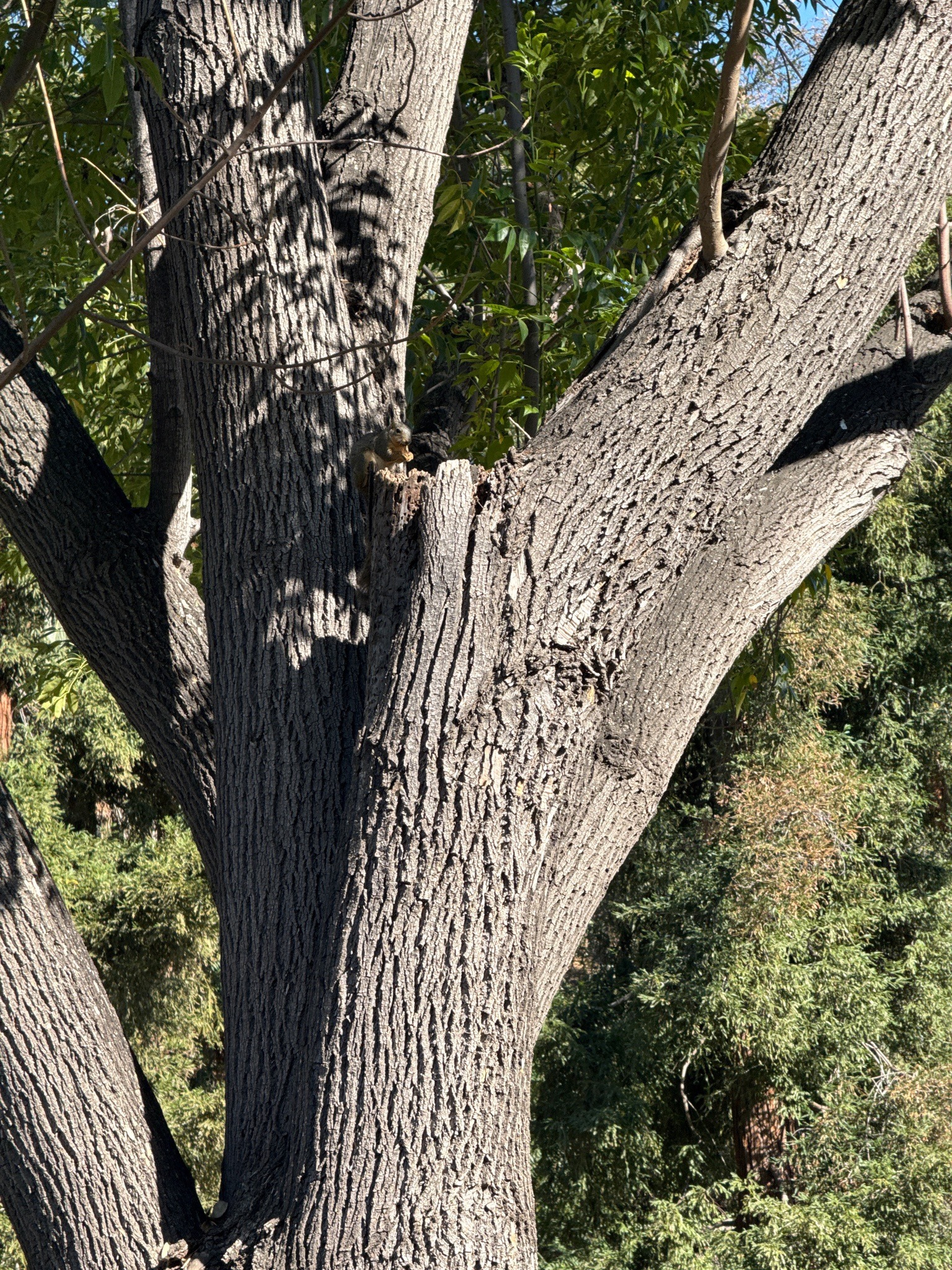
Look for them on the ground searching for fallen nuts or perched on large branches like the one shown here. They are relatively bold and can be photographed easily if you remain still.
Interesting Facts
Eastern Fox Squirrels have excellent vision and a sharp sense of smell; they can locate buried nuts even under a layer of snow.