Eastern Diamondback Rattlesnake
Scientific Name: Crotalus adamanteus
Category: reptile
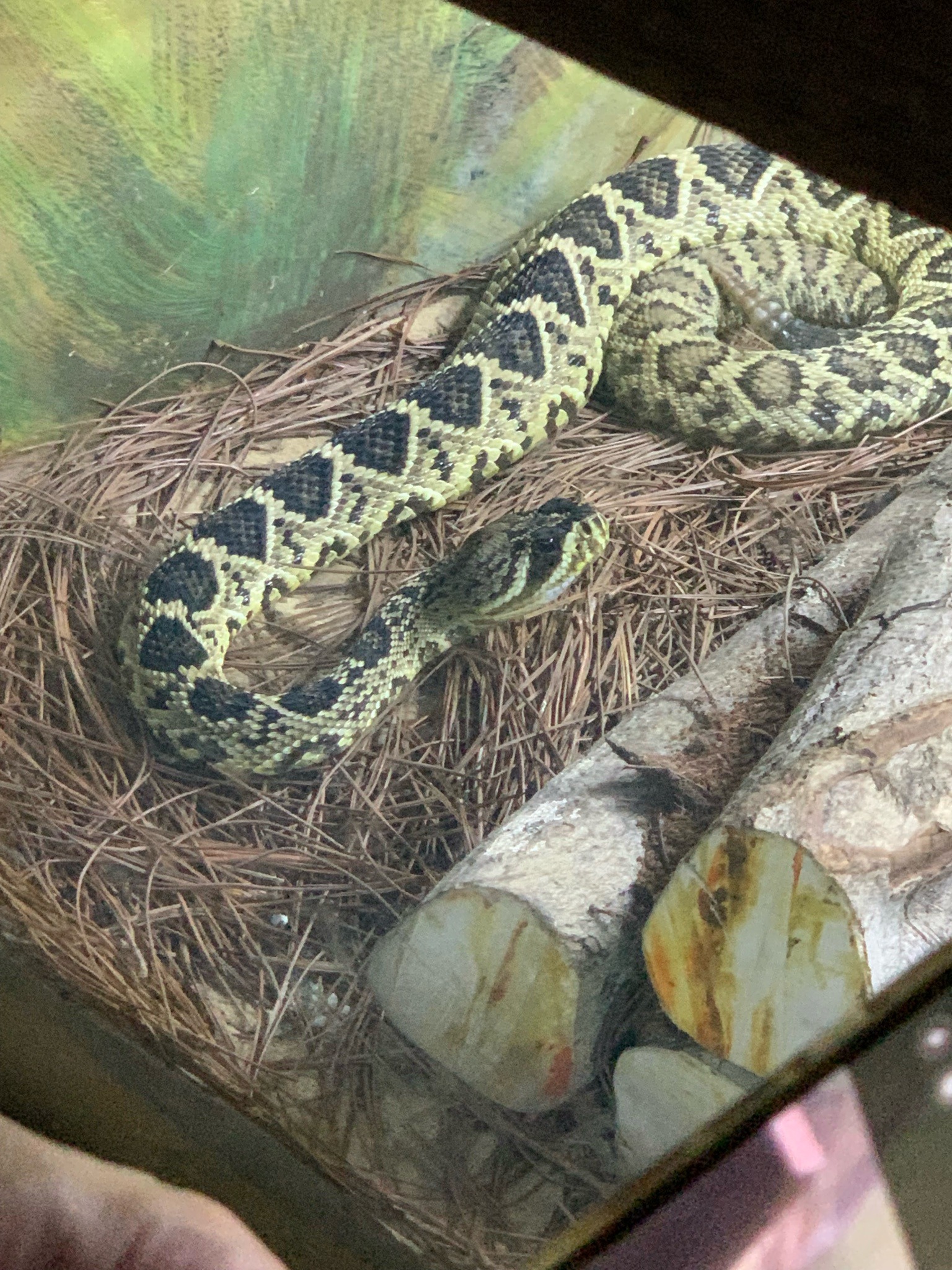
Brief Description
A large, heavy-bodied venomous pit viper characterized by a distinct diamond pattern on its back and a rattle at the end of its tail.
Characteristics
Features a series of dark brown to black diamonds with light centers on a tan, yellow, or greyish background. It has a broad, triangular head, heat-sensing pits between the eyes and nostrils, and a rattle composed of interlocking keratin segments.
Habitat
Found in pine flatwoods, palmetto hammerocks, sandhills, and coastal barrier islands in the Southeastern United States, ranging from North Carolina down through Florida and west to Louisiana.
When to Find It
Most active during the day in spring and fall, but often becomes nocturnal during the hot summer months to avoid extreme temperatures.
Conservation Status
Vulnerable - While not federally listed as endangered, it has faced significant population declines due to habitat loss and human persecution.
Ecological Role
As an apex predator, it plays a vital role in controlling populations of small mammals like rabbits and rodents, which helps maintain the balance of the ecosystem.
Easily Confused With
Timber Rattlesnake (Crotalus horridus) which has chevron-shaped bands rather than diamonds; Western Diamondback (Crotalus atrox) found further west with different tail markings.
Observation Tips
Maintain a safe distance of at least 15 feet. Never attempt to touch or provoke the snake. In the wild, stay on marked trails and wear thick boots in tall grass.
Interesting Facts
It is the largest species of rattlesnake in the world, capable of reaching lengths over 7 feet. The rattle is made of keratin, the same protein found in human fingernails, and adds a new segment every time the snake sheds.